


 Francais
 Deutsch
 Italiano
Refine Your Search
Yokohama Japan 1945 stock footage and images
- Showing 2233 to 2238 of 7988 results more
more Hide
Hide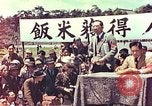
Japanese laborers, agrarians and white collar workers listen to speeches held in the Imperial Park in Tokyo.
Speeches held during May Day demonstrations in Tokyo, Japan. Japanese laborers, agrarians and white collar workers gather and listen to a speaker in the Imperial Park. The speaker on a makeshift stand is Mr. Kenichi Ito, Kanto District Trade Union. People listen to the speaker. A group of girls with red bandanas on their head. A group of people sit on the ground and listen to the speaker. Red Cross Japanese nurses. Another speaker is Mr. Yoshira II, a congressman representing the Socialists party. A Communist congressman speaks to the group of workers.
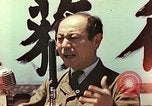
Japanese workers listen to speeches by various Japanese officials in the Imperial Park during May Day demonstrations in Tokyo.
Speeches held during May Day demonstrations in Tokyo, Japan. Japanese laborers, agrarians and white collar workers gather and listen to a speaker in the Imperial Park. The speaker on a makeshift stand is Chairman Shingoro Shimagami. A group of workers listens to the speaker. The demonstrators sing 'Song of the Red Flag'. The speakers on the stand direct the singing.
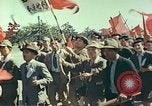
A group of Japanese workers demonstrates and marches in the Imperial Park during May Day demonstrations in Tokyo.
May Day demonstrations in Tokyo, Japan. Japanese laborers, agrarians and white collar workers leave an assembly area and march along a road in the Imperial Park. Workers from Sunamachi Steel Works march. The workers march. A group of demonstrators has a pep meeting. The workers sitting on the ground listen to a speaker who is on the top of a police box. The workers wave red flags.
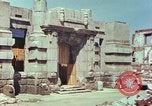
Japanese people clean rubble from their properties and prepare to make new homes in Hiroshima after World War II.
Ruins in Hiroshima, Japan after World War II. The entrance to a Savings Bank which is set up and doing business in a light wooden structure built inside the shell of the original bank building. A Japanese man pulls a cart along a road which has been partially cleared. A man walks through debris of a collapsed building. A Japanese man cleans away rubble from his property, preparatory to planting his garden and erecting his new home. A Japanese telephone maintenance man repairs lines on a telephone pole. A group of Japanese children collects sea shells near a bridge along the fringe of Motoyasu River.
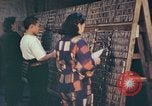
Japanese typesetters at work and printing of a Japanese newspaper at a Japanese press in Hiroshima.
Activities at a Japanese newspaper office in Hiroshima, Japan after World War II. A typesetters' rack shows several typesetters at work pick out the Japanese characters by hand. An entire page is typeset and is ready for press. A translation editor's desk where several American magazines lay on the desk. A giant press starts rolling and printing the newspaper. The finished paper comes out of the press. Two Japanese men engaged in sorting the completed newspaper. A pressman looks on.
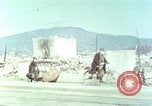
Japanese pedestrians, traffic and trolley cars move past the destroyed Agricultural Society Building in Hiroshima.
Ruins in Hiroshima, Japan after World War II. Japanese pedestrians, traffic and trolley cars move past the destroyed Agricultural Society Building in the background. Several Japanese women dry green seaweed on a line. A group of Japanese children salvages small pieces of tiles. They use a rail spike to pry the tiles loose. A group of Japanese laborers loads corrugated sheet metal scrap on a truck, preparatory to salvage.
CRITICALPAST.COM: About Us | Contact Us | FAQs - How to Order | License Agreement | My Account | My Lightboxes | Shopping Cart | Advanced Search | Featured Collections | Website Terms & Conditions | Privacy Policy ©2026 CriticalPast LLC.
License Agreement |
Terms & Conditions |
Privacy Policy
©2026 CriticalPast LLC.