


 Francais
 Deutsch
 Italiano
Refine Your Search
Yokohama Japan 1945 stock footage and images
- Showing 2707 to 2712 of 7988 results more
more Hide
Hide
A Japanese naval cadet meets his parents and relatives during vacation
Japanese WW2 movie with opening credits indicating it is dedicated to those who died in the World War 2 Hawaii to Malaysia naval battles. Film depicts events from 1930-1937. In 1930: an Imperial Japanese Navy cadet walking down a village road. The cadet passes in front of farm. A young Japanese farm girl rushes from house and waves to the cadet. The girl talks to the cadet. Japanese cadet walking down country road. He calls for his aunt. Cattle grazing in field. A woman, girl, and boy working in a rice paddy farm saw the cadet. The three farmers rise and warmly greet “welcome home” to the cadet. Young cadet returning salute to the farmers, who turned out to be his aunt and cousins. The woman asks her son to accompany the cadet. The farm boy joins his cousin. Cadet and the farm boy walking down country road; boy is carrying suitcase for cadet. View of a Japanese farmhouse belonging to a wealthy family. A farm field is seen in the foreground. Young cadet takes off his shoes before entering the house. Shoji doors traditional interior of a Japanese house. Japanese man and woman at home wearing kimono. The young cadet goes inside and greets his mother. The young cadet bows to his father, and they talk.
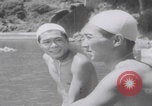
Two Japanese boys swimming in the river; Japanese mother gives son her permission to join the navy
Two Japanese boys sitting beside a river, talking. Japanese boys are seen wearing swimming caps and fundoshi underwear. The younger boy expresses his wish to join the Imperial Japanese Navy as a pilot, but his mother is against it. Boys diving into the river from a rock. Boys climbing up steep rock. Older boy poses before diving into the river from a 40-foot rock. Two boys swimming and talking. Excited Japanese girl in kimono running out of her house. Cadet and old woman talking. Boy runs inside his house to thank his mother for her permission to join the navy. Japanese girl joins her brother, mother, and cousin inside the room. The cadet reassures his aunt.

Snippets from various Japanese movies circa 1937
Snippets from various Japanese movies circa 1937. View of a Japanese coastal town . A Japanese man in western attire talks to his wife at home. The wife, wearing a kimono, looks away from her husband sadly. Cars driving on hilly road. A Japanese woman chatting as she sits between two men in the back of a convertible car in the countryside. A woman talks to a man smoking on a dock. She walks towards a docked cargo ship. Men and children fishing in the countryside. Cars and trains are seen moving on a bridge in the background. A man and a child walk past boats on the beach. The child avoids the waves as they walk.

Shinto pilgrims climbing Mount Fuji
Japanese Shinto pilgrims climbing Mount Fuji through a narrow mountain trail. More pilgrims carrying banners in rural road with view of Mount Fuji in the background.
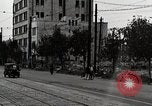
Gutted War Department building in Tokyo
Bombing damage in Tokyo soon after the end of World War 2. Samurai district showing remains of small shops and Geisha houses. Square block destroyed. Gutted war department building and retaining prison. Damage to navy building. Entrance to imperial palace and surrounding area. U.S. sailors stand at entrance to imperial palace.
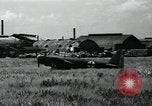
Japanese planes parked in airfield of Tokyo Municipal Airport after WW2
An assortment of Japanese planes scattered all over in the grass at Tokyo municipal airport. Included are a Japanese "Shiragiku" plane with green cross on side. A helicopter flying by. A 2PA-B3 plane built by Seversky corporation (based on the P35 fighter, purchased pre-war as a long-range escort fighter but sold off for civil use). Japanese "hickory" plane. Scrapped Douglas DC5 transport . Several DC-3s and other unidentified aircraft are also seen. Salvaged Japanese planes from World War II. Hangars and airfield. An American C-47 and small high wing monoplane with radial engine (possibly a UC-81).Transport ship on bay and a Japanese Mitsubishi C5M "Babs" reconnaissance aircraft.
CRITICALPAST.COM: About Us | Contact Us | FAQs - How to Order | License Agreement | My Account | My Lightboxes | Shopping Cart | Advanced Search | Featured Collections | Website Terms & Conditions | Privacy Policy ©2026 CriticalPast LLC.
License Agreement |
Terms & Conditions |
Privacy Policy
©2026 CriticalPast LLC.