


 Francais
 Deutsch
 Italiano
Refine Your Search
Yokohama Japan 1945 stock footage and images
- Showing 3079 to 3084 of 7988 results more
more Hide
Hide
Explosions in the city and people stand with soldiers on the street in Manila, Philippines.
View of the buildings, houses, streets and trees in Manila, Philippines. Explosions in the city. Smoke arises from the explosions. Soldiers on military vehicles on the street. Jeeps parked in front of a building. Wreckage in the building. People gather to watch the wreckage. Smoke arises from fire in the background. Men raise the United States flag on the terrace of a building. Houses in a field. High altitude view of the wreckage in the city. Huts and shacks on the field. Liberated women cook food outside the huts after liberation from internment. Men and children sit and eat the food. Children play. Liberated internee men seated on chairs smoke and talk amongst themselves. Liberated civilian internees mingle with United States troops in the streets of the city. Girls come out of a building and walk on the street. They talk amongst themselves. Children view a tank and peer inside it from atop. A man and a woman talk. A soldier holds two children and talk to them. Starved and emaciated freed American prisoner from a camp stands with soldiers near a tank and smokes. (World War II period).
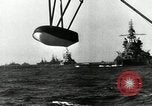
United States troops land and the Filipino guerrillas gather to greet them in Luzon, Philippines (WW2)
United States troops land on Luzon from Lingayen Gulf, Philippines during World War II. Battleships at sea. A map shows the target area of the ships. Troops land on the surface. Happy Filipino guerrillas and civilians gather to greet them. Soldiers in Jeeps. Filipino men hold the United States flags in hand. Filipino guerrillas are given clothes and arms. A United States soldier helps a Filipino guerrilla put on a new shirt. Filipino guerrillas receive new weapons. United Sates soldiers ride a cart pulled by a carabao. Men and children march with flags. Houses along the sides of the street. Trees in the background. Infantry advances rapidly through town. People watch the soldiers. Soldiers in a field during the war. Smoke arises from bombardment in the mountains of Luzon. Ground soldiers and sky soldiers work together. Airplanes drop bombs on the field. Soldiers discuss a map. They discuss plans for the operation.
United States Army on a rescue mission liberates United States and Filipino prisoners of war at Cabanatuan, Philippines
A patrol liberates United States and Filipino prisoners of war in the Philippines during World War II. U.S.. Army soldiers fire artillery and mortars on battlefield. Smoke arises from firing. Soldiers approach a chaplain, one by one, to receive prayers and pardon. Soldiers load shells in various artillery and fire. They move toward a hillside and advance up the hill. Soldiers passing bodies of dead soldiers. Soldiers carrying wounded back downhill on stretchers. Graphic shows movement of U.S. forces down through plains toward Cabantuan prisoner of war camp. Allied guerilla forces and U.S. Army Rangers move on a rescue mission 25 miles behind enemy lines, moving through fields and jungle areas. Staged scene of a soldier firing through a gate lock and entering the gate of the prisoners' camp. Soldiers who were victims of the Bataan Death March, now freed from their prisoner camp, walk in columns with Army escorts. Many are smiling. Some are emaciated. Local women and children watch them. Another group of liberated prisoners pass by in the back of a truck.
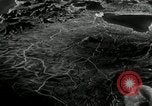
A skirmish rages at Rizal Stadium and dead bodies of the soldiers in Manila, Philippines (WW2)
United States soldiers marches south from Tarlac to Manila. Map of Manila and surrounding areas under United States control. A sign reads “Notice Picking Flowers Absolutely Prohibited”. Soldiers crawl under a hole in a wall. A skirmish rages in Rizal Stadium (Rizal Memorial Sports Complex, Adriatico St, Malate, Maynila, 1004 Kalakhang Maynila), a baseball stadium in Malate, Manila. Soldiers walk on streets of Escolta, the business district of Manila. They cross a bridge on a waterway. They move on tanks in the field and pass a waterway. Animated map shows captured parts of Manila. Soldiers in the wrecked stadium. Soldiers fire in the stadium. Smoke arises due to firing. Soldiers walk on the street and engage Japanese in house to house and building to building combat. Buildings and houses along the sides of the street. Soldiers fire on the street. Wounded Japanese soldier looks up at U.S. Army soldiers near a street corner. Wounded American soldiers carried by fellow U.S. soldiers to safety and to receive first aid from medics. Dead soldiers on the street. Dead body of a soldier near barricades. (World War II period).
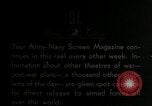
U.S. prisoners of war rescued in the Philippines and returning home to the United States at end of World War 2
Families at harbor waiting for the troop transport ships. United States soldiers and liberated prisoners of war on ship. San Francisco's Golden Gate Bridge and harbor in background with Coit Tower atop Telegraph Hill. Troop ships arrive and crowd cheers. Japanese soldiers bonzai cheer and Japanese forces bomb and take control of Corregidor. Japanese planes bombing. Ambulance carries wounded. United States soldier loses his arm during a Japanese aerial attack on Corregidor in 1942. Japanese soldiers guard American prisoner of war soldiers and escort them into prison camp in Manila (soldier narrating says it was Bilibid jail). General Wainwright surrendering in Corregidor in May 1942. United States flag lowered by Japanese soldiers and Japanese flag is hoisted. Wreckage of bombed U.S. facilities in Philippines. Japanese propaganda film showing care for wounded American soldiers on hospital beds. U.S. Army prisoners fo war eat food. Wounded American soldiers walk with crutches on the grounds of the prison camp. Bataan Death March of the emaciated prisoners. American military prisoners at Cabanatuan labor and sleep on open air bunks. Scene of U.S. Army training early in World War 2 with troops in a field setting a machine gun emplacement to fire at rolling trucks relabeled as "Tank". Japanese propaganda newsreels showing Japanese military success in Philippines and Japanese forces in the Aleutian Islands. Aerial view formation of U.S. Army Air Force B-25 bombers in the sky. Aerial side view of American bomber aircraft and bombs away view. Navy bombing from ships. General MacArthur returns to Philippines and wades ashore. Philippine guerrillas and U.S. troops in battle to retake Philippines. U.S. prisoners of war liberated and freed and at 92nd Evacuation Hospital Cebu. Released prisoners on ships to America. WAC women hand out mail. Soldiers write telegram wires announcing arrival. Ship docks in San Francisco. Prisoners reunite with happy families and crowds on streets cheer their arrival. Soldiers and civilians walk on Market Street in San Francisco. Welcome home parade for San Francisco soldiers during WWII. Soldiers waving from buses in parade. Soldier in front of Marina Junior High School, 3500 Fillmore Street. One armed, disabled soldier with parents views photo album.

Ernie Pyle reports in newspaper about why he likes Albuquerque, New Mexico.
Tribute to war correspondent, Ernie Pyle in New Mexico. Newspaper column by Ernie Pyle, called "The ROVING REPORTER." In it Pyle mentions many places he could live, including the Pacific Northwest, New England, the Mississippi Gulf Coast, Key West, California, and Honolulu. Images of these places are shown. Farmers loading hay in the Northwest; A church in New England; A paddle wheeler ship on the Mississippi River; A seaplane coming in to land on the water at Key West, Florida; Aerial glimpse of Golden Gate Bridge; the Diamond Head mountain in Honolulu. But Pyle chose to live in Albuquerque New Mexico. View of a passenger train arriving at station in Albuquerque. The street and house where Ernie Pyle lived A woman on the porch of the house petting Pyle's dog Cheetah. Inside the house are views of his study, books, and photographic memorabilia. View of Pyle with American soldiers in World War 2. American troops marching in war zone. Troops trying to keep warm in snowy conditions, and advancing in street fighting and other places, firing at hidden enemies Scene shifts back to Pyle’s study at home and focuses on a map of New Mexico. Glimpse of Santa Fe and its Capitol building, and its old Palace of the Governors. Persons on horseback riding in the town of Taos, and views of its Pueblo village. Woman seated in village painting a scene of the village. Gravestone of famous Frontier Scout, Kit Carson. Street scene in downtown Gallup, New Mexico. Coal being moved in open rail cars from a mine near Gallup, New Mexico. Street scene in Roswell, New Mexico, and view of the New Mexico Military Institute with cadets marching in a field. View of Silver City, and of various metal ores being mined near there. Carlsbad Caverns, seen with visitors on a walkway in front of a huge opening and views inside the caverns where visiting children are singing the religious hymn "Rock of Ages." Views, back again to Ernie Pyle’s home, its study and living room, with his dog, named Cheetah, sitting on one of the chairs.
CRITICALPAST.COM: About Us | Contact Us | FAQs - How to Order | License Agreement | My Account | My Lightboxes | Shopping Cart | Advanced Search | Featured Collections | Website Terms & Conditions | Privacy Policy ©2026 CriticalPast LLC.
License Agreement |
Terms & Conditions |
Privacy Policy
©2026 CriticalPast LLC.