


 Francais
 Deutsch
 Italiano
Refine Your Search
Yokohama Japan 1945 stock footage and images
- Showing 3367 to 3372 of 7988 results more
more Hide
Hide
Troopers of the 28th Constabulary Squad of the United States Army leave a command post at Bad Steben near Hof in Germany.
Troopers of the 28th Constabulary Squad of the United States Army leave a command post at Bad Steben near Hof in Germany. Convoy of jeeps and M-8 armored vehicles moves through the streets of Bad Steben and then to the country side. It moves past a station on dusty roads in Lichtenberg. Jeeps and armored vehicle take position on side of a bridge. Squad reaches the Russian border. A signboard in Russian warns against unauthorized crossing.
Nazi concentration camp in Dachau Germany visited by General Patch and other soldiers of the United States Army.
Officials of the Allied military at a Nazi concentration camp in Dachau in Germany. A soldiers opens the leakage proof door of a gas chamber. Sign over the door in German 'Shower Bath'. Pile of starved dead bodies in room adjoining the gas chamber. General Alexander Patch of the United States Army and other soldiers at the camp. (World War II period).
Christian altars and religious objects at liberated Dachau concentration camp in Germany, at end of World War II
Dachau concentration camp in Germany, after liberation in final days of World War 2. Sign on railroad station building 'Dachau'. Free standing corner post decorated with figures on top, showing three German soldiers in one direction and a German soldier pointing two German musicians in the other direction. One musician has a bass fiddle on his back and carries a folded umbrella. The other carries an accordion. Sign on the entrance to the Concentration Camp: 'Quarantine, Typhus. This concentration camp is off limits to all civil and military personnel. By order of General Patch, CG, Seventh Army'. Christian altars with Mother Mary, a monstrance, and an altar card at the concentration camp. Pile of dead bodies of victims of Nazi atrocities carried in horse carts by German civilians wearing gas masks.
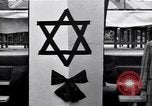
U.S. Army Chaplain (Rabbi) Captain David Max Eichhorn arrives at Dachau concentration camp in Germany
A Nazi concentration camp in Dachau in Germany. Funeral ceremony for victims of the camp. Star of David at a ceremonial site. U.S. Army chaplain (Rabbi) Captain David Max Eichhorn, steps out of a jeep and is greeted by inmates. Male inmates attend funeral services. Inmates in tears. One inmate speaks . Flags behind the ceremonial place.
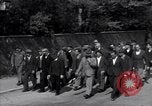
Piles of dead bodies drawn by horse carts for funeral ceremony at Dachau concentration camp (WW2)
Removal of bodies from Dachau concentration camp after Allied liberation in World War II. Funeral ceremony of the victims of the camp. Civilian men walking in front of horse carts carrying dead bodies. Carts carry dead bodies for a funeral ceremony. Piles of dead bodies in some of the carts are covered by clothes. Several carts on the road.
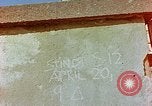
Tanks and infantry of the United States Army enter Leipzig in Germany (WW2)
Tanks of the United States Army and infantry men drive in the streets of Leipzig in Germany after taking it over during World War II. Signboard 'Leipzig 69th Infantry Division'. A dead German military officer's body covered with overcoat. Dead bodies of Deputy Mayor of Leipzig, his wife and daughter. They were Deputy Mayor and Municipal Treasurer Dr. jur. Ernst Kurt Lisso, at his desk, his wife Renate Stephanie, in chair, and their daughter Regina Lisso after committing suicide by cyanide in the Leipzig New Town Hall (Neues Rathaus Martin-Luther-Ring 4, 04109 Leipzig, Germany). Damaged buildings in Leipzig. Scattered waste and debris of demolished buildings from Allied bombing.
CRITICALPAST.COM: About Us | Contact Us | FAQs - How to Order | License Agreement | My Account | My Lightboxes | Shopping Cart | Advanced Search | Featured Collections | Website Terms & Conditions | Privacy Policy ©2026 CriticalPast LLC.
License Agreement |
Terms & Conditions |
Privacy Policy
©2026 CriticalPast LLC.