


 Francais
 Deutsch
 Italiano
Refine Your Search
Yokohama Japan 1945 stock footage and images
- Showing 385 to 390 of 7988 results more
more Hide
Hide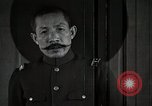
Japanese General Baron Sadao Araki speaks, and animated maps show danger of attacks on Japan and its occupied territories.
Film opens with closeup of Japanese general, Baron Sadao Araki, speaking. Behind him is a huge Japanese flag so that his head is silhouetted against its huge red ball. His image fades out and a map of Japan and Asia appears. Sadao Araki continues to narrate. The map shows animated arrows directed from Russia southward toward Japanese held Manchuria (Manchukuo) and from India northward. The arrows converge and are joined by arrows from the sea. All are directed against Japan. The message clearly speaks to need for Japan to be ready to protect against attacks by others. Back to closeup of Baron Sadao Araki speaking. Then flags of world nations are shown with Japan's rising taller and larger than all the rest. Next a map of Japan and its occupied territories in Manchukuo, and Korea, with arrows from foes threatening them. Japan seems to shudder on the animated map.
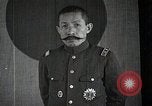
Japanese film using various kinds of imagery and analogies to illustrate Japan's National frustrations in 1933.
General of the Imperial Japanese Army Baron Sadao Araki speaks for a while, with the National flag of Japan (Sun-mark flag) in the background. A group of Japanese hikers is seen on the windy slope of a snow-covered mountain. Camera pans across the snowy scene. Closeups of individual hikers, who seem intimidated by the prospect of continuing their journey. Next, they are seen climbing the mountain, using picks, and lifelines, in an experienced manner. As the leader reaches the summit, he secures their lifeline and assists those behind as they arrive. Shadow of the leader is cast on the snow at the summit. As they cross a Crevasse, one of the climbers falls in, but his descent is stopped by the lifeline. Others work securing the line and pulling him up. With their help, he gains footing up the side of the crevasse and climbs out. Scene shifts completely to the Palace of Nations, Geneva, Switzerland, home of the League of Nations. Inside, Japan's chief delegate, Foreign Minister Yosuke Matsuoka, is seen objecting to the League's report charging Japan with responsibility for the hostilities in Manchuria. Animated map shows Europe with arrow pointing to Geneva, Switzerland. A cartoon explosion rises there and drifts East to encircle Japan in its smoke, transforming into a steel chain around Japan and environs. It shrinks, successively tightening its grip, choking Japan into its home islands, where the Japanese national Sun-mark flag flies. A train arrives at a crowded station. The crowd contains many persons displaying protest banners and waving small Japanese National flags. Many police are amongst the crowd, maintaining order. Next, Minister of Foreign Affairs, Yosuke Matsuoka, arrives from Geneva to report to the Emperor and Government. He steps from a limousine, and walks across an esplanade, followed by many officials. He and they, all bow toward the Imperial Palace, as a photographer takes their picture. For a moment, Yosuke Matsuoka holds a handkerchief to his face as he proceeds across the esplanade. The animated map appears again, this time showing the encircling cartoon smoke ring looping out to enclose part of Manchuria, where the flag of Manchukuo now flies. Scene shifts back to the mountain climbers, who now are descending from the summit. View of clouds below them as they stand with arms raised celebrating their accomplishment with what appears to be three "Banzai" shouts. Final scene is a view from moving railroad train of Mount Fuji and other views of Mount Fuji.

Japan's possible shortages of material for clothing in World War 2. Japanese domestic production of cotton, wool, and silk
Illustrated discussion of Japan's limitations in natural resources prior to World War II. Workers shown in textile mills which employed more than half of Japan's factory workers prior to the war, satisfying domestic and export needs. Analysis of the natural resources. Cotton thread is rolled on the spindles in the Textile mills in Japan. Textile mills produce fabric in Japan. Japanese women work in the textile mills. Bales of raw cotton imported from Japanese possessions in Korea and Formosa, and from the United States,India, Brazil and China. They are transported via horse carts and manually pushed on small rail carts to storage buildings for stockpiling. People cultivating some of the small amount of cotton grown in Japan. Horses and cattle used to pull plows in rice paddies. Pigs used as scavengers. Woolen fabric is produced from wool. Some of Japan's very few sheep being sheared for wool. Women working in fields of mulberry trees where silk worms flourish on their leaves. Views of the silk being spun onto spindles in a factory. Silk fabrics being stacked. Illustrated summary highlights Japanese domestic shortages of cotton, wool, and leather needed for clothing.
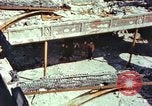
A catholic priest kneels in prayer at a church in Hiroshima, Japan.
A Catholic church (Jesuit Church of Our Lady of the Assumption Hiroshima, Japan) and newly constructed houses in Hiroshima, Japan. A Catholic Jesuit priest walks from underneath a choir loft, at his side are four Japanese children. The Jesuit priest kneels in prayer. A church tower with debris in the foreground. The priest looks around the gutted interior while at his side stand the four children. A small barley field amid the ruins along the south east section of Hiroshima being tended by the owner. Newly constructed houses built on the former site of Japanese Transport Regiment Barracks which is located north of Gokoku Shrine (21-2 Motomachi, Naka Ward, Hiroshima, 730-0011, Japan) in Hiroshima.A Catholic church (Jesuit Church of Our Lady of the Assumption Hiroshima, Japan) and newly constructed houses in Hiroshima, Japan. A Catholic Jesuit priest walks from underneath a choir loft, at his side are four Japanese children. The Jesuit priest kneels in prayer. A church tower with debris in the foreground. The priest looks around the gutted interior while at his side stand the four children. A small barley field amid the ruins along the south east section of Hiroshima being tended by the owner. Newly constructed houses built on the former site of Japanese Transport Regiment Barracks which is located north of Gokoku Shrine (21-2 Motomachi, Naka Ward, Hiroshima, 730-0011, Japan) in Hiroshima.A Catholic church (Jesuit Church of Our Lady of the Assumption Hiroshima, Japan) and newly constructed houses in Hiroshima, Japan. A Catholic Jesuit priest walks from underneath a choir loft, at his side are four Japanese children. The Jesuit priest kneels in prayer. A church tower with debris in the foreground. The priest looks around the gutted interior while at his side stand the four children. A small barley field amid the ruins along the south east section of Hiroshima being tended by the owner. Newly constructed houses built on the former site of Japanese Transport Regiment Barracks which is located north of Gokoku Shrine (21-2 Motomachi, Naka Ward, Hiroshima, 730-0011, Japan) in Hiroshima.
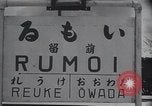
Japan ground self defense forces receive training provided by Japanese and United States government jointly in Japan.
Members of the Japan ground self defense force at Rumoi, Hokkaido in Japan for ski training. Ski troops go carrying ski equipment in their hands. Dog seen with troops. Steam locomotive train arrives. Ski troops board railroad train. Smoke emits from engine. Train leaves. Ski troops receive training for wearing ski gear. Ski troops in sliding actions. Snow covered mountains in the background. Ski troops practice traveling on the hill carrying machine guns. They travel straight down the hill. They dig the ice and set up mortars. Ski infantry rifles are wrapped in white cloth. Brigadier General Ned D. Moore, Chief of the army section of United States Military Advisory Group, talks about training of selected Japanese officers, in the United States. Japan ground self defense forces march in parade.
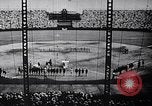
US baseball players visit Japan in 1931; also anti-Japanese propaganda circa 1941-1942 during World War 2.
Huge crowd attends baseball game between visiting American players and Japanese team in Tokyo, 1931. Lou Gehrig, Al Simmons and Lefty Grove mentioned by announcer but not seen. American representatives walk out to pitcher's mound to greet pitcher. Shots of Babe Ruth hitting. Shots of Japanese player rounding third, sliding safely into home. Film suddenly morphs into anti-Japanese propaganda circa 1941-1942; shows Japanese newspaper publisher who was murdered. Scenes of sumo wresting and judo and kendo seen and compared to alleged acts of Japanese diplomatic and military treachery and spying. Shots of fishermen, tourists, barbers and others said to be spies and soldiers for Tokyo. Closeup of a Japanese man gardening. Japanese men on small fishing boats, raising boat sails, and pulling in heavy loads of tuna fish in nets. Japanese tourists supposedly taking photographs of American ships in Hawaii. Female Japanese barbers giving haircuts. Japanese military officials in Japan organizing papers, films, and incoming information. Japanese industrialist figure emerging from car. Scenes of Japanese industry supporting war preparations: Exterior views of Japanese factories in Osaka, textile mill operations in Tokyo, chemical plant operations in Nagoya, steel mills, and a large newly completed ship being launched in Nagasaki. Overhead view of steel mill operations. View of a slum town area in Japan and simple living arrangements of Japanese citizens. Japanese laborers at work in small home factories for textiles, pottery, and other goods, said to be in "semi-slavery." Workers include men, women, and child labor. Shows production of goods said to be produced in other countries that are pirated, mislabeled by Japan, and dumped at low prices abroad to undercut competitors. Products shown include factories and production lines for spark plugs, scotch whiskey, matches, silk, cotton, bottled beer, toothbrushes, hair brushes, hair combs, and American flags produced in Japan and offered for sale at lowest prices in the United States. Shipping dock areas in Japan showing large ships at docks, cranes in use, and importing of oil, rubber, scrap iron, tin for war materiel.
CRITICALPAST.COM: About Us | Contact Us | FAQs - How to Order | License Agreement | My Account | My Lightboxes | Shopping Cart | Advanced Search | Featured Collections | Website Terms & Conditions | Privacy Policy ©2026 CriticalPast LLC.
License Agreement |
Terms & Conditions |
Privacy Policy
©2026 CriticalPast LLC.