


 Francais
 Deutsch
 Italiano
Refine Your Search
Fort-monroe stock footage and images
- Showing 247 to 252 of 771 results more
more Hide
Hide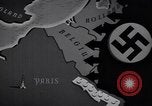
German invasion of Belgium, Holland, and France. Fall of Fort Eben Emae during World War II
Animated map depicts German Westward military thrusts into Holland and Belgium and toward France in World War 2. German armor units passing dragons teeth defenses, from behind. German troops riding atop tanks and trucks towing artillery. German Stuka dive bomber aircraft. Map showing Albert Canal, Meuse River, and details of Fort Eben Emael. German Paratroopers dropping from Ju-52 aircraft. Closeup of Ju-87 Stuka dive bomber. German troops using flame thrower. German armed engineer troops cross a road near a bridge and cross Meuse River in inflated boats, as Stukas drop bombs. German troops advance behind battery of flame throwers. German soldier places demolition charge. Huge explosion as it destroys the Fort blockhouse. Allied troops cross French-Belgian border to confront German forces. French Lorraine 37L armored vehicles. Roads filled by Belgian civilian refugees with their belongings. Animated cartoon of German planes bombing Belgian villages, strafing refugees, so they would clog roads and block Allied advance. Views of clogged roads and German bombings. He-111 dropping bombs. Me-109s strafing refugees who take cover in ditches. views from inside German bombers. Montage of destruction by German planes. Wounded child cries out, traumatized, in a hospital bed. Another wounded and bandaged child is seen in a hospital bed. A nun nurse sits by the bed of a wounded child. Montage of refugee children leaving war zones atop piles of belongings in trucks, and children in prams and carts, and in strollers and horse carts evacuating battle areas. Map shows German plan to attack through Ardennes Forest. German engineers sliding down steep hills, fording rivers, and laying wire for demolitions. German troops setting up machine gun and artillery placements and firing at opposing troops. German tanks and troops going through the Ardennes to the Meuse River, where Stukas dive bomb French positions. German artillery barrage across the Meuse. German troops cross the river with inflated boats. German engineers building pontoon bridges. Shelling by Allies causing explosions beside German troops building bridges. German Armor crossing the bridges and entering France in Battle of France.
Dedication ceremony of the U.S. Army Felker Heliport at Fort Eustis, Virginia.
Aerial view of helicopters at Fort Eustis, Virginia, with snow on the ground. Crowd gathered inside a large hangar. The widow of Alfred C. Felker, wearing a corsage, stands with his father, as Army officers salute in tribute at the dedication of the Felker heliport. A young boy who is Felker's young son removes the covering from the dedication plaque, which reads:"U.S. Army Fort Eustis Virginia, Felker Heliport in Memory of WOJG Alfred C. Felker 1929-1953." A Piasecki H-21 Workhorse or Shawnee helicopter takes off from the snow covered airfield. Mrs. Felker is a passenger on one of two smaller helicopters that circle around one another and then land.
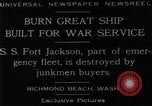
The S.S. Fort Jackson is burned by junk salvagers.
The ship S.S. Fort Jackson, part of the U.S. emergency fleet in 1929, is destroyed by salvage buyers at Richmond Beach in Washington. Flames and smoke rising as the S.S. Fort Jackson falls to pieces.
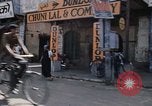
Indian people outside the Red Fort wall in Delhi, India.
Indian men ride bicycle on street in Delhi, India. Local shops in the background. View of the domes of the Red Fort (Netaji Subhash Marg, Lal Qila, Chandni Chowk, New Delhi, Delhi 110006, India). Local people walk on the street outside the monument. Ruins of a building with the Red Fort in the background.
Army Corps of Camouflage Engineers builds camouflage at Fort Heath in Massachusetts.
Camouflage engineers at Fort Heath in Massachusetts during World War 2. Aerial view of Fort Heath with its Coastal areas. U.S. Army Corps of Camouflage Engineers builds camouflage for coastal defense battery installations. Engineers build gun emplacement and concealment using fishnets and other material to deceive enemy. They prepare camouflage paint and paint it on a roof. Tree branch brought in by army truck.
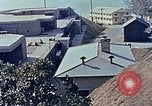
Camouflage Engineers camouflage buildings and bridges with camouflaged nets at Fort Heath in Massachusetts.
Camouflage engineers at Fort Heath in Massachusetts. U.S. Army Corps of Camouflage Engineers look at maps. Housing and other structures camouflaged to resemble installations. A group of engineers builds fishnets. They cut strips and tie them onto fishnet to build a camouflage. Engineers work on machine cutting iron rods, welding and fitting instruments. These iron rods are placed near a bridge. The iron rod structure placed on the ground. Engineers make wooden boxes for camouflage. Camouflage nets placed over a bridge. Buildings, bridges and other neighboring area camouflaged. Engineers tie camouflaged nets with strings and rods. Engineers stand next to artillery. Building next to coastal area. World War 2 era aerial view of Fort Heath with camouflaged areas.