


 Francais
 Deutsch
 Italiano
Refine Your Search
Italy airfields stock footage and images
- Showing 2515 to 2520 of 3777 results more
more Hide
Hide
Various experimental and prototype U.S. Air Force aircraft being developed and tested at Wright Field in Ohio.
Models and drawings of futuristic planes in the Air Force Laboratories at Wright Field, Ohio. Scenes of XP-67 aircraft in flight. A Northrup N9MB Experimental Flying Wing aircraft taxiing and in flight. A larger version, the XB-35 aircraft under construction. The XB-35 taking off. P-82 aircraft taxiing and taking off. Pilot in P-82. P-82 in flight. The XB-36 aircraft being assembled for its initial test flight, at the Convair factory in Fort Worth, Texas. XB-36 taking off from the Convair factory runway, at Fort Worth, Texas, and then in flight, with landing gear (of two 110-inch single tires) extended. View from above it as XB-36 lands at Eglin Air Field (one of only three airfields capable of bearing its high pressure wheel loading, which required concrete 22 inches thick). Officers standing by the tire of the XB-36 aircraft . B-50 aircraft taxiing and taking off. B-50 buzzing field. Demonstration of variable pitch propeller operation, including the blades going into full feather position. B-50 in flight on one engine, with props on engines 1,3, and 4 feathered. Testing landing gear on C-69 aircraft. C-69 landing. Testing landing gear of B-32 aircraft. Wind tunnels. Series of shots of wind tunnel.
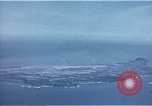
P-51s from Iwo Jima escort B-29s from Marianas Islands on bombing mission against Japan in Second World War
U.S. Army Air Force VII Fighter Command P-51s operating bomber escort missions from Iwo Jima, in World War II. Aerial views of Iwo Jima and airfield. A military cemetery. Several dump trucks working on ground improvements. View of Army camp. Long line of parked P-51s. Three officers looking at chart depicting B-29 mission paths from Marianas Islands to Japan and back. P-51 starting engines. Name on one aircraft is 'The Deacon'. Aircraft pulls out of parking area, second one follows. Formation of B-29s, including some from Saipan-based 73rd Bomb Wing, 499th Bomb Group (Tail Code "V"). Views of interior of a B-29 with crew members at their duty stations. P-51 fighter escorts join up with the bombers. View of escorting fighters from inside B-29 looking through gunners bubble. Formation begins to encounter Japanese Flak. P-51s peel off and are seen maneuvering near the B-29s. Views of gunner rotating turret on a bomber.
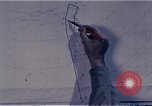
U.S. B-29s bombing Japan mainland from Marianas Bases during Second World War
Numerous B-29 bomber aircraft operating against Japanese targets from Northern Marianas Islands bases during World War II in the Pacific. U.S. Army Air Force bombers are seen from following units: Guam-based 314th Bomb Wing, 39th Bomb Group (Tail Code "P"), 29th Bomb Group (Tail Code "O") and 330th Bomb Group (Tail Code "K"); Tinian-based 313th Bomb Wing, 6th Bomb Group (Tail Code"R"); Saipan-based 73rd Bomb Wing, 497th Bomb Group (Tail Code "A"). Aircraft of these units are all seen taking off on missions. View from inside cockpit of a B-29 aircraft taking off. Pilot calls for and signals "gear up" to copilot. View from nose of the aircraft as it flies low over some ships. On airfield, a ground controller/dispatcher is seen on radio telephone. View aboard a B-29, during mission, as bombardier signals that he has control of the B-29. Large clusters of incendiary bombs dropping from B-29s. Bombs away views of many bombs dropping from open bomb bay doors. Explosions and flashes on ground as bombs impact Japanese enemy targets. Huge clouds of smoke rise and obscure the scene after the strikes. B-29s returning to land after the mission. View from nose as a B-29 touches down and taxis on active runway. Crew members discussing mission in front of parked B-29. Final scene is of formation of B-29s from Saipan-based 73rd Bomb Wing, 499th Bomb Group (Tail Code "T").
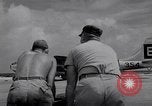
Atomic device being loaded on B-29 Superfortress, "Dave's Dream," for operation Crossroads Test Able at Bikini Atoll
Two airmen pushing a trolley with contents covered by canvas. They are moving it towards B-29 Superfortress, "Dave's Dream," sitting on the airfield ramp, surrounded by armed Military Police guards. Airmen cover the bomb bay door and lower part of the B-29 with a canvas to prevent the nuclear device from being seen during loading. The canvases are removed after loading and the aircraft's engines are started. Bomb bay doors are then closed.
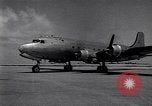
Operation Cross Roads. Aircraft brings participants and official observers to the Marshall Islands
Air Transport Command C-54 aircraft, arrives and taxis to parking place on ramp at airfield in the Marshall Islands, related to the nuclear tests at Bikini Atoll (Operations Crossroads). When the door opens, An officer scurries down the stairway to join two others standing at foot of the stairs ready to greet arriving passengers. Military officers are gathered on the ramp, including Air Force General Henry (Hap) Arnold. Many military and civilian passengers deplane and are greeted and mingle with those on the ramp. Some distance away, base personnel are gathered , including several women, to watch the activity. The only base buildings seen are Quonset huts and buildings contrived from them. The first of several military staff cars drives away carrying the arriving passengers.
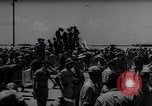
Operation Crossroads. Activities on ramp after return of B-29 "Dave's Dream" from Test Able atomic bomb drop at Bikini Atoll
Military personnel swarm about on the ramp of airfield in Marshall Islands, where B-29, "Dave's Dream," is parked after returning from the Able Test drop of atomic bomb on Bikini Atoll, as part of Operation Crossroads atomic testing. Seen is Major General Curtis Lemay, Commander of the 20th Air Force, to which the 509th Bombardment Group its atomic bombers (B-29s) were assigned. He is being interviewed in front of another B-29 atomic bomber, with symbol of atomic explosion on its nose area and the name "Atomizer" written on it.
CRITICALPAST.COM: About Us | Contact Us | FAQs - How to Order | License Agreement | My Account | My Lightboxes | Shopping Cart | Advanced Search | Featured Collections | Website Terms & Conditions | Privacy Policy ©2026 CriticalPast LLC.
License Agreement |
Terms & Conditions |
Privacy Policy
©2026 CriticalPast LLC.