


 Francais
 Deutsch
 Italiano
Refine Your Search
Italy airfields stock footage and images
- Showing 2623 to 2628 of 3777 results more
more Hide
Hide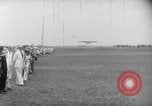
French General De Lattre De Tasigny and President Tran Van Nuu visit French forces in Dong-Trieu, Vietnam.
French General De Lattre De Tasigny and President Tran Van Nuu in Dong-Trieu, Vietnam. Two Airplanes land on an airfield, bringing French General De Lattre De Tasigny and Vietnamese President Tran Van Nuu on visit to Dong-Trieu. The officials inspect the troops. They also greet school children and athletic societies participating in the review. French Troops including Colonial units parade. School children also walk past the review area while military band plays.
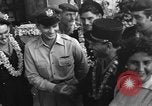
Wounded French troops are welcomed at Hickam Air Force Base, Oahu, Hawaiian Territory, on way home from Indochina
A U.S. Air Force officer shakes hands with a French officer in reception center canteen at Hickam Air Force Base,Oahu, Hawaiian Territory, as French troops pass through on their way home from Indochina. A civilian converses with a wounded French soldier, on a stretcher. A U.S. Navy admiral greets wounded soldiers. The hangar is seen crowded with French troops and American greeters. View shifts to interior of a Red Cross bus set up as an ambulance. Nurses and other medical staff are seen in the bus. U.S. Airmen lift wounded French soldiers into the ambulance bus. In next scene, military police on motorcycles lead two ambulance buses out a gate from the airfield. In another scene where wounded are being loaded aboard an ambulance bus, Hula dancers stand beside the bus and entertain them. The loaded bus moves out with its rear open and medics attending to the wounded passengers. Back in the Air Evac Canteen, greeters and French troops continue to mingle. Closeup of a wounded French soldier on a stretcher, being greeted. A microphone is held near as he converses with the civilian and the admiral, seen earlier.
USAAF XX Bomber Command B-29s attack Japanese positions on Formosa in World War II
U.S. Army Air Forces XX Bomber Command Operations during World War 2. A Boeing B-29-10-BW Superfortress, number 42-6347, named "King Size," of the 462nd Bombardment Group, 769th Bombardment Squadron. It is seen here, at their forward operating base on Kiunglai Airfield, China. Tents are seen near the flight line. Numerous bombs are lined up on the ground ready to be loaded aboard the bomber. A B-29 taking off at nightfall. A formation of B-29s in flight. Bombs being dropped over Japanese installations at Hatto, Formosa (aka Taiwan). View of B-29 landing after the mission. (Note. Formosa was a Japanese colonial territory from 1895 to 1945.)
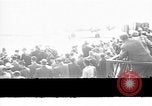
U.S. President Harry Truman lands at Military Airbase. At White House Rose Garden, Truman speaks near bond drive flower sign.
President Harry Truman is aboard the VC-118 presidential aircraft (Independence) as it arrives at U.S. Military airfield and taxis in to park. Across the runway in far background, a formation of military personnel can be seen. President Truman descends steps from the aircraft, followed by flag officers of the Air Force, Army and Navy. He is greeted by officials, including Secretary of State Dean Acheson. . A crowd is gathered to welcome the President. Photographers take pictures. Led by a motorcycle escort, the President drives away in a white convertible limousine, accompanied by Secret Service agents. Unrelated scenes in the White House Rose Garden. A sign made completely of flowers reads: Make today your D-Day, buy United States Defense Bonds. President Harry Truman, wearing a flower in his lapel, stands next to the flower sign and speaks briefly. A group of women listen to the President.
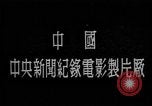
UN Secretary General Dag Hammarskjold meets Premier Zhou Enlai in Beijing to seek release of imprisoned airmen.
People’s Republic of China officials at an airfield. A DC-3 passenger aircraft taxis in and parks. United Nations Secretary General Dag Hammarskjold hurries down steps of the aircraft and is greeted by Chinese officials. Hammarskjold shakes hands with many of them, and then drives off in a car. The Secretary General is on a mission to secure the release of fifteen American fliers being held by the Chinese, who do not consider them Prisoners of War to be repatriated, following the Korean War. He is seen later at a dinner reception in a hall with many Chinese officials in attendance. Chinese Premier Zhou Enlai and Secretary General Hammarskjold spend considerable time conversing, with help of translator. They toast with several other officials and appear to have a relaxed and pleasant meeting.

Gulf of Tonkin response: President Johnson announces U.S. action as United States soldiers and aircraft are rushed to Vietnam
United States planes and soldiers are rushed to Vietnam, responding to the Gulf of Tonkin crisis. U.S. Destroyer Maddox seen underway in the gulf of North Vietnam following reported skirmish with North Vietnamese torpedo boats (the "Maddox Incident.") Narrator indicates U.S. war planes from two carriers avenged the unwarranted Red communist assault with 64 sorties against North Vietnam. An airman boards a U.S. aircraft. Night view of the White House in Washington DC. President Lyndon Johnson addresses the American people in a midnight speech on August 4, 1964 describing U.S. actions in response to the Gulf of Tonkin incident. Scenes of South Vietnamese women and children evacuees looking exhausted and scared beside nearby American helicopters. The President's speech continues, including, "We Americans know, although others appear to forget, the risks of spreading conflict. We still seek no wider war." View of the United Nations building in New York and flags of various nations at the UN building. Ambassador Adlai Stevenson is seen making his report of the Gulf of Tonkin attacks to the UN Security Council and affirms U.S. position that it wants the people in Vietnam to be free of North Vietnamese intervention and agression. United States military advisors and U.S. Army soldiers board helicopters. A gunner aims at a target on the ground. Vietnamese troops accompany U.S. soldiers. South Vietnamese forces exit a helicopter and wade through water and rice paddies. U.S. soldiers advance in trucks with artillery. A Douglas TBD Devastator aircraft takes off armed with a torpedo. Another one lands at an airfield. A TBD plane, armed with a torpedo, taxis with wings folded. several TBD aircraft parked on a flight line. The President concludes his remarks referring to "firmness in the right" being indispensible for peace. (Vietnam War period).
CRITICALPAST.COM: About Us | Contact Us | FAQs - How to Order | License Agreement | My Account | My Lightboxes | Shopping Cart | Advanced Search | Featured Collections | Website Terms & Conditions | Privacy Policy ©2026 CriticalPast LLC.
License Agreement |
Terms & Conditions |
Privacy Policy
©2026 CriticalPast LLC.