


 Francais
 Deutsch
 Italiano
Refine Your Search
Italy airfields stock footage and images
- Showing 2869 to 2874 of 3777 results more
more Hide
Hide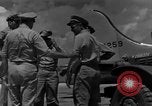
General Spaatz on Tinian Island meeting with officers, touring facility, and awarding Legion of Merit to Sergeant Klabo.
General Carl Spaatz in Tinian, Mariana Island during World War 2. General Barney M. Giles, General Nathan Twining talk to General John Davies, Commanding General of 313th Bombardment Wing near a jeep at an airfield. Rear of an aircraft in the background. Officers get into a jeep. General approach the headquarters of the 313th Bombardment Wing. A U.S. Army Air Forces B-29 aircraft with a sign on the fuselage that reads ' Goin Jessie ' General Carl Spaatz pins up a Legion of Merit award onto Sergeant Klabo.
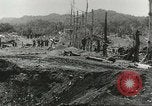
Australian 7th Division takes over Lae and raises the Australian flag in New Guinea during World War II.
Allied campaign in Lae- Salamaua in New Guinea during World War II Australian 7th Division soldiers move forward and take over Lae. Soldiers move through the ruins of the city. Soldiers at artillery. Australian soldier holds a local child after rescuing the child. Damaged Japanese planes and a hangar at an airfield after Allied bombings. Damaged Japanese barges in the harbor. Soldiers play piano, relax and eat as they celebrate their victory in Lae. Australian flag hoisted by the soldiers.
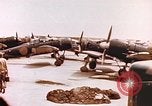
Aircraft of 19th Fighter Squadron and 6th Night Fighter Squadron land at Saipan, after its capture during World War ii
U.S. Army Air Forces begin operations on Saipan after its capture from the Japanese during World War 2. Japanese Zero fighter planes parked in a jumble on Saipan, after its capture by American forces in 1944. American soldiers are seen walking about and U.S. Army engineers are repairing the field for use. The first American P-47 to arrive, after Saipan is secured, lands on the airfield. Its pilot, Major Henry E. McAfee, Commander of the 19th Fighter Squadron, 318th Fighter Group, poses by his P-47 named "Jeanie." At another area of Saipan, U.S. Marines administer medical aid, including blood plasma, to a wounded comrade. A P-61 of the 6th Night Fighter Squadron lands on the field. Aerial views of Saipan, showing destroyed structures and buildings.
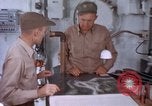
Aboard USS Yorktown, Commander Flatley, Captain Clark, and Rear Admiral Pownall study map and images.
USS Yorktown (CV-10), also called the "Fighting Lady," underway in the Pacific Ocean during World War 2. Captain J. J. "Jocko" Clark conferring with Commander James H. Flatley, Jr. aboard the Yorktown. The officers examine and discuss the map of an airfield on a Japanese-held island in the Pacific. Rear Admiral (2-star) Charles A. Pownall, seated, examine the map and aerial photographs. Close-up view of Rear Admiral Charles A. Pownall.
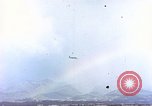
U.S. Secretary of Navy James Forrestal arrives by a C-54 aircraft in Honolulu, Hawaii.
A U.S. C-54 transport aircraft approaching Honolulu to land, with faint rainbow visible behind it. The aircraft lands and taxis in with outboard engines shut down, to the Military Air Transport Terminal on the airfield. An anchor and four stars on field of blue are displayed below the pilot's window. The aircraft parks and sailors quickly form an honor guard as the cabin door opens. Secretary of the Navy, James Forrestal, wearing a tropical pith helmet, steps from the airplane and is greeted by Rear Admiral John Towers and other officers. Secretary Forrestal is accompanied by Admiral Towers across the tarmac to a waiting car. He stops briefly to converse with Vice Admiral Richmond Kelly Turner, before he and Admiral Towers enter the car.
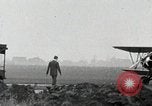
An aircraft piloted by aviator Charles Lindbergh takes off from a field in Hicksville, New York.
American aviator Charles Lindbergh takes off in an aircraft from Hicksville, New York. At an airfield, Charles Lindbergh walks towards a 1930 Perth Amboy Bird BK aircraft with registration number N727Y. He examines the aircraft. Men gathered around the plane. Propellers of the biplane aircraft rotate as engine starts. Lindbergh taxis and takes off in the aircraft and the plane is seen climbing.
CRITICALPAST.COM: About Us | Contact Us | FAQs - How to Order | License Agreement | My Account | My Lightboxes | Shopping Cart | Advanced Search | Featured Collections | Website Terms & Conditions | Privacy Policy ©2026 CriticalPast LLC.
License Agreement |
Terms & Conditions |
Privacy Policy
©2026 CriticalPast LLC.