


 Francais
 Deutsch
 Italiano

Refine Your Search
Italy airfields stock footage and images
- Showing 3217 to 3222 of 3791 results more
 Hide
Color Sound
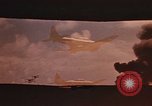
Views of Midway Island before, during and after the first Japanese bombing attack there in World War II
Japanese bombing attack on Midway Island in World War 2 (Battle of Midway). Opening scene shows map with Midway Island in context .of the Pacific Ocean. A Navy Consolidated PBY Catalina flying boat is seen among clouds. Closeup of the plane from another in formation with it. View of gunner with machine gun in blister of a PBY. Views from the PBY of Midway Island, from above and from low over the water. Two PT boats in the harbor. A PBY seaplane lands and is next seen being towed tail first up an incline, by sailors using lines. A U.S. Marine Corps color guard leads a contingent of Marines marching in formation along a pier, where some submarines are docked. F lock of white sea birds photographed against blue sky and Gooney birds on the white sands of the Island. Marines silhouetted in front of a beautiful sunset. The are relaxing. One plays an accordion. Sentries are alerted by some thunder from clouds in the distance. Next, B-17E bombers are seen near sandbagged positions on the airfield. Air crews gather for briefings. Camera pans over several B-17s being loaded with bombs and refueled. Glimpse of a railroad engineer who served 38 years on the Ironton railroad, standing next to a steam locomotive.( He is ostensibly related to one of the flyers.) Brief views of the flyer’s mother and sister. B-17 taxiing on number 1 and 4 engines (unusual). Several B-17Es taking off. One is Number 41-2524. Others with readable numbers are 41-2611, 41-2632, 41-2648, and 41-2437. Suddenly, several Japanese aircraft are seen in loose trail formation overhead. Marine fires machine gun from a defensive position. Black flak clouds form from exploding U.S. antiaircraft rounds. One Japanese aircraft falls burning toward the sea. Several U.S. Marine Chance-Vought SB2U Vindicator aircraft take off to engage the Japanese bombers. The U.S. aircraft maneuvering overhead. More machine gun fire from defenders on Midway. A bomb explodes close to the camera, sending debris flying. More machine gun fire, and another bomb strikes near the shoreline with a huge explosion. Explosions on other areas of Midway. A hangar burning. Another bomb strike close to the camera. Marines running past burning and destroyed aircraft, and raising the American flag, as fires burned and the bombing continued.
Aftermath of the Battle of Midway in World War II
Views of U.S. Navy pilots, their aircraft, and aftermath of Japanese bombing of Midway Island, in World War 2. Opening scene shows a formation of U.S. Navy Douglas Dauntless aircraft in flight. A U.S. Navy pilot climbs from the cockpit of an F4f Hellcat airplane on the deck of an aircraft carrier. His aircraft displays symbols for two Japanese aircraft downed. Another pilot in cockpit of his airplane that displays symbols for 7 downed Japanese aircraft. He climbs from his cockpit. Other pilots climbing out of their aircraft. One displays symbols for 6 kills. Three of them pose in front of an airplane. Scene shifts to Midway Island where a hangar is still burning from Japanese bombing. Glimpse of Gooney birds. Sentries stand on the airfield, with black smoke rising in the background. Closeup of wing from a downed Japanese airplane. Marines look through tangled pieces of crashed airplanes. One leans on a bent propeller blade. Heavy black smoke from petroleum fire is seen in background. Scene shifts to a PBY Catalina flying boat in flight, searching for survivors of the Battle of Midway. A U.S. Navy aircraft is seen floating in the sea, as a Navy warship heads toward it. A survivor is seen being helped from a PBY aircraft. Earlier picture of him smoking a cigarette inside the PBY aircraft. Sailors help him to a waiting ambulance. Other rescued survivors are seen standing about. Sailors place a litter aboard a PBY and use it to transport another survivor to sick bay. (Narrator states this is the 13th survivor rescued by the pilot of this PBY Catalina.) Ambulatory survivors being covered with blankets as they sit in the back of an ambulance, that then drives away with back door still open. Views of destroyed hospital on Midway Island. Red cross markings on are shown in the debris.

Footage of the Japanese South Seas Force on New Guinea following the dual invasions of Lae and Salamaua, in World War II.
Scenes from the Japanese South Seas Force invasion of coastal New Guinea in March 1942, during World War 2. Stern of a ship. Smoke rising from a ship in the far background. Japanese warships underway at sea, mountains in the background. A Japanese man on deck of warship, paints picture of historic naval victory. Animated map showing Northern Australia and New Guinea, with animated bombs falling on Port Moresby and flags showing Japanese-held positions at Lae and Salamaua on the coast of the Solomon Sea, to the North. A view of the coastline on the Solomon Sea. Japanese troops are seen in a column making their way through the jungles.They stand with the rising sun battle flag and proceed further, pulling field pieces and carrying other war materiel. View from inside a dwelling, as the Japanese troops enter town of Lae. Destroyed hangars and aircraft at the Lae airfield, which the Japanese bombed on January 21, 1942. The Japanese rising sun flag flying on a tall flag pole. Japanese ships in harbor.
Japanese bombers strike Port Darwin, Australia, during World War II.
Japanese bombing of Darwin, Australia in World War 2. Animated map showing line of Japanese attack from the RyukYu Islands to Darwin, Australia. Japanese MitsubishiG4M1 (Betty) long range bombers being readied at a Japanese air base. They take off on mission to bomb Port Darwin.Those on ground wave goodbye to them. View through nose greenhouse of a bomber. Bombers in formation. View of pilot and copilot in cockpit. More views of formation flying over clouds. Pilot with hands on control yoke. A note in Japanese fastened to the cockpit window. Crew members take lunch break while underway. Crew of bomber seen in warm clothing and on oxygen, as they proceed at a higher altitude.Radio operator keys message. Gunner at his station. The bombers begin their bomb run over Port Darwin. Bomb seen dropping from the aircraft, and striking the airfield of the Australian Naval Base on the coast.
Japanese military operations against Chinese coastal areas during second Sino Japanese war (WW2)
Japanese military operations in the 2nd Sino Japanese war (World War II). A rough wartime Japanese airfield with several Mitsubishi G3M "Nell" bombers. One has engines running. Japanese pilot wearing flying helmet and flotation vest, is standing by a communications tent. Group of Japanese fliers being briefed before a mission. Closeup of pilot in cockpit of bomber as engine starts.Pilots or navigators of two crews comparing notes and charts, as other crew members stand nearby. Another closeup of an engine running. The number 22 seen on tail of one plane. Bombers taxiing and taking off. Closeup of right engine and prop of one bomber viewed from inside the plane during takeoff. Glimpse of another bomber, ahead and below, as the formation flies over populated area. Formation of these Japanese type 96 "Nell" bombers (Mitsubishi G3M) in flight directly overhead. Closeup of one in the formation, with number 15 on its tail. Another closeup of engine and turning prop. A bomb falling. Irregular coastline area of china. Bombs exploding on coastal towns. Imperial Japanese Naval ensign displayed on mast of a ship. Japanese marines descend side of troop transport and enter landing craft. Closeup of marines in landing craft. several landing craft proceeding toward shore. Nakajima E8N naval scout floatplane is seen in flight overhead. Japanese marines climbing a hill under fire. Marine firing a Japanese Type 11 Light Machine Gun atop a hill. The Japanese flag flying near the top of a hill.
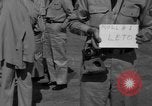
Film shot by U.S. Air Force personnel during visit to Cuban Air Force base at Campo Columbia near Havana, Cuba in January, 1953
Scenes of Cuban Air Force Base and headquarters, at Campo Columbia near Havana, Cuba, and aircraft acquired from the United States Air Force. Film opens with U.S. Air Force sergeant photographer holding a slate marked roll #1, LETO. He is dressed in starched khaki uniform. Other U.S. Airmen stand behind him. Scene shifts to a North American T-6 trainer airplane, Number 119, with skin removed from forward fuselage. A maintenance stand and tools are positioned in front of the aircraft. Hangar number 3 sits behind the T-6. The camera pans right showing two bubble-top P-47Ds parked on the ramp. The first displays number 458 (One of twenty-nine P-47s purchased from the USAF in the period, May, 1952 through June 1953). Work is being performed on the engine of the other. Camera panning right shows another T-6. Also seen is a Lockheed C-56 Lodestar (Lockheed Model 18) that was purchased in 1950 and numbered CU-EDU 2. It is parked in front of a low building with parapets and a flag flying atop it. A large multistory Headquarters building, topped with a control tower is seen in background. Closeup of another P-47 parked on edge of ramp, with its tail in the grass. Camera is moved back showing P-47s and T-6s on ramp in front of the headquarters building. Next, several U.S. Airmen are seen walking across the ramp towards the operations office on ground floor of the Headquarters building. More views of P-47s and T-6s plus a Consolidated PBY 0A-10 Catalina amphibious aircraft parked on the airfield. Several C-47 (DC-3) transport aircraft are seen at the end of the film.
CRITICALPAST.COM: About Us | Contact Us | FAQs - How to Order | License Agreement | My Account | My Lightboxes | Shopping Cart | Advanced Search | Featured Collections | Website Terms & Conditions | Privacy Policy ©2026 CriticalPast LLC.
License Agreement |
Terms & Conditions |
Privacy Policy
©2026 CriticalPast LLC.