


 Francais
 Deutsch
 Italiano
Refine Your Search
Japanese-martial-arts stock footage and images
- Showing 835 to 840 of 4336 results more
more Hide
Hide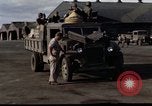
Tractor tows Japanese plane at Atsugi Airdrome in Japan.
Japanese planes parked at Atsugi Airdrome in Japan. Tractor tows Japanese plane. Japanese fighter. Flat tire of plane. Tractor pulls Japanese plane away. Tractor parks Japanese plane in field. Tractor tows another Japanese plane.
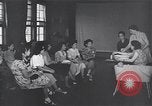
At a school set up by American women in Japan, Japanese brides of American soldiers learn American domestic ways
Japanese brides married to American soldiers attend school to learn about American homemaking and baby care. American women teach Japanese brides about baby care. An American housewife teacher demonstrates on a baby doll. She wipes the face of the baby doll. A Japanese bride stands up to demonstrate lesson. Japanese brides attend a baking class with an American teacher. Japanese students pour tea from Western porcelain tea set. A Japanese woman receives a cup of tea.
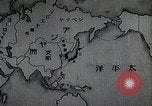
Assimilation of Western culture and fashions seen in Japanese cities
Film opens showing map of Asia and black clouds coming from all around the world to enclose Japan. A street scene with commercial displays of lights and modern architecture. Hollywood movie advertisements, including one for the 1931 Hollywood movie "Confessions of a Co-Ed," starring Phillips Holmes, Sylvia Sidney, and Norman Foster. Japanese newspapers reporting on communist activities. View of a woman's skirt and shoes as she walks along a sidewalk in Western clothing fashions. Similar view of a man. Japanese woman in Western fashions holding a compact and powdering her face. Closeup of the woman's face, with lipstick applied. She winks at the camera. A Japanese man and woman dressed in Western fashions, walking together. They sit together at a cafe table sipping sodas through straws. Behind them on the wsll is posted an advertisement for the 1930 movie, "Girl of the Golden west" starring Ann Harding. Japanese people in western fashions hurrying along a city street past others in more traditional Japanese garb. A Japanese dressed in the latest Western golfing attire, teeing off on a golf course. Two boy caddies stand next to him. Laborers in a glen using pickaxes to contour the ground (possibly for a golf course). View of a large school building with many uniformed school girls performing calisthenics in the schoolyard. Final scene reverts to the opening map and shows the dark clouds being dispelled from Japan.
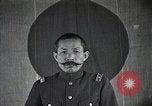
Industrial activity in Japan. Japanese people demonstrate spirit of Nationalism and patriotism in public gatherings.
A film narrated by General of the Imperial Japanese Army Baron Sadao Araki. Japanese flag in the background. National flags of Japan (Sun-mark flags) are seen on flag poles extending above a moving electric train and on the hood of an automobile. Front view of the train traveling along a rail line powered by overhead electrical wires, in an industrial area. A factory with smoke stacks visible in background. The train passes the camera and scene shifts to black smoke spewing from four metal smoke stacks. Then various industrial scenes are shown in rapid succession, including: a machine printing some sort of documents; an industrial crane raising a closed bucket high above the ground; view from bucket of a crane full of scrap metal being raised high in the air; an empty bucket being lowered by a crane; large shipping containers being offloaded from a ship to barges, below; longshoremen moving boxes of cargo at the port, and others carrying sacks of rice to small boats in a nearby river; a glimpse of a riveter at work; glimpse from above of moving industrial rail cars carrying liquid and bulk cargoes; ground-level views of passing railroad trains and a steam locomotive; a busy street with cars, numerous bicyclists (including one pulling a large cart loaded with boxes. Closeup of a man looking skyward, where a large flock of birds is seen. A group of laborers working in a field with hand tools, such as picks and shovels. Workers tending machinery in a fabric factory. Scene shifts back to General Baron Sadao Araki narrating, for a while, and then shows many factory workers by a large industrial plant, watching a military parade. The national flag flies from a tall flagpole in the factory yard. The color guard of the parading Japanese Imperial Army soldiers carries their rising sun flag and military unit flags. Another parade is seen on the esplanade of the Imperial Palace in Tokyo. Civilian marchers carry the Japanese national (Sun-mark) flag. People walk together on a street in a commercial district, displaying banners and flags. Boy Scouts parade through a gate of the Imperial Palace, carrying the National flag. An outdoor crowd of enthusiastic men listen to a speaker (unseen). A troop of Japanese soldiers pose with the National and Rising sun flags. School faculty pose in front of a large number of young women. Views downward on an outdoor crowd of cheering men. An outdoor theater, with audience seated on benches. Persons massed carrying flags, raise and lower them in unison. A huge gathering of young women, all dressed alike, outside a wall of the Imperial Palace, in Tokyo, which is seen in the background. Camera pans across them. Many uniformed men stand near the Seimon-tetsubashi Bridge to the Imperial Palace, in Tokyo. A conclave of uniformed Boy Scouts and leaders are seen saluting the Japanese National Flag. Closeup of some of them. A large gathering of Girl Scouts cheers three times, in unison. A gathering of uniformed soldiers with massed Rising Sun flags. More views of masses Rising Sun flags. People on a shore, all pulling together on a rope line. The setting sun.

Illustrated discussion of Japanese self-sufficiency in forest products prior to World War II.
Japanese women in kimonos viewing Sakura cherry blossom trees in full bloom. Japanese loggers felling a tree. Logs readied for transport to sawmills. Japanese men pushing backwards to move a load of finished wood on a dolly. Men cutting wood for sandals in a factory. Animated map illustrating three forest regions of Japan. View of column of men walking in forest of the subtropical zone, containing oak, camphor, bamboo, and palm trees. Views of temperate zone forests containing pine, cypress, arborvitae, cedar, fir, beech, ash, chestnut, and poplar trees. The arboreal area contains coniferous forests of fir and spruce. Japanese officials in dress clothing initiate a reforestation project, as other officials and Japanese military officers watch. Women and children participate in the project. Cross-section of a cut tree illustrating products derived therefrom. Animation depicts various uses of produces wood products like sandals, houses, barracks, and military uniform for the Japanese.
U.S. Lieutenant General Daniel Sultan explains Japanese aggression in China and need for troops in India and Burma during WW2
World War II film about the China, Burma, India (CBI) Theater of Operations. A soldier is seen filling out a form seeking information about him and inviting him to write in questions about anything he hadn't learned through normal information channels. Scene shifts to Information and Education Department of the Burma-India Command, where it is being processed by a soldier. Lieutenant General Dan I. Sultan, commander of Burma-India Theater, is seen next, seated at a desk, with wall map of the region behind him. He is appearing in an information film intended to inform troops under his command. He notes that more than half the troops who filled out the information form, asked why American troops were stationed in India and Burma. He refers to the recent recall of General Stillwell and the splitting of CBI into two theaters (China and India/Burma). He states that the purpose is a path toward Japan. An animated map shows China (that narrator notes has been fighting Japan since 1937). Animation shows Japan walling off China from the outside world, by seizing her ports, and then concentrating its grip on the Eastern part of the country. Without access by sea, the allies had only one option to assist China in the fight against Japan. That was to open the Burma Road. Film shifts to scenes of Japanese bombing of Shanghai and Chinese civilians abandoning the city in 1937 during Second Sino-Japanese War. Wounded and injured Chinese fighting fires while tending casualties in an open area. Glimpse of Chinese soldiers near one of their few large artillery pieces. A gun crew manning one of her few antiaircraft guns. Chinese jam road in trek to the unoccupied provinces of the country. Chinese carrying casualties on stretchers, making do without ambulances. Chinese coping in the face of all kinds of shortages. In contrast, well supplied Japanese troops are shown in formation. Japanese troops, military vehicles and equipment are seen. Japanese firing machine guns and heavy artillery against Chinese positions. Japanese armor and long lines of troops engaged against the Chinese, who continue to resist in spite of shortages and hardship. Chinese soldiers without shoes, marching in a column.