


 Francais
 Deutsch
 Italiano
Refine Your Search
Japanese-martial-arts stock footage and images
- Showing 925 to 930 of 4336 results more
more Hide
Hide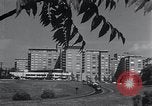
Apartment furnished with Japanese furniture and artifacts in Arlington, Virginia. Bradley Boulevard Apartments in Bethesda, MD.
An apartment furnished with Japanese furniture and artifacts in the Arlington Towers apartments (later River Place Apartments) at Rosslyn in Arlington, Virginia . An American man shows a Japanese man various Japanese artifacts like Japanese tables, vase, bowls placed in apartment. Japanese prints and paintings hang on walls of the apartment. A view of apartment building from outside. A view of Bradley Boulevard Apartments a residential neighborhood in Bethesda Maryland. Trees line garden of Bradley Boulevard Apartments neighborhood. Cars are parked. People walking. People on bicycle.1964-65.
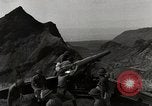
Japanese people worship in temples and salute the United States flag in Hawaii.
American soldiers practice with anti-aircraft artillery in Hawaii circa 1941-1942. People of Japanese descent visit a Shinto shrine and show respect to the United States flag. Flags of United States and Japan on display at entrance of a shrine or temple. Japanese civilians visit a Shinto shrine. They walk through a torii gate. Girls in kimono worship at the Shinto shrine. Priest bows in temple. A family of Japanese descent worships in shrine together. Japanese children carry the United States flag and hold hands over their hearts as the flag passes by during a civic ceremony. Woman serves punch at a social gathering. Men stand and talk. (World War II period, just before time of opening of internment camps and relocation centers for civilians iof Japanese descent).
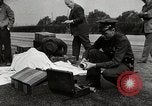
Japanese American travelers being stopped on a highway, and having their belongings searched during World War II.
Several trucks and automobiles carrying Japanese-Americans citizens are stopped and directed to the side of a highway, where policemen search their personal baggage (during time in World War 2 when the U.S. government was sending many Japanese-American citizens to internment camps or relocation centers). Police officers being directed by officials in civilian clothes, search open suitcases and other containers of clothing and personal items, laid out on the pavement. The Japanese American owners repack their suitcases after they are searched. One truck open stake truck is carrying many items of luggage and clothing rolled up and tied. These are all off-loaded and spread out on the pavement for search. A Japanese American woman stands near a 1937 Chevrolet 4-door sedan, in which children are seen looking out from the back seat. The woman helps a man roll up a bundle of clothes, as a uniformed policeman, nearby, searches another one. The woman and and two men repackage and tie the bundle with cord, as a policemen looks in the car trunk. More views of Japanese Americans with their luggage laid out on the pavement being searched. One woman has belongings tied up in a cardboard box labeled: "Sunland Biscuit Company, Los Angeles & San Francisco." Under direction of a civilian official holding a walkie talkie telephone, a policeman helps people load their belongings into an open truck after they have been searched.
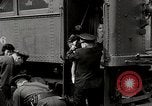
Military policemen process arriving internees at the Santa Anita Assembly Center internment camp for Japanese
United States military policemen search and question Japanese-Americans passengers at railroad train station depot next to Santa Anita Assembly Center (horse racing track converted to interment camp), during relocation of Japanese-American citizens in World War 2. Policeman lifts a baby down from the train, women get down from the train and soldiers watch them. Woman and children sit on chairs and officer writes on a paper in front of the woman. Close up views of internees arriving at center including many young children. Inspector frisks pockets and shoes of Japanese-American men. Japanese-American man carries a baby. Girl stands at a table. Inspector inspects suitcase of a woman and points with finger. Men stand at table and talk. A Japanese-American family stands in front of a train. They each have name tags on. Queue of people. Inspector searches a man. Woman walks with inspector. Wide shot of internment camp. (World War II period).
Air operations on Japanese aircraft carrier Zuikaku, during World War II.
View from deck of a Japanese battleship looking back at three Japanese aircraft carriers underway. during World War 2. Interior view of compartment in Japanese aircraft carrier Zuikaku Ship's intercom loudspeaker calls pilots to a mission. Airplanes with engines running on the flight deck of the carrier. The planes ready for take off. Pilot prays at shinto shrine below decks, before mission briefing. Japanese flight commander briefs the pilots before take off. Pilots in cockpits. Nakajima B6n1 torpedo planes take off carrying torpedoes underneath (these B6N aircraft were called "Jill" by the Allies). Japanese Imperial Navy sailors watch the planes.
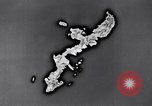
U.S. Battleships fire at Japanese defenses during the battle for Okinawa, Japan, in World War II.
U.S. Battleships fire at Okinawa, Japan. A map shows the area of operation of the land forces. 483 Japanese artillery pieces located in the area. U.S. tank destroyed by Japanese artillery fire. Japanese antiaircraft fire interferes with U.S. observation planes. U.S. naval gunfire from ships was able to destroy 120 Japanese artillery emplacements. An airplane in flight. Many views of U.S. naval gunfire. Views of destroyed Japanese heavy artillery.
CRITICALPAST.COM: About Us | Contact Us | FAQs - How to Order | License Agreement | My Account | My Lightboxes | Shopping Cart | Advanced Search | Featured Collections | Website Terms & Conditions | Privacy Policy ©2026 CriticalPast LLC.
License Agreement |
Terms & Conditions |
Privacy Policy
©2026 CriticalPast LLC.