


 Francais
 Deutsch
 Italiano
Refine Your Search
Japanese-martial-arts stock footage and images
- Showing 1291 to 1296 of 4336 results more
more Hide
HideColor Sound
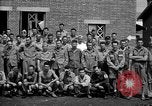
Japanese prisoners of war work under American guards and former American prisoners of war at a camp area in Mukden, Manchuria.
Showing change of prisoners from American to Japanese in Mukden, Manchuria during last days of World War II. Former POW (prisoners of war) Constant J. Wasilewaki, surviving POWs from cattle boat in which 1,623 POWs left the Philippines but only 400 reached Japan. Survivors of Bataan "Death March" includes Lieutenant Colonel Tarpley, Trspnell, Wilson and Lieutenant C.Y. Christis, men of 200th Coast Artillery corps. American prisoners of war Criville A. Johnson, Robert E. Butler worth play bass and guitar that they made while in prison. Cartoon called 'Changie- Changie' drawn by Benny Pinson, depicting change of prisoners from American to Japanese. Prison wall. High tension wire on top. Lieutenant Christie stack Red Cross carton atop pile. Japanese prisoners carry supplies under guard.
Anti aircraft guns fire and Japanese suicide bomber dives onto a ship in the Pacific Ocean during World War II.
U.S. Navy fleet under Japanese air attack in the Pacific Ocean during World War II. Japanese plane in flight. Flak in sky and antiaircraft guns fire. Ships underway at sea. Ship explodes as Japanese kamikaze suicide bomber dives into ship.
Japanese plane being shot down as anti aircraft guns fire in the Pacific Ocean during World War II.
U.S. Navy fleet under Japanese air attack in the Pacific Ocean during World War II. Japanese plane in flight. Flaks in sky. Ships underway at sea. Antiaircraft guns fire and shoot down the Japanese plane.
Marine typing message to send it and Marines work on Japanese radio set at Peleliu, Palau Islands.
U.S. Marine Corps Communication activities at Peleliu, Palau Islands. Silhouette of Marine in tent. Silhouette of Marine typing message in tent. Message center tent, runner receiving message and leave area. Marines work on Japanese radio set. Marines standing around and watching. Marines work on Japanese radio set, other marines look at part of the radio set. Hands of Marine working on Japanese radio set.
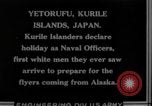
Japanese natives perform for the Americans and welcome them on the first stop of Douglas World Cruisers in Japan.
U.S. Army Air Service Douglas World Cruisers (DWC) in Japan during their first flight around the world. At Etorofu, Jurile Islands, Japan: Natives congregate and carry flags. Natives of the island observing the Americans. Children do a dance. The natives perform for the Americans. World cruisers flying over snow-covered mountains, their first stop in Japan. One of the cruisers on a lake. A cruiser with personnel in the foreground. Natives enjoy a feast in honor of the Yankee pioneers. Crew of the Japanese destroyer "Isokaze" entertains with the ancient sport of sumo. One of the cruisers afloat in water. Mechanics working on aircraft. A large crowd of Japanese children waving flags. Several views of Japanese welcoming the Americans.
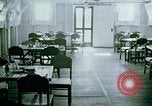
Workers dine on food made by Japanese detainees in Crystal City, Texas internment facility.
Alien enemy detention facility in Crystal City, Texas. Dining tables in hall. Japanese staff of detainees cook food. A staff member serves sandwiches in plates. Views of food trays. Workers of administrative staff, security staff and nurses eat food. Japanese staff serve food. The facility is for relocation and internment of Japanese-Americans and German-Americans during World War 2.
CRITICALPAST.COM: About Us | Contact Us | FAQs - How to Order | License Agreement | My Account | My Lightboxes | Shopping Cart | Advanced Search | Featured Collections | Website Terms & Conditions | Privacy Policy ©2026 CriticalPast LLC.
License Agreement |
Terms & Conditions |
Privacy Policy
©2026 CriticalPast LLC.