


 Francais
 Deutsch
 Italiano
Refine Your Search
Japanese-martial-arts stock footage and images
- Showing 1831 to 1836 of 4328 results more
more Hide
Hide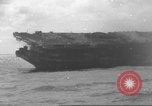
Severely damaged U.S. aircraft carrier USS Franklin after Japanese attack on it in the Pacific Ocean during World War II.
Aftermath of Japanese attack on United States Navy aircraft carrier USS Franklin (CV-13) underway in the Pacific Ocean during World War II. USS Franklin listing heavily smoking after the Japanese attack. Extensively damaged flight deck of the ship. USS Franklin listing heavily to starboard side.
Firefighters extinguish a fire during the Japanese attack on the USS Franklin in the Pacific Ocean during World War II.
Japanese attack on United States battleship Franklin (CV-13) underway in the Pacific Ocean during World War II. A United States destroyer ship underway in the Pacific Ocean. Fire burns furiously on the hangar deck of the USS Franklin after the Japanese attack. Fire fighters spray water to extinguish the fire. Smoke billows up as a result of the fire. The firefighters spray water with hoses to extinguish the fire.
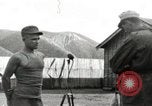
A freed American prisoner talks about the experiences at a Japanese prison camp in Honshu, Japan during World War II.
American prisoners of war being interviewed at Japanese prison camp number 3, in Honshu, Japan after World War II. A U.S. officer interviews a prisoner who has been liberated from a Japanese prison camp. The prisoner says that his name is Benini. He says that he is from Pennsylvania, United States. The officer asks him whether he was in the Philippines and when was he captured. He states he was captured before the Bataan Death March. He narrates his experiences of his prison camp, noting that a building in the prison camp was called the white house because it was large and painted white.
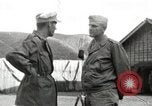
An American medical officer talks about the experiences at a Japanese prison camp in Honshu, Japan during World War II.
American prisoners of war being interviewed at a Japanese prison camp in Honshu, Japan after World War II. A U.S. officer interviews a medical officer who has been liberated from a Japanese prison camp. The medic says that he is from San Antonio, Texas. He talks about his early days. He says that he came to the Philippines on November 3, 1940. He discusses the difficulties faced by the medical officers at the prison camp. He narrates an incident where a soldier developed an infection in his foot and he lost nearly 20-30 kilos of weight. The medical officer also talks about the scarcity of medical supplies at the prison camp. He states that many men died due to malnutrition at the camp.
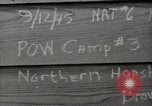
A U.S. medical officer being interviewed at a Japanese prison camp in Honshu, Japan after World War II.
Japanese prison camp number 3 in northern Honshu, Japan after World War II. A U.S. medical officer being interviewed at the prison camp as other prisoners look on. Buildings at the camp. A walled gate at the camp as two U.S. officers walk away from it. A Japanese sign on the gate. Wooden logs piled up.
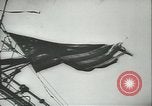
USS Franklin heads towards the United States after facing a Japanese attack during World War II.
United States aircraft carrier USS Franklin after being attacked by a Japanese bomber in the Pacific Ocean on March 19, 1945, during World War II. The U.S. flag flies from USS Franklin while on its way to the United States. A chaplain conducts a religious service on the deck of the aircraft carrier. The ship enters the Panama Canal. The men who faced the Japanese attack on USS Franklin being decorated. Men lined up with medals on their uniforms. Crew members smile after being decorated. The ship enters New York Harbor with the Statue of Liberty in the background.
CRITICALPAST.COM: About Us | Contact Us | FAQs - How to Order | License Agreement | My Account | My Lightboxes | Shopping Cart | Advanced Search | Featured Collections | Website Terms & Conditions | Privacy Policy ©2026 CriticalPast LLC.
License Agreement |
Terms & Conditions |
Privacy Policy
©2026 CriticalPast LLC.