


 Francais
 Deutsch
 Italiano
Refine Your Search
Japanese-martial-arts stock footage and images
- Showing 2419 to 2424 of 4328 results more
more Hide
Hide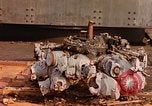
Burned out shells and damage caused to USS Franklin in the Pacific Ocean after Japanese attack during World War II.
USS Franklin underway in the Pacific Ocean after the Japanese attack during World War II. A man inspects the charred wreckage of a plane engine. Burned out shell of an aircraft as a sailor examines it. Burned out shells of an aircraft. Damaged bulkhead and deck plating of the ship USS Franklin.
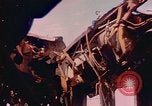
A welder cuts a damaged stringer aboard USS Franklin in the Pacific Ocean after Japanese attack during World War II.
USS Franklin underway in the Pacific Ocean after the Japanese attack during World War II. A welder cuts away a damaged stringer with acetylene torch. A jeep aboard the ship. Sailors throw away wreckage in the sea.
Damaged USS Franklin approaches the Brooklyn Navy yard after Japanese attack during World War II.
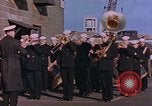
The damaged USS Franklin arrives at the Brooklyn Navy Yard in New York City after the Japanese attack during World War II. Skyscrapers of lower Manhattan. USS Franklin steams up the river surrounded by tugs. Skyscrapers in the background. USS Franklin off the Brooklyn Navy Yard. A Navy band waits at the dock for the arrival of USS Franklin.
Captain Gehres aboard the damaged USS Franklin approaches the Brooklyn Navy yard after Japanese Kamakazi attacks
USS Franklin (CV-13) arriving at Brooklyn Navy yard in New York City, after being severely damaged by Japanese attacks in the Pacific, during World War II. Navy band plays at the pier. Captain Lesslie H. Gehres standing with his Navigation Officer, Commander Stephen Jurika,Jr., aboard the USS Franklin as it approaches the Navy Yard. The Captain looks through the binoculars and talks with Commander Jurika. He smokes a cigarette. He issues instructions through the voice tube. Damaged flight deck of the USS Franklin. (Note: West Coast repair facilities were all full of damaged U.S. ships, so the USS Franklin had to proceed to the East Coast for final repairs.)
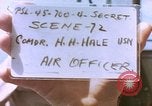
Commander H.H. Hale aboard the damaged USS Franklin at New York after Japanese attack during World War II.
The damaged USS Franklin arrives at the Brooklyn Navy yard in New York after the Japanese attack during World War II. Commander H.H. Hale aboard the USS Franklin. Damaged flight deck of the aircraft.
Officer aboard the damaged USS Franklin at New York after Japanese attack during World War II.
The damaged USS Franklin arrives at Brooklyn Navy yard in New York after the Japanese attack during World War II. U.S. Navy officer aboard the USS Franklin at Brooklyn Navy yard. An officer talks and smiles.
CRITICALPAST.COM: About Us | Contact Us | FAQs - How to Order | License Agreement | My Account | My Lightboxes | Shopping Cart | Advanced Search | Featured Collections | Website Terms & Conditions | Privacy Policy ©2026 CriticalPast LLC.
License Agreement |
Terms & Conditions |
Privacy Policy
©2026 CriticalPast LLC.