


 Francais
 Deutsch
 Italiano
Refine Your Search
Japanese-martial-arts stock footage and images
- Showing 2437 to 2442 of 4328 results more
more Hide
Hide
Japanese Yokosuka D4Y1 torpedo bomber attacks U.S. warship and is shot down
Japanese Yokosuka D4Y1 torpedo bomber in attack against U.S. warships, as seen from the USS Lexington (CV-16). The aircraft flies through heavy antiaircraft fire, at low altitude and releases a torpedo. It continues to fly through heavy fire and is struck and ends up in the water. A momentary silhouette view of SBD aircraft on deck of the USS Lexington. (World War II period).
U.S. 13th Air Forces B-17 Flying Fortress bombs Japanese airfield at Munda Point in New Georgia group of Islands.
A film titled 'Air Aspects of the Campaign against Munda' based on USAAF (United States Army Air Force) activities on the New Georgia group of Islands, Solomon Islands during World War II. USAAF P-38 Lightning in flight over the Solomon Islands. An animated map highlights Munda Point in New Georgia, Solomon Islands. A USAAF officer takes a look at aerial reconnaissance photographs. The officer talks over a phone at his desk. An animated map highlights Vila in Kolombangara. The map connects Vila and Munda Point with Henderson Airfield on Guadalcanal. U.S. 13th Air Forces B-17 Flying Fortress bombers take off from an airfield and bomb Japanese airfield at Munda Point.
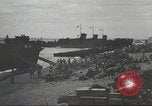
U.S. forces prepare for attack against Japanese forces on Munda, readying supplies, troops, and aircraft.
Planning and moving of U.S. equipment, supplies, aircraft, and soldiers in preparation for attack at Munda Point on New Georgia Islands, Solomon Islands during World War 2. U.S. Marines and infantry massed up on Guadalcanal beach prepare for the invasion of Munda Point. Gasoline barrels are rolled on the beach. Crated food in cargo nets hoisted aboard ships. Equipment is loaded onto ships. U.S. combat aircraft assemble for an aerial offensive. U.S. Army General Douglas MacArthur exits car and talks with another U.S. officer. General MacArthur, U.S. 13th Air Force Lieutenant General Hubert R. Harmon, U.S. Army Air Force General Nathan Twining and U.S. Fleet Admiral William Halsey plan the attack on Munda Point. United States Army Air Force P-40 Warhawk fighters taxi and take off from an airfield. U.S. aircraft including P-40 Warhawk, P-39 Airacobra, U.S. Navy F4F Wildcat, TBF Avenger, B-25 Mitchell and B-24 Liberator aircraft in flight heading to destroy enemy positions on Munda. Japanese aircraft seen taking off and in flight.
U.S. 13th Air Forces B-17 Flying Fortress bomb Japanese airfield on Munda Point, New Georgia during World War II.
A film titled 'Air Aspects of the Campaign against Munda' based on USAAF (United States Army Air Force) activities on New Georgia group of Islands, Solomon Islands during World War II. USAAF P-38 Lightning in flight over the Solomon Islands. An animated map highlights Munda Point in New Georgia. A USAAF officer takes a look at aerial reconnaissance photographs. The officer talks over a phone at his desk. An animated map highlights Vila in Kolombangara. An animated map connects Vila and Munda Point with Henderson Airfield on Guadalcanal. U.S. 13th Air Forces B-17 Flying Fortress bombers take off from an airfield and bomb Japanese airfield at Munda Point.

U.S. 13th Air Force B-17 Flying Fortress bombers drop bombs over Japanese installations in Rekata Island during World War II.
U.S. Army Air Force aircraft attack enemy installations on Rekata Island, Solomon Islands during World War II. U.S. 13th Air Force B-17 Flying Fortress bombers drop bombs over Japanese installations on Rekata Island. Smoke billows up from the explosions.
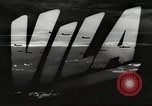
U.S. 13th Air Force bombers drop bombs over Japanese installations on Munda Point, Solomon Islands during World War II.
U.S. Army Air Force aircraft attack enemy installations on Munda Point, Solomon Islands during World War II. U.S. 13th Air Force bombers in flight over Vila in the Solomon Islands. The bombers take off from Guadalcanal to attack Japanese installations on Munda Point in New Georgia. Views of support fighter aircraft taking off to join in this, the largest single raid (total participating aircraft) in the Pacific thus far. U.S. naval guns shell enemy targets on Munda. The bombers release bombs over ground targets. Ships fire salvo from giant artillery guns towards shore targets. Smoke rises from heavy shell fire. The bombers escorted by fighters drop bombs over the targets. Smoke billows up from exploding targets. View of newly formed craters all over Munda Point after smoke clears. Aerial views of a second round of bombing over Munda Point during the same raid.
CRITICALPAST.COM: About Us | Contact Us | FAQs - How to Order | License Agreement | My Account | My Lightboxes | Shopping Cart | Advanced Search | Featured Collections | Website Terms & Conditions | Privacy Policy ©2026 CriticalPast LLC.
License Agreement |
Terms & Conditions |
Privacy Policy
©2026 CriticalPast LLC.