


 Francais
 Deutsch
 Italiano
Refine Your Search
Japanese-martial-arts stock footage and images
- Showing 2611 to 2616 of 4328 results more
more Hide
Hide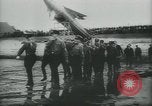
Montage of German rocketry scenes from 1930s through World War II. Nazi surrender. Atomic bomb. Japanese surrender
German rocket pioneer, Gerhard Zucker, attempting to develop postal rockets in the 1930s. Location is Wadden Sea off Cuxhaven, on April 9, 1933, where Zucker follows Nazi Sturmabteilung (also called SA or Stormtroopers) carrying the mail rocket across wet sands. The rocket is set up on a launch stand. Zucker and an assistant ignite the 8 side rockets and the mail rocket takes off. It noses up and loops over backwards, falling to the sand. German Stormtroopers lift up the damaged device. Next, is seen a later, more modern, rocket trial ending in failure. Two German engineers display a model similar to the pulse-jet-powered "buzz bomb" (V-1) employed by the Nazis in World War 2. A brief glimpse of similar American machine on sand flat, as narrator states German acknowledgement of knowledge gleaned from Dr. Robert Goddard's work. A German V-1 flying bomb (aka Doodle Bug) being launched in 1944, during World War 2. View of British houses of Parliament, London, England; an air raid shelter sign in City of Westminster. Londoners waiting out a raid in the shelter. Scenes of fire and destruction during German bombing of London, as narrator speaks about the more advanced German V-2 ballistic missiles employed later in the war. Londoners trudging through debris amongst bombed out buildings. Change of scene to U.S. infantry and armor advancing deep into Germany. Narrator refers to them overrunning rocket bases and other vital war-making facilities, near the end of the war. Glimpse of large number of German prisoners of war. Documents of military surrender being signed by Field Marshal Wilhelm Keitel, in Berlin, May 8, 1945. Closeup of Keitel. Scenes of American forces operating in Pacific theater. Aerial view of atomic bomb explosion. Japanese surrender ceremony on September 2, 1945, aboard the battleship USS Missouri. U.S. soldiers and other service personnel return home and greeting loved ones at end of war. Aerial view of Pentagon building and surrounding area in Arlington Virginia near Washington DC. U.S. troops boarding a ship in San Francisco, bound for war again, this time in Korea (1950).
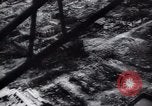
U.S. Marines battle Japanese forces on Agana, Guam, Mariana Islands after aerial bombardment during World War II.
Cleaning up operations by the U.S. Army in Agana, Guam, Mariana Islands during World War II. Aerial views of the town of Agana after U.S. Army Air Force bombardment. A Mass is conducted in a field as cleaning up operations continue. Smoke rises from shell explosions. U.S. Marines armed with guns advance cautiously. Wounded are carried behind the firing line by their comrades. Near the same United States Marine marker which stood during the Japanese attack two and a half years ago, the U.S. flag is raised over Guam.
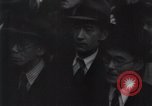
Japanese-American men cheer as they watch a parade in the United States
Japanese-American men standing on a sidewalk, watching a parade, in the United States. They cheer as various elements of the parade pass their vantage point. The entire focus is upon them and their demeanor and expressions.
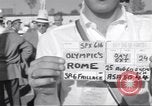
Japanese, Indian, American, Soviet athletes march at a stadium during Summer Olympics of 1960 in Rome, Italy.
Summer Olympics of 1960 in Rome, Italy. Japanese, Indian, American, Soviet athletes march at the Foro Italico Stadium. German athletes hold a sign “Germania”. Gold medalist of 1956 games Rafer Johnson holds American flag and leads the group of American athletes.
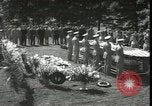
Secretary of Japanese-American Citizens League Masaoka delivers a brief eulogy during Nisei services at Arlington Cemetery.
Nisei services at Arlington National Cemetery in Virginia, United States. Mr. Michael Masaoka National Secretary of the Japanese-American Citizens League Anti-Discrimination Committee, the first volunteer for service in the U.S. 442nd Infantry Regiment, delivers a brief eulogy. Taps are sounded. The flags which were held over the caskets are folded by men. Soldiers parade. Folded flags are presented to the families by U.S. General Jacob Devers.
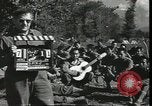
Japanese-American soldiers seated and singing on a field in Alvignano,Italy during World War II.
Japanese-American soldiers resting in Alvignano, Italy during World War II. A group of soldiers seated and singing song. One soldier in the center plays guitar.
CRITICALPAST.COM: About Us | Contact Us | FAQs - How to Order | License Agreement | My Account | My Lightboxes | Shopping Cart | Advanced Search | Featured Collections | Website Terms & Conditions | Privacy Policy ©2026 CriticalPast LLC.
License Agreement |
Terms & Conditions |
Privacy Policy
©2026 CriticalPast LLC.