


 Francais
 Deutsch
 Italiano
Refine Your Search
Japanese-martial-arts stock footage and images
- Showing 2683 to 2688 of 4328 results more
more Hide
Hide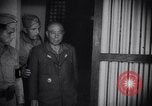
American post War II occupation of Japan.
Documentary depicts job of United States occupation forces in Japan. Opening scene shows Japanese General Tomoyuki Yamashita being escorted by armed American military officer to a room. A woman at an outdoor stand, passing out leaflets to Japanese people during the U.S. postwar occupation of Japan. Camera pans across exterior of prison where Japanese wartime leaders are incarcerated. Japanese read information posted on a telephone pole. Newspaper in English reporting that Emperor Hirohito says he is not a Diety and the Japanese are not a master race. A Japanese broadcaster spreading the new concepts. Loud speakers on city streets carry the news. People visiting news stands, including many Japanese soldiers in uniforms. Several Japanese citizens gathered by a bulletin board to read the latest information. Japanese workers shoveling up debris from bombing during World War 2. View of vast destruction in a Japanese city, where only several concrete and steel buildings can be seen standing. Japanese people going about their normal affairs, walking on paths cleared through the detritus of war. U.S. troops monitoring Japanese travelers boarding a railroad train. A U.S. soldier standing with a Japanese policeman, searches a Japanese cyclist for contraband. Views of the Pacific Ocean, with waves crashing on the shore. Dead American soldiers in the waters at the coasts of various scenes of combat against Japanese forces during World War II. Views of American soldiers helping and tending to wounded during the war. A huge formation of American soldiers marching. The Liberty bell. A closing slate reading: "Our Job in Japan". Music: Beethoven's 9th Symphony is heard.
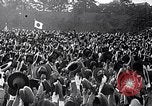
U.S. war effort is concentrated against Japan after the fall of Nazi Germany in World War II
Overlaid on scenes of fervently patriotic Japanese people waving flags and cheering, is slate reading: "Japan is firmly determined to fight a hundred years war to crush the United States." A huge explosion. Glimpse of U.S. Marine Flame Thrower Tank M67 directing flame on a Japanese bunker. U.S. marines charging in an amphibious assault on a Japanese held Pacific Island during World War 2. U.S. troops wading through surf from their landing craft, during amphibious assault. Marines fighting Japanese in Pacific Island jungle. Landing craft at beach in background. American flag being raised on a palm tree. Soldier saluting the American flag. General Douglas MacArthur wading ashore in the Philippines followed by staff officers and soldiers, including Filipinos. U.S. aircraft bombing Japanese held Corregidor in the Philippines. U.S. Navy ships bombarding the Philippine coast. American paratroopers of the 503rd Parachute Infantry Regiment, jumping at low altitude, from C-47 aircraft onto a critical hill known as "Topside" on Corregidor. Views from ground of paratroopers descending. and landing at the hilltop. U.S. troops in an amphibious assault, under fire. The American flag being formally raised as General MacArthur and other officers salute the flag. Marines in amphibious assault on Iwo Jima. A U.S. battleship firing at the coast. Explosions along the coast from Naval bombardment. Marines charging across the black sands of Iwo Jima. Marines firing a 75mm Pack Howitzer M1. Shells exploding at the base of Mount Suribachi. The famous flag raising by Marines on Iwo Jima. American forces attacking the Japanese Island of Okinawa. A Landing Ship Medium (R) firing rockets at Okinawa. Numerous explosions ashore. The USS LSM(R)-198 firing rockets. U.S. troops using a flame thrower to attack Japanese troops in a bunker. A Japanese defender is shot and tumbles down a hill from a fortification. American flag raising on Okinawa. Army officers salute the colors. A U.S. Navy destroyer firing its stern 8-inch guns. A Japanese warship struck by a bomb or shell, with flash of fire and explosion. More views of U.S. Navy warships bombarding Okinawa. A torpedo seen below the water as it is launched A Japanese ship exploding with fireball and huge cloud of smoke. Glimpse of helmsmen inside U.S. submarine. A formation of Douglas SBD Dauntless Dive Bomber aircraft peels off, and dives. A Japanese ship being strafed and bombed. It explodes. U.S. Army Air Forces B-29 bomber aircraft taking off from captured islands to attack Japan. A formation of B-29s in flight. B-29s flying over Japan. Mount Fuji is visible. B-29 raining bombs on Japan. View from aircraft as bombs strike, exploding on ground. Closeup of falling bomb. Huge clouds of smoke rising from struck targets. More views of B-29 aircraft in flight. Some leaving contrails at high altitude. View from bridge of U.S. battleship bow plunging into heavy seas that cover deck. (Ship's forward triple gun turrets are visible.) Aerial view of landing craft speeding toward a beach, leaving white wake in water. Glimpse of U.S. battleship, in camouflage paint, bombarding a shore. Closeup of twin 40mm Bofors anti aircraft guns being fired from U.S. Navy ship. A Japanese Kamikaze airplane on fire, falling through flak clouds. A Japanese Mitsubishi G4M bomber aircraft flying low past a U.S. Aircraft Carrier. U.S. Navy sailors on a ship's deck firing a twin 40mm bofors gun. A Japanese Kamikaze airplane hit and in flames as it falls. A squadron of U.S. aircraft in formation. Gun camera film of Japanese airplane bursting into flames while being shot at by U.S. aircraft. Flaming aircraft falling straight down towards the water and splashing on contact. U.S. troops wade through surf as they leave Landing Ship Infantry Large USS LCI(L)-337. Troops rush past a beached Landing Vehicle Tracked (LVT) on sand beach. Troops in tracked landing vehicles approaching the shore from a cove. White smoke in the area. A banner erected at shore reading: "CIC." Explosions nearby. Soldiers using a flame thrower. Scene shifts to U.S. Secretary of War, Henry Lewis Stimson, speaking from his office in Washington, DC. He speaks of destroying Japan's armed forces and war fighting capability. A soldier shouting with a beached LVT behind him. American soldiers firing small arms from sheltered positions. An artillery soldier closing the breech of a heavy gun after loading it. Montage of scenes similar to all seen already. A liberty bell and "V" for victory is shown.
Children of Japan during World War II
Scenes depicting daily life for children in Japan during World War II. View of Mount Fuji in Japan. Japanese children walk through terraced rice and tea fields on their way to school during World War 2. Japanese schoolgirl carries a bento box wrapped with traditional Furoshiki cloth. Other children carry Western-style lunchboxes. Japanese schoolchildren carry standard randoseru backpacks. Children pass by a tea picker working. Children walk past boats and nets. Japanese school children passing by factories with smokestacks. A Japanese boy, his sister and father put on shoes together before leaving their house. Japanese children are wearing the standard school uniform while their father is wearing a Waffenrock-style Western coat. A Japanese grandmother eats breakfast with a young grandson. Grandmother helps her grandson finish his tea. Japanese mother says “iterasshai” (“Go ahead and come back later” in Japanese), the children reply using a more polite form of language to their mother. The Japanese woman bids her husband good-bye using the same polite form of language her children used. Father accompanies his children on the street on his way to work. The three stops at a post office and the boy posts a letter. Japanese father talks to his daughter while waiting outside the post office. Japanese father bids good-bye to his children, telling them to listen to their teacher’s lessons. Children bow to their father upon leaving. Japanese man enters his office to begin his work as a train station manager. Japanese train manager speaks on phone in his office.
Montage of scenes related to 1942 Fall of Corregidor, the Bataan Death March, POWs and destruction of manila, in World War II
World War 2 scenes related to the Philippines. Opening shot shows Japanese troops unceremoniously taking down American flag in 1942, followed by superimposed images of Japanese soldiers boots trampling over U.S. flags. Next, U.S. Lieutenant General Jonathan Wainwright with members of his staff, are seen seated at a table in the Japanese headquarters building on Bataan to discuss surrender with General Masaharu Homma, Commander of the 14th Japanese Imperial Army. Homma has General Wachi at his left and Colonel Nakayama to his right. Repetition of the superimposed Japanese army boots trampling American flags. Next, U.S. defenders of Corregidor are seen surrendering to Japanese troops in 1942, and then being marched under guard to Mariveles, where the infamous Death March commenced. Several views of the American and Filipino prisoners marching under guard. Glimpse of American combat helmets piled up in a heap. Views of the POWs without helmets, using white cloths over their heads to protect from the sun. Huge numbers of POWs held in an open area for the night, and then marching again during the day. One who had fainted is carried in a blanket by several others. Illustrations of POWs being tortured by Japanese soldiers. Views of two POWs, who died during the march, lying on the ground. Next scene shows emaciated Allied POWs in 1945 being freed by American soldiers from a Japanese prison camp. American soldiers speaking with another group is a section of prison behind a sign reading: "Dysentary, Keep Out." Undernourished former prisoners of war eating a meal. One smoking a cigarette. Aerial view showing large swaths of Manila, Philippines, destroyed by Japanese forces retreating from advancing American forces. Smoke rising along a line of destruction in the background. Bodies of numerous Filipinos lying amid rubble in the streets of Manila. Many have hands tied behind their backs. Glimpse of dead children. Cadres of Japanese soldiers raising victory cheers. New Japanese conscripts in large formations during military training for new recruits following draft. Japanese naval trainees in white uniforms, waving their hats. Huge crowd of Japanese people cheering, followed by view of Emperor Hirohito, in Army uniform, saluting as he stands on a balcony. Cheering Japanese people, at a rally in a stadium.
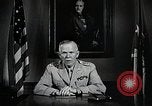
Chief of Staff George Marshall encourages war effort and outlines plan to defeat Japan late in World War 2
U.S. Army Chief of Staff George Marshall narrates film and is shown several times speaking seated at a desk. Marshall praises the Pacific Forces. Close up view of several U.S. military officers including General MacArthur (with a bandage over his right ear). Scene of U.S. Marines in combat on a Pacific Island during World War 2. U.S. marines advancing under fire. An enemy soldier is fallen in the distance, followed by a group of Japanese soldiers running for cover. Gun camera footage of a strafing attack by a U.S. aircraft on a Japanese ship, followed by strafing of parked Japanese airplanes at an airfield. Mid air dogfight scene is shown as a U.S. warplane hits and downs a Japanese aircraft. View on deck of a U.S. Navy aircraft carrier ship as a Japanese kamikaze aircraft bears down toward the ship, is hit by ship's guns, loses a wing, and, in flames, crashes into the ocean just off the ship. Scenes at Pearl Harbor after the Japanese attack in 1941, as medics care for wounded U.S. sailors in stretchers. Japanese soldiers seizing control in Bataan, with U.S. soldiers holding their hands up in surrender. Also U.S. soldiers in Corregidor standing by as they are addressed by Japanese captors. Scenes of Japanese soldiers in drills and training. Japanese Emperor Hirohito on horse back during a military parade. Scenes of dead Japanese soldiers laying on battle fields after battle. View of industrial smoke stacks of a factory in Japan. Japanese workers producing steel and munitions for war effort. Japanese soldiers cheering at a military rally. George Marshall speaks urging commitment by every American citizen in the war effort. Caricature image of Axis leaders Hitler and Mussolini with "X" marks over them, beside a non-marked image of Japanese General Hideki Tojo. Clip closes with several scenes of American flags being raised on flagpoles of military bases all over the world, as soldiers, sailors, marines, women WACS soldiers, and airmen salute the American flag.
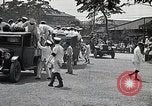
Japan mobilizing for war
Scenes from 1930s during lead up to Second Sino-Japanese War, and World War 2. Narration by General of the Imperial Japanese Army Baron Sadao Araki. Opening scene shows a practice drill in which male emergency workers, in white uniforms, arrive by truck and assemble in a field, as hook and ladder fire trucks filled with firemen, arrive and turn into a circle. Glimpse of women nurses in white uniforms standing near a large Red Cross flag with Japanese writing on it. Scene shifts to traffic on a busy city street. Tnen a closeup of Japanese women in white garb, passing out leaflets to people. Boy Scouts at the corner of a building and Girl Scouts at another spot, solicit contributions for the troops. They use megaphones to get the attention of busy pedestrians. The girls hold baskets to collect contributions. Women in traditional Japanese garb stand on a street corner and encourage public support for Japanese soldiers, by knitting scarfs to be sent to them. Soldiers stand on a street corner wearing sashes and displaying a banner. More girl scouts (or uniformed school girls) soliciting support for the military. View from a high vantage point overlooking a bridge filled with pedestrians. Camera pans upward showing way into downtown. Japanese people attend a public display of airplanes at an airport in Osaka, where citizens have contributed to fund them. They crowd around two biwing planes. A woman bows at a temporary shrine set up honoring Japanese fliers. Closeup of airplane fuselage with writing on it. Quartering view from front of radial engine running on the airplane. Covered search lights sitting side by side. Anti-aircraft battery consisting of sound detection listening devices and guns. A Japanese army truck on display and then driving away. Closeup of an anti-aircraft searchlight. More views of sound detection devices. Air raid sirens. Two bi-wing airplanes. The one in foreground is equipped with a center ski. A Nakajima aircraft in flight overhead. A searchlight being demonstrated at night. Glimpse of firemen extinguishing a fire in a street, during exercise. Nurses and stretcher bearers in an emergency exercise. Soldiers remove signs from an army truck. Emergency workers in full protective gear, including gas masks, demonstrate and exercise emergency procedures using gas on a city street. A rifle being fired at a target. Girls lined up with rifles in prone position on a firing range. They stand up with their rifles. Riveters working on steel girders of a building under construction. Closeup of a hot rivet being installed. People traveling on motorcycles, cars, and bicycles. Feet of pedestrians walking on sidewalk. View from above of cars, motorcycles, bicycles, and pedestrians moving near an electric tram on a city street. Passenger railroad coaches passing the camera viewing from beside railroad tracks. A clamshell bucket unloading coal from a barge. Cargo in a net being unloaded from a ship to a dock. New automobiles driving on a Japanese highway. Trains moving through a rail yard with many rail lines. Japanese business commuters walking on a railroad station platform. Japanese Women working rapidly using headsets and manual phone plugs at a switchboard in a telephone exchange. A Japanese businessman using the telephone. A woman typing on an english typewriter keyboard. Construction workers using wrenches to bolt a steel part on a structure. Various kinds of machinery running rapidly. Hot steel being handled in a steel mill. Fires in furnaces and smoke billowing from factory smoke stacks next to numerous electric power lines.