


 Francais
 Deutsch
 Italiano
Refine Your Search
Japanese-martial-arts stock footage and images
- Showing 2773 to 2778 of 4327 results more
more Hide
Hide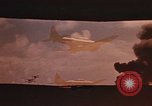
Aftermath of the Battle of Midway in World War II
Views of U.S. Navy pilots, their aircraft, and aftermath of Japanese bombing of Midway Island, in World War 2. Opening scene shows a formation of U.S. Navy Douglas Dauntless aircraft in flight. A U.S. Navy pilot climbs from the cockpit of an F4f Hellcat airplane on the deck of an aircraft carrier. His aircraft displays symbols for two Japanese aircraft downed. Another pilot in cockpit of his airplane that displays symbols for 7 downed Japanese aircraft. He climbs from his cockpit. Other pilots climbing out of their aircraft. One displays symbols for 6 kills. Three of them pose in front of an airplane. Scene shifts to Midway Island where a hangar is still burning from Japanese bombing. Glimpse of Gooney birds. Sentries stand on the airfield, with black smoke rising in the background. Closeup of wing from a downed Japanese airplane. Marines look through tangled pieces of crashed airplanes. One leans on a bent propeller blade. Heavy black smoke from petroleum fire is seen in background. Scene shifts to a PBY Catalina flying boat in flight, searching for survivors of the Battle of Midway. A U.S. Navy aircraft is seen floating in the sea, as a Navy warship heads toward it. A survivor is seen being helped from a PBY aircraft. Earlier picture of him smoking a cigarette inside the PBY aircraft. Sailors help him to a waiting ambulance. Other rescued survivors are seen standing about. Sailors place a litter aboard a PBY and use it to transport another survivor to sick bay. (Narrator states this is the 13th survivor rescued by the pilot of this PBY Catalina.) Ambulatory survivors being covered with blankets as they sit in the back of an ambulance, that then drives away with back door still open. Views of destroyed hospital on Midway Island. Red cross markings on are shown in the debris.
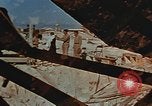
U.S. Navy and Marine personnel recover after the battle of Midway in World War II
Recovery actions by U.S. Navy and Marine personnel in the wake of the Battle of Midway in World War 2. Opening scene shows religiious services being held by a bomb crater that had once been a chapel on Midway Island. That evening, marines are assembled near flag-covered coffins of fallen comrades, in a burial ceremony. A marine chaplain conducts a funeral service, as Marines stand, with their rifles, at parade rest Several views from different perspectives of the event. An honor guard fires a volley with rifles. The American flag is at half staff, in the background. Among the officers seen is Marine Major James Roosevelt, son of the U.S. President, Franklin Roosevelt. Next, Navy boats are seen offshore, carrying the fallen for burial at sea. U.S. Navy aircraft fly in formation overhead. A marine scans the sky with binoculars as dense black smoke continues to billow from the petroleum facility bombed by the Japanese several days ago, and hangs like a pall over Midway Island. The American flag on a tall pole, is highlighted against the black smoke. Film ends with series of Slates summarizing Japanese losses in the Battle of Midway. The first shows 4 Japanese Carriers sunk. It is painted over by a brush containing red paint. Another slate announces 28 Japanese Battleships, Cruisers, Destroyers sunk or damaged. A paint brush places a large black cross over that slate. A final slate states 300 Japanese aircraft destroyed. The red paint brush appears again, but this time it marks a big “V” for Victory across the slate.
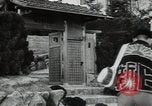
Natural disaster scenes in Japan during the early 1900s, and scenes of Tokyo before World War 2
Panoramic views of Japanese cities before World War II. A Japanese boy at home. A volcanic eruption is shown in progress. Japanese firefighters on a ridge survey a massive wildfire burning forest area. Damage after earthquakes and floods. View of a flooded Japanese town. 33rd Prime Minister of Japan, Senjuro Hayashi, exits a car and is surrounded by other officials. A crowd assembled on the street. Japanese modern buildings seen across water view in Tokyo. The Imperial Palace in Tokyo. The exteriors of several downtown buildings in Tokyo before World War II.
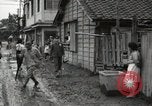
Liberation of American prisoners from Urawa prison camp in Saitama, Japan towards the end of World War II.
A Japanese prison camp at Urawa in Saitama, Japan towards the end of World War II. A Japanese military personnel near a muddy street in a village. U.S. officers and the Japanese military personnel enter the main gates of a prison building. American prisoners wave from the balcony of a building as they see U.S. officers arriving. A Japanese prison guard. Interiors of a washroom in the prison camp. A hole in the building where a U.S. Army Air Force B-29 Superfortress bomber dropped a food package. A Japanese police guard. A flag flies from the top of the building. Police officers getting prison bundles together.
General Jonathan Wainwright and American prisoners on Corregidor following their surrender to Japan during World War II.
The Battle of Corregidor Island in the Philippines during World War II. Animated map of Corregidor Island, Luzon Island. Japanese bombers bomb Corregidor. Smoke billows up from explosions. Japanese troops advance in Corregidor. U.S. Army General Jonathan Wainwright and U.S. officers confer with Japanese captors in Corregidor. View of the Manila Bay. American prisoners following their surrender. Entrance to a tunnel at Corregidor. American prisoners are marched on the island. Interiors show officers in the Malinta Tunnel. Japanese officers arrive in cars in Manila. People wave Japanese flags.
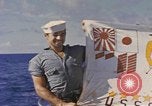
Crew members of Submarine, USS Crevalle, display a commemorative flag in World War II
The USS Crevalle (SS-291) on war patrols in East China Sea and Sea of Japan in final days of World War II. Crew members hold a flag they made depicting their engagements with Japanese shipping. It shows Japanese Navy Rising Sun flag with marks below for five Japanese Navy ships. It also shows the Japanese Red Ball flag and fourteen marks for other Japanese ships. As the film continues, it reveals more of the flag, showing more encounters with enemy shipping. A Landing Craft Infantry (LCI) passing by. Sailors standing on deck in bright sunlight with breeze blowing. One of the sailors is drinking from a mug. Sailor Robert Schwarz has grown a notable full beard and smokes a pipe. Toward the end of the film, the boat's Captain, Navy Captain Everett Hartwell Steinmetz, is seen from the back and in profile, standing on deck. Another aircraft passes overhead. (Note: Sailors holding flag in opening frames has been identified as James A. Katchis who served on the boat beginning as a Seaman 1st Class in August 1944 and Robert Schwarz of St. Louis, MO)
CRITICALPAST.COM: About Us | Contact Us | FAQs - How to Order | License Agreement | My Account | My Lightboxes | Shopping Cart | Advanced Search | Featured Collections | Website Terms & Conditions | Privacy Policy ©2026 CriticalPast LLC.
License Agreement |
Terms & Conditions |
Privacy Policy
©2026 CriticalPast LLC.