


 Francais
 Deutsch
 Italiano
Refine Your Search
Japanese-martial-arts stock footage and images
- Showing 2935 to 2940 of 4327 results more
more Hide
Hide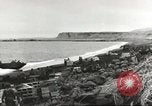
U.S. troops and supplies land at Attu Island in Aleutian Island, Alaska, during World War II
U.S. army troops and supplies being landed by Higgins boats at Massacre Bay, in preparation for battle to dislodge Japanese forces that invaded Attu Island in the Aleutians during World War 2. American forces landing at this Southern landing site included elements of the 17th and 32nd Infantry Regiments.. Troops and supplies are seen being brought to the shore by Higgins boats. Boxes of supplies are piled up and several Higgins boats are beached, including one from the Attack Transport Ship, USS Barnett (APA-5) and one from the USS Zeilin (APA-3). Weather is bleak and snow covers mountains in background. Most of the supplies are in wooden crates. Some building materials are also seen. There is no sign of Japanese resistance. The Higgins boats, aka Landing Craft, Vehicle, Personnel (LCVP) are shuttling back and forth from the attack transports seen anchored offshore. As the sequence progresses, more and more troops and supplies are seen on the beachhead. Troops form a chain to unload cargo from the landing craft. U.S. army troops and supplies being landed by Higgins boats at Massacre Bay, in preparation for battle to dislodge Japanese forces that invaded Attu Island in the Aleutians during World War 2. American forces landing at this Southern landing site included elements of the 17th and 32nd Infantry Regiments.. Troops and supplies are seen being brought to the shore by Higgins boats. Boxes of supplies are piled up and several Higgins boats are beached, including one from the Attack Transport Ship, USS Barnett (APA-5) and one from the USS Zeilin (APA-3). Weather is bleak and snow covers mountains in background. Most of the supplies are in wooden crates. Some building materials are also seen. There is no sign of Japanese resistance. The Higgins boats, aka Landing Craft, Vehicle, Personnel (LCVP) are shuttling back and forth from the attack transports seen anchored offshore. As the sequence progresses, more and more troops and supplies are seen on the beachhead. Troops form a chain to unload cargo from the landing craft.
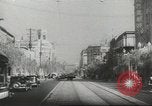
Japan in final mobilization on the home front during World War II
Street scene in Japan, as Allied Forces make progress toward Japan in World War 2. Cartoons posted to remind Japanese citizens to avoid talking about military matters. Government leader speaking to citizens about the "oratorical conquest of the foe." Camera pans across his outdoor audience. Next, tickets sold in a State Lottery to help pay for the war, are dumped into a tumbler, turned with hand cranks by two men. View of spectators waiting for the outcome as winning tickets are drawn. A man and a women saying farewell to their respective sailor sons, as they prepares to depart for duty. A troop train leaving a station as loved ones wave goodbye to departing servicemen. Next, large crowd of well-wishers wave from shore as the Japanese battleship Aki steams away. Closeup of crew members aboard the ship. Closeup of women pointing and waving from the shore. Views from a boat full of civilians, of the Aki making way in the harbor behind another three-funnel warship. Change of scene shows Emperor Hirohito with officers on horseback, reviewing and saluting Japanese army troops. Views of many Japanese soldiers marching in formations. Change of scene to U.S. Iowa class battleship viewed from overhead, and then to several U.S. battleships heading past the Golden Gate Bridge in California, on their way into the Pacific ocean. Aerial view of the battleships underway in single line formation. The U.S. Destroyer USS Porter (DD-356) passing several other U.S. warships. A Douglas Dauntless dive bombers brought up on the deck of a U.S. Yorktown class aircraft carrier. Navy armorers working on the deck of the carrier, moving bombs and machine gun ammunition. Tail view of the carrier from an aircraft taking off. Aerial view of a U.S. armada of warships and aircraft underway over the ocean. Aerial view of Mount Fuji in Japan.
American prisoners narrate their experiences of the Bataan Death March after being released from a prison in the Philippines.
United States prisoners after being released from a Japanese prison camp in the Philippines during World War II. American soldiers after being released from the Japanese prison camp. The soldiers loaded in carts. Trucks outside a building. A crippled soldier. The soldiers lying in beds. Two American prisoners introduce themselves and share their experiences about their life at the Japanese prison camp. The first soldier talks about the Bataan Death March to San Fernando from where the prisoners were taken to a prison camp. He says that the captured soldiers were made to march to San Fernando for 3 days and 3 nights and that the prisoners were not provided any food or water. He says that nearly 150 men out of 800 lost their lives during the march. Sergeant Daniel Smith narrates how the Japanese tortured the American soldiers at the prison camp.
Invasion of Corregidor by U.S. 503rd Air Regiment and 24th Division during World War II.
Battle of Corregidor fought between U.S. troops and Japanese troops in Corregidor, Luzon Island, Philipinnes during World War II. Japanese troops lower the U.S. flag and raise the Japanese flag after the fall of Corregidor in 1942. U.S. troops in Japanese prison camps. Invasion of Corregidor on February 16, 1945 by U.S. 503rd Air Regiment and 24th Division. A U.S. convoy underway at sea. U.S. naval battleships attack shore targets. Planes take off from an airfield. U.S. 503rd Air Regiment dropped by parachutes. Paratroopers land in Corregidor. U.S. 24th Division comes ashore in amphibious vehicles, troops land and fight their way inland.
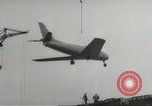
United States provides F-86 fighters to Japan Self Defense Forces and trains them
An F-86 offloaded from a ship in Japan. Six F-86s on the dock. American and Japanese mechanics work on aircraft under lights on airbase.One of the aircraft has Japanese red ball insignia on fuselage. Japanese and American mechanics working on jet engines in a hangar, with an American aircraft in background. American pilot briefs Japanese flyers before a training mission. F-86s lined up on ramp, ready to start. Fuel trucks and tanks in background. American Flight leader raises hand and circles in air to signal engine start. They taxi out. The flight of 4 F-86s is seen in formation above clouds.
Wrecked U.S. vehicles and equipment and a destroyed U.S. Navy base at Mariveles in Bataan, Philippines (WW2)
Japanese occupation of Philippines by Japanese troops during World War II. View of Mariveles, Bataan in Central Luzon. Japanese troops wander through the ruins of Mariveles Naval Base at Mariveles in Bataan. A sign board reads 'US Navy Base'. Japanese soldiers stand nearby. A gas pump and sign read “U.S. Navy Gas”. An abandoned Northwest crane and bulldozers in Bataan. A ship underway at sea. Mountains and buildings in the background. Wrecked vehicles and equipment on a field.