


 Francais
 Deutsch
 Italiano
Refine Your Search
Japanese-martial-arts stock footage and images
- Showing 2965 to 2970 of 4327 results more
more Hide
Hide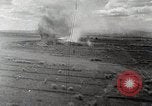
Views of Clark Field and environs,Luzon, Philippines, after liberation by U.S. in 1945
Aerial views from airplane flying very low over portions of Luzon, Philippines, after liberation by the U.S. in World War II. Smoke from farmers burning parts of their fields. View of Clark Field and environs. Barracks and other installations, including a hospital with red cross on the roof. Aerial view of the Holy Rosary Church in Angeles City, Pampangga, Philippines whose roof was damaged by an American Mitchell B-25 bomber on January 7, 1945. The bomber, dubbed the "SAG Harbor Express" of the 499th Bomb Squadron, had been hit by Japanese anti-aircraft artillery. 2nd Lt. Arthur Browngardt was manning the bomber, and perished with all crew as the plane crashed near Holy Angel Academy. Destroyed and damaged Japanese warplanes on Clark Field. Two Americans (one with a rifle) and a local mechanic examining an undamaged Japanese Mitsubishi G4M "Betty" bomber (tail number: 763-12). They open the fuselage door and go inside.
United States 1st Marine Division troops bomb Peleliu Island, Palau.
U.S. 1st Marine Division operations on Peleliu, during World War 2. U.S. F4U Corsair aircraft, flying low and slow, with gear down, drop napalm incendiary bombs on Japanese troops dug in on a ridge. Huge explosions seen. A C-47 transport airplane taxis on airfield. F4U Corsairs are seen parked and tents are pitched nearby.Several C-47s are parked on a ramp. Three F4Us taxi past them headed to the runway. F4Us take off and one is seen bombing Japanese positions on the ridge. Slate notes 1st Marine Division and D+24. Major General William Henry Rupertus,kneels on one knee, in sand, as another officer (shirtless) briefs him. They briefly discuss tactics and then walk away. Marine rifleman firing into burning wreckage of a Japanese position. Marine firing grenade from his rifle. Two Marines stand on beach with LVT (landing vehicle tracked) on the sand, nearby. They point at large ship offshore. Views of the Peleliu beachhead, with numerous ships and landing craft beached, including the second USS Seaward (LST 278) that collided with LST-129 and suffered considerable damage, On October 2, 1944. (LST-129 may be the LST seen next to LST-278.)
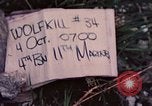
U.S. Marines employ artillery and flame throwers at Peleliu Island, Palau, during World War II.
Slate identifies 4th Battalion, U.S. 11th Marine Artillery Regiment, in action at Peleliu, during World War 2. They are seen loading and firing a 105mm howitzer point blank at Japanese positions dug into the hills. Another slate identifies "L" Company, 3rd Battalion, 5th Marine Regiment, operating against Japanese in caves on the island. They are seen using a flamethrower equipped Landing Vehicle Tracked (LVT) against hillsides. Marine seen firing at any Japanese defenders who try to escape.
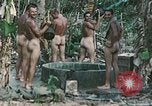
U.S. 1st Division marines find time to clean up and get mail near end of battle of Peleliu Island, Palau, in World War II.
U.S. 1st Division marines find time to bathe and clean up at the end of preliminary mopping up operations in the battle of Peleiu Island, during World War 2. A group of Marines uses water from a captured Japanese well to take much-needed baths. They load captured supplies onto a Japanese cart. Other marines are also seen washing up at the captured site. Two marines look at a small Japanese army truck. Marines gather around for mail call as letters from home are destributed. A marine standing in front of his tent. A group of marines relaxes, as one of them cuts open a coconut. Several of them smoke cigarettes. Two are seen cleaning their rifles.
U.S. Marines of 1st Division establishing beachhead during battle of Peleliu Island, Palau, during World War II.
The battle of Peleliu during World War 2. F4U Corsair aircraft of U.S. Marine Aircraft Group 11, dive to attack Japanese positions near the beachhead on Peleliu Island. Two U.S. M4A2 tanks of the 1st Marine Tank Battalion are seen on the airfield. Closeup of a knocked-out grass-camouflaged Japanese tank with two dead Japanese soldiers lying next to it. Marines unload shells from LVT (landing Vehicle Tracked) as F4U flies low dropping bombs in background. Smoke rises from bomb burst. Marines watch the bombing activity,.
U.S. 1st Marine Division in battle of Peleliu Island, Palau, during World War II
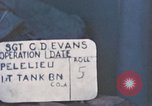
Slate identifies location as Peleleiu (misspelled) and unit as 1st Tank Battalion. Battle of Peleliu in World War 2. After taking the airfield, Marines of the U.S. 1st Marine Division examine dead Japanese next to what appears to be a demolished Japanese light tank (turret is missing completely). Next scene shows destroyed Japanese light tank, Type 95 Ha-Go. View from U.S. tank moving towards the airfield, where several Marine 1st Battalion M4A2 Tanks are seen. The area is strewn with wreckage and destroyed buildings. A combat photographer squats in the sand next to two Marines and a tank, as he removes his movie camera from a bag, and examines it.
CRITICALPAST.COM: About Us | Contact Us | FAQs - How to Order | License Agreement | My Account | My Lightboxes | Shopping Cart | Advanced Search | Featured Collections | Website Terms & Conditions | Privacy Policy ©2026 CriticalPast LLC.
License Agreement |
Terms & Conditions |
Privacy Policy
©2026 CriticalPast LLC.