


 Francais
 Deutsch
 Italiano
Refine Your Search
Japanese-martial-arts stock footage and images
- Showing 3067 to 3072 of 4328 results more
more Hide
Hide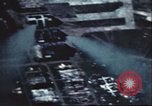
Aerial view of the target area and the strafing of the area by the U.S. aircraft in Manila, Philippines.
U.S. aircraft in flight over Manila, Philippines during World War II. Aerial view of the target area in Manila. Japanese airplanes in a field are strafed. Japanese transports being strafed. Hangars and buildings. The Japanese held area of Manila. Fire in the background. A bridge bombarded. The bombed bridge over a river. The city and the waterfront. Aircraft in flight overhead.
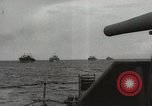
A U.S. Naval invasion Task Force operating in the Pacific Ocean during World War II.
A U.S. naval Task Force, carrying troops and equipment in the Pacific, during World War 2. Infantry fill the deck of a transport ship. Closeup of some. A Benham class destroyer nearby. Closeup of the USS Buchanan (DD-484), a Gleaves-class destroyer, in camouflage, as it steams past the camera ship. Closeup of a Douglas SBD Dauntless aircraft taking off from an aircraft carrier. A Navy Grumman F4F Wildcat airplane with engine running on a carrier deck. Another Douglas Dauntless plane taking off from a carrier. American aircraft circling to land on a carrier. Two Independence class light aircraft carriers underway. A Douglas Dauntless aircraft taking off from a carrier, as another is seen aloft in the background. Repeated earlier view of Grumman F4F on a carrier. A U.S. Colorado class battleship raising a large bow wave as it heads toward the camera ship. A Baltimore class heavy cruiser underway. Task force planning taking place aboard warships. Iowa class fast battleship. Alarm sounds aboard a warship and sailors respond to battle stations. Grumman TBF torpedo bomber aircraft take off from a U.S. Aircraft Carrier, and are seen later flying in formation. Gun camera footage from U.S. aircraft strafing Japanese warplanes parked on airfields and strafing Japanese supply ships. (One explodes). Gun camera footage from U.S. planes attacking Japanese ships and boats.
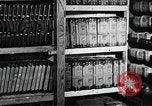
A film is reviewed, translated and checked and sound effects are added to the film before it is shown to people in Japan.
A documentary film about public film production and use in Japan. Motion picture film reel canisters kept on shelves. A man places film canisters on the selves. The man places a film from a canister on a film projector. A review committee on Civil Information and Education Section with other Japanese advisors review the film. Officials discuss. Japanese men rewrite the script in Japanese. Men check the script for accuracy. A man works on a typewriter. The man puts an OK seal on a paper. Men prepare a discussion guide of the film. Men shoot scenes from a building terrace. Officials at a desk. A man writes a title on a book. A map on a slide. A man speaks into a microphone and another waits in a recording studio. Musicians give music in the film. A man controls volume and tone quality. The man records on the film on a recorder as well as on a tape. The film is taken out of the recorder. The film pases through various equipment in the laboratory during its development. A man inspects the film. Men make bundles of films for different regions. The bundles are carried on trolleys. The trolleys on a railway station platform. A train carrying the bundles pulls out of the railway station.
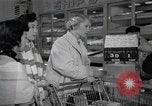
Women at dairy bar select cheeses and put purchases on counter as the cashier checks them out in Japan
Japanese women engaged to American soldiers take practical classes at bride schools in Japan. An American housewife acts as a mentor to two Japanese brides, teaching them how to shop for groceries at a supermarket. A Japanese supermarket staff hands over a box to the American woman. The three women checks the dairy bar for cheese. The three women at the checkout counter. Housewife put purchases on counter as the cashier checks them out. Woman puts a can of sweet peas to the counter at checkout.
American Marines land and advance inland in Guadalcanal.
American Marines and the Japanese forces in Guadalcanal during World War 2. Animation depicts the Allied forces plan against the Japanese forces on islands in the Pacific Ocean. A convoy of U.S. ships. The United States Marines land on Guadalcanal. Marines running out of landing craft while under fire. The Marines move inland. Combat scenes show soldier in prone position firing rifle. A U.S. Marine firing a machine gun at enemy Japanese in jungle area inland of beach during battle. Face of Marine in fox hole. (World War II period).
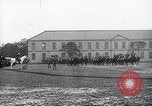
Emperor Hirohito reviews the graduate officers and present awards at the graduating ceremony in Japan (WW2)
A film of the Army-Navy Screen Magazine about the military cadets trained at the Imperial Japanese Army Academy or Rikugun Shikan Gakkō in Ichigaya, Tokyo, Japan. The Emperor of Japan Hirohito reviews the graduate officers. The cadets parade. Women from a school for army brides bow to graduates. The honored student is being presented a special scroll. The Commanding Officer receives a gift from Emperor Hirohito for training the cadets. The cadets in a parade on horses lead by Emperor Hirohito. The cadets raise their cups of Sake (Japanese rice wine) during the graduating ceremony. Soldiers walk past a wooden gang plank as they return to Tokyo. View of dead Japanese soldiers lying on a beach following a battle with American forces in World War II.
CRITICALPAST.COM: About Us | Contact Us | FAQs - How to Order | License Agreement | My Account | My Lightboxes | Shopping Cart | Advanced Search | Featured Collections | Website Terms & Conditions | Privacy Policy ©2026 CriticalPast LLC.
License Agreement |
Terms & Conditions |
Privacy Policy
©2026 CriticalPast LLC.