


 Francais
 Deutsch
 Italiano

Refine Your Search
Japanese-martial-arts stock footage and images
- Showing 3091 to 3096 of 4337 results more
 Hide
Color Sound
U.S. Navy's Task Force 58 in the Battle of Okinawa during World War II.
Opening title is: "The Fleet That Came To Stay." Opening scene shows a U.S. warship dimly in darkness, during World War 2. Three American sailors in battle gear, lean over the ship's railing and discuss their destination: "Okinawa.". One sailor walks along the deck, past many more looking over the railing. The men discuss being only 320 miles from Japan, itself. Nose view of a Japanese Kawasaki Ki-61 aircraft with engine running. View of it taking off, followed by a succession of views showing numerous similar Japanese aircraft taking off. A U.S. B-29 bomber taking off and views of B-29s in formation aloft. Bombs dropping from the B-29s and seen from the aircraft as they explode on Japanese targets below.
Preparation area at Ashiya Air Force Base in Japan shows cargo being assembled and parachutes being attached to drums.
Combat cargo airdrop prepared at Ashiya Air Force Base in Japan during the Korean War. Views of the cargo which is to be dropped. Preparation area shows the cargo being assembled. American and Japanese personnel working in the area. Drums of gasoline, with protective cover, being prepared for dropping. Parachutes are attached to the gasoline drums. Conveyor belt system is used in the cargo preparation area. A Japanese civilian pushes two drums down through the area on the conveyor belt system. Japanese make parachute attachments to fifty gallon drums.
United States Army Air Force tracers strafe ground and coastline installations in Kyushu, Japan (WW2)
An air raid by the United States Army Air Force on Kyushu, Japan during "Operation Downfall" of World War II. United States Army Air Force tracers strafe Japanese ground installations. Grassland seen. The tracers strafe Japanese coastline installations as seen from aircraft cockpit. The tracers strafe a small Japanese patrol vessel and junk. Fire around the vessel.
President Harry S. Truman reads prepared speech after dropping of atomic bomb on Hiroshima Japan during World War 2.
U.S. President Harry S. Truman delivers a speech following the dropping of the atomic bomb on Hiroshima, Japan, during World War II. U.S. President Harry S. Truman seated at desk in cabin of a ship. He reads prepared speech stating that a single American aircraft dropped one atomic bomb on Hiroshima and destroyed its usefulness to the enemy. He reminds listeners that the Japanese began the war from the air at Pearl Harbor. He speaks about the U.S. Armed Forces and the production of atomic bombs in the United States. The President states that the U.S. is now prepared to completely destroy every productive enterprise of Japan, by bombing Japanese docks, factories, and communications. Truman states that the U.S. shall completely destroy Japan's power to make war. President Truman notes that acceptance of the Ultimatum of July 26th issued at Potsdam, could have saved the Japanese people much suffering. But it was rejected by Japan's leaders. He states that the U.S. have spent more than two billion dollars on the greatest scientific gamble in history and have won. This is due to the greatest achievement of organized science in history.
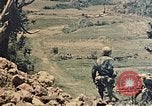
United States 1st Battalion 1st Marines attempt to put off a fire in an overturned tank after hitting a land mine in Naha.
U.S. 1st Battalion 1st Marines fight Japanese troops in Naha during their advance to Shuri in Okinawa Island. Marines examine cave (Japanese fortification) blasted by demolition charge. Marines carry wounded man on stretcher. Marine stand on top of hill in foreground. Marines advance up a hill with casualties. U.S. tank overturns after hitting a land mine, it is on fire. Marines attempt to extinguish the fire. Marines dig around tank in an attempt to rescue men inside. Turret of tank burns. Marine with wounded arm, blown clear when tank hit Japanese mine. Marines talk to the man who was hit. Tank burns. Marines with mine detector in foreground. Ammunition in tank explodes. Tanks burns after explosion. Pellets of hot steel fly from tank which is burning. Smoldering tank. (World War II period).
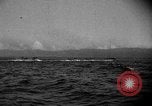
United States 182nd Regiment lands and invades city of Cebu in Philippines.
U.S. 182nd Regiment lands on Cebu. U.S. landing crafts approach Cebu beach. Troops wade ashore. Palm trees in the background. Major General William H Arnold mapping the drive to city. Equipment is unloaded by men. U.S. troops advance toward Cebu city and encounter road blocks. They sweep for land mines on their way to city. A Bomb is taken out of a hole. Dead body of American soldier killed by land mine. 4.2 inch mortars are brought forward by the 80th Chemical Mortar Battalion (CMB) on beach. Tanks and troops advance towards a village where first organized enemy resistance is encountered. Troops take cover behind trees and fire rifles at Japanese snipers hiding in houses. Trooper throws grenade in house and moves back. Explosion in house. House is set on fire. Wounded Japanese comes out of house and falls down. Troops advance further. Troops greeted by civilians. Native carriages, tanks and troops advance in village. Japanese prisoners under guard. Troops move through rubble and wreckage of building in village. Troops advance through old military installation Fort San Pedro. Wreckage of building. Troops move along streets of Cebu. (World War II; WWII;World War 2; WW2)
CRITICALPAST.COM: About Us | Contact Us | FAQs - How to Order | License Agreement | My Account | My Lightboxes | Shopping Cart | Advanced Search | Featured Collections | Website Terms & Conditions | Privacy Policy ©2026 CriticalPast LLC.
License Agreement |
Terms & Conditions |
Privacy Policy
©2026 CriticalPast LLC.