


 Francais
 Deutsch
 Italiano
Refine Your Search
Japanese-martial-arts stock footage and images
- Showing 3157 to 3162 of 4328 results more
more Hide
Hide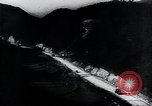
Runner runs during track meet in Japan.
Track meet in Japan. A Japanese runner run. People gather besides road to watch meet, with Japanese flag in hand. A car driven behind the runner.
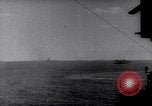
U.S. warships fire moving barrage of naval gunfire to support amphibious assault on Iwo Jima in World War II
World War 2 invasion of Iwo Jima by U.S. amphibious forces. U.S. warships continue bombardment of Japanese fortifications on Iwo Jima, but cease temorarily, allowing U.S. air strikes. U.S. dive bombers attacking Japanese positions.The Cruiser USS Indianapolis (CA-35) is seen maneuvering close to shore. U.S. gunboats firing barrages of rockets that saturate the beach with explosions. Diagram illustrates the way heavy naval gunfire overhead is coordinated with advancing amphibious craft. Views of landing craft and battleships firing overhead in a moving barrage. Landing craft arriving at the beach.
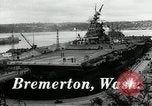
The aircraft carrier USS Bunker Hill being repaired at the Puget Sound Naval Shipyard, Bremerton, Washington, during World War II
View of the aircraft carrier, USS Bunker Hill in dry dock at Bremerton, Washington. She is being repaired after being attacked by Japanese Kamikazes during the invasion of Okinawa in World War 2, in which suffered more than 600 casualties including 346 dead and 43 missing. View of the ship's captain, George Seitz, looking over the damage to the ship. Camera shows severe damage below decks of the Bunker Hill and outside, where the flight deck is seen completely destroyed and collapsed into the ship's interior. View of a large scoreboard displaying a Japanese flag for every enemy plane downed by crew of the Bunker Hill. A sailor totals them and writes "475" on the board. Crew members are massed on shore and wave enthusiastically about returning to sea and rejoining the battle against Japan. (Note: The USS Bunker Hill repairs were not completed until after the war ended.)
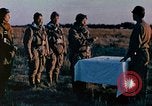
Four Kamikaze pilots drink a final toast of Sake on an airfield in Chofu, Japan (WW2)
A World War II reenactment shows four Japanese Kamikaze pilots on an airfield in Chofu, Japan. They stand near a table on the field. Sake or Japanese rice wine placed on the table. Commander stands on the other end of the table. He talks to the pilots. Kamikaze pilots dressed in the flying gear. They salute the commander. They each step forward and the commander fills their glasses with Sake. They return to face the commander and they all drink their Sake together, and then walk away. (World War II; WW II; World War 2; World War Two)
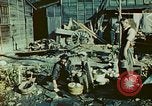
People sit outside shacks in war-ravaged Tokyo, Japan soon after end of World War 2
Japanese people sit outside shacks in Tokyo, Japan, soon after the end of World War 2. Flimsy homes in the background with rugs, bedding, and laundry hung out on the house in the sun. Japanese people living in poverty amid rubble. Woman squats on ground and washes dishes using water from a pump well. Other family members help wash dishes that are laid out on the ground. Two young boy children are seen in the bombed out ruins, and operating a water pump.
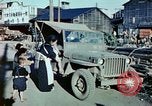
Woman and children stand on a street near a U.S. Army jeep in Tokyo, Japan.
Japanese woman and children stand on a street near a U.S. Army jeep in Tokyo, Japan, soon after the end of World War II. The children sit in the American jeep. Japanese boy and girl children pose for the camera. Simple post-war houses and shacks seen in the background.
CRITICALPAST.COM: About Us | Contact Us | FAQs - How to Order | License Agreement | My Account | My Lightboxes | Shopping Cart | Advanced Search | Featured Collections | Website Terms & Conditions | Privacy Policy ©2026 CriticalPast LLC.
License Agreement |
Terms & Conditions |
Privacy Policy
©2026 CriticalPast LLC.