


 Francais
 Deutsch
 Italiano
Refine Your Search
Japanese-martial-arts stock footage and images
- Showing 3307 to 3312 of 4328 results more
more Hide
Hide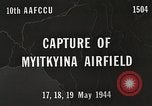
U.S. Waco CG-4 gliders unload airborne engineers to secure Myitkyina airfield after its capture during World War II.
Capture of Myitkyina airfield by Allied Forces during Burma Campaign of World War II. Animated map highlights Myitkyina airfield in North Burma which is captured by Allied ground forces on 17th of May, 1944. USAAF (United States Army Air Forces) Waco CG-4 gliders parked at Shingbwiyang airfield. USAAF officer inspects a map. Airbase engineering equipment are loaded aboard gliders. Tow rope of glider is hooked up with USAAF C-47 Skytrain transport plane. Airborne engineers board the glider. C-47 tows CG-4. CG-4 makes a landing at Myitkyina airfield under Japanese machine gun fire. Another glider makes a crash landing. Airborne engineers exit the gliders on field. A pilot and an engineer of crashed glider are given plasma and first aid. Wounded men are evacuated. Bulldozers level the airfield. Chinese soldiers search for hidden Japanese snipers in area.
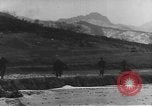
U.S. 8th Army forces battle their way to Seoul during the Korean War. Lieutenant General Ridgeway takes command.
Operations of United States troops in Korea during the Korean War. U.S. soldiers advance towards a battlefield. Smoke from firing and bombardment on the battlefield. Wrecked equipment and rubble on the ground. Prisoners of war are questioned by a soldier. Tanks advance on the battlefield and soldiers fire rifles. Mountains in the foreground. American forces enter the capital city of Seoul and set up a 155mm howitzer next to Government-General of Chōsen Building (also called the Japanese General Government Building or the Seoul Building, built by the Japanese in 1926). View of the sandbagged howitzer firing at North Korean targets. An aerial view of the battlefield. U.S. Army Lieutenant General General B. Matthew Ridgway, newly appointed Commanding General of the U.S. Eighth Army, arrives on a U.S. C-54 transport plane, to assume command in Seoul. As he steps from the plane, he is greeted by Major General William M. Hogen and another officer.
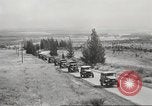
United States Army soldiers arriving and advancing towards their camps in Hawaii. View of Lt General Walter Short.
(Before the attack on Pearl Harbor in World War 2). United States Army soldiers arriving in Hawaii. A truck convoy on a road. The soldiers aboard the trucks. Supplies and equipment loaded on the trucks. The soldiers arrive at U.S. Army camps. Soldiers running in a line in the camp. Soldiers include some who appear to be of Japanese-American descent or Hawaiian descent. They carry their luggage on shoulders and stand outside the tents. Closeup view of U.S. Army Lieutenant General Walter Short on a street in front of a staff car, confers with a civilian. (This is before General Short's reduction in rank to Major General which followed the Japanese attack on Pearl Harbor. General Short had been responsible for the defense of U.S. military institutions in Hawaii at the time of the attack.)
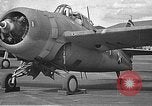
U.S. Navy Lt.Edward O'Hare and LCDR John Thach, of VF-3, prepare for flight at Kaneohe NAS, Hawaii, in World War II.
Standing in front of an F4F with its engine running and the plane captain in its cockpit, Lieutenant Commander John S. Thach, Commander of Navy Fighting Squadron Three (VF-3) discusses a planned flight with Lieutenant Edward "Butch" O'Hare, as they look over a map. (This sequence is repeated again for the camera.) LCDR Thach boards his aircraft, as plane captain steps out of cockpit and stows his map. Thach's plane has 3 Japanese victory flags painted below the cockpit. The Squadron's Felix-the-Cat logo is seen on the fuselage.The plane captain helps Thach get strapped in and settled in the cockpit. Thach gives a thumbs up indicating he is ready. Lt. O'Hare climbs aboard his F4F, which displays 5 Japanese victory flags. (O'Hare is the U.S. Navy's first air ace of World War 2.) His plane captain stows his map and O'Hare straps himself in and runs his cockpit checks. He gives a thumbs up indicating he is ready.
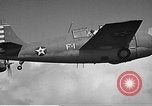
U.S. Navy Lt. Edward Henry "Butch" O'Hare and LCDR John S. Thach, in flight over Hawaii, during World War II.
LCDR John S. Thach, Commander of Navy Fighting Squadron Three (VF-3) is seen flying his F4F (number: F-1) with his wingman, Lt. Edward O'Hare,who is flying F4F number F-13. They fly over Hawaii and environs, with their canopies open. Thach is seen clearly in his cockpit. A change of sequence suddenly shows O'hare flying lead, with Thach flying on his wing. There appear to be only 4 Japanese victory flags painted on O'Hare's airplane. (Note: Lt. O'Hare was the U.S. Navy's first ace, shooting down 5 Japanese aircraft, in World War 2, and was a Medal of Honor recipient.)
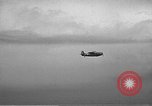
USN Lt. Edward Henry "Butch" O'Hare and LCDR James Thach, pilot F4F aircraft over Hawaii in World War II.
Lieutenant Edward O'Hare, the U.S. Navy's first ace fighter pilot of World War 2, is seen flying his F4F aircraft (number: F-13). Felix-the-Cat logo of the Navy Fighting Squadron Three (VF-3) is seen on his airplane, but only 4 Japanese victory flags are visible below his cockpit. Another F4F (number F-1) appears,flown by Lieutenant Commander John S. Thach, Commander of VF-3. Thach is flying with his canopy open. The VF-3 logo and 3 Japanese victory flags are painted on his airplane. With Thach in the lead, O'Hare maneuvers into the left wing position.
CRITICALPAST.COM: About Us | Contact Us | FAQs - How to Order | License Agreement | My Account | My Lightboxes | Shopping Cart | Advanced Search | Featured Collections | Website Terms & Conditions | Privacy Policy ©2026 CriticalPast LLC.
License Agreement |
Terms & Conditions |
Privacy Policy
©2026 CriticalPast LLC.