


 Francais
 Deutsch
 Italiano
Refine Your Search
Japanese-martial-arts stock footage and images
- Showing 3589 to 3594 of 4328 results more
more Hide
Hide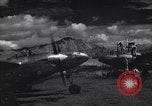
P-38 aircraft and ground crews of U.S. 49th Fighter Group in New Guinea, during World War II.
P-38 Lightning aircraft of the 9th Fighter Squadron, 49th Fighter Group, at Schwimmer Field near Port Moresby, New Guinea, during World War 2. Crew chiefs attend to P-38 aircraft, some with engines running. Ground crewmen manually maneuver nose wheel using towbar. Crew chief cleans the aircraft of American Ace, Captain Richard I. Bong. His P-38, named "Marge," displays large picture of woman and 27 Japanese victory flags ( Bong having just broken Eddie Rickenbacker's World War I record of 26 victories). Staff in control tower use light signals. Aerial view from airplane flying among cumulus clouds.
The bombing of Rekata bay, near Munda in the South Pacific,on August 24th 1943.
Bombing of Rekata bay (near Munda and Guadalcanal in the South Pacific) during August 24th 1943. U.S. B-24 Liberator bombers of the 13th Army Air Forces in flight at a high altitude over the bay. Bombers drop bombs on Japanese targets at Rekata bay. (World War II period).
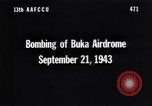
The bombing of Buka Airdrome on Bougainville Island by U.S. B-24 Liberators
Events relating to the bombing of Buka Airdrome on Bougainville Island on September 14th 1943. U.S. B-24 Liberator bombers and fighters in flight at a high altitude over the airdrome. B-24s dropping bombs. Impacts visible. Japanese fighter aircraft receiving fire from American aircraft. (World War II period).
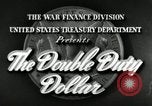
World War 2 film promoting public investment in War Bonds and stamps to aid the war effort and temper inflation
World War 2 era film that also includes some World War 1 scenes. Show girls or chorus girls in follies-like show, costumed as U.S. silver dollars and marching to tune and lyrics alluding to dramatic increase of currency in circulation, over the years. Animation with stacks of coins shows increase in national income from $46 billion,in 1933, to $71 billion, in 1939, and $142 billion in 1943. Back to the "follies dollars," a boy asks why, and then scenes of the Japanese attack on Pearl Harbor,are shown, with U.S. battleships being sunk. Wartime arms plants are shown. An M2A3 Light Tank rolls off a production line. Ships being constructed in a shipyard. B-24 Liberator bombers being built in a factory. Artillery shells being produced. Defense workers receiving their pay. The "follies dollars" group themselves to illustrate the fractions of income devoted to taxes and savings. But other spending is curtailed by wartime shortages. A woman talking with clerk in a drug store. U.S. Army troops crossing a pontoon bridge in open trucks, towing 75mm M1A1 howitzers. Infantry on the march. Animation showing industrial production devoted to war materiel and lots of dollars chasing few civilian goods. A grocery clerk offers to sell a woman customer butter for more than the established price, and she agrees. The "follies" performers then introduce the idea of an "inflationary dollar," and some history of past U.S. inflations. Animated examples of price inflation are shown. Glimpses of World War I scenes are seen, circa 1917 -1918, including: a 12-inch railway gun firing; a huge explosion from shell bursting near the camera; various scenes of United States infantry soldiers and French soldiers in battle action, running to bomb craters for cover and emerging from trenches to go up "over the top" into no-mans land during combat. Meanwhile, singing narration refers to the home front inflation due to competition for limited civilian goods. Map shows Europe and singing narration cites rising prices for food in occupied France and other countries suffering ravages of World War II. Montage of scenes showing needy civilians obtaining food in those countries. Animation shows increases, by 1944, in cost of U.S. civilian goods since the Pearl Harbor attack. "Follies" character called "Double-duty dollar," appears explaining he serves the war and curtails inflation on the home front by being saved through investments in War Bonds and stamps.
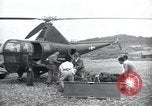
U.S. Army Medical Service in Korea. Evacuation of wounded to Japan for treatment during the Korean War
Medical aid being provided to U.S. soldiers during the Korean War. Helicopters with special containers on their sides to be used for evacuation. An injured soldier being carried in a container on the side of the helicopter. The helicopter takes off. An injured soldier being brought to a medical station aboard a light liaison airplane. Men carry soldier on stretcher into an evacuation airplane. Cover over ramp into aircraft reads'374th troop carrier wing, Hospital Evacuation'. The aircraft will evacuate the wounded to Japan. In Japan, Japanese civilians are seen carrying wounded U.S. soldiers from a C-47 aircraft ,on a stretcher into an ambulance. View of ambulance interior,shows tiers of litters. Ambulance arrives at Tokyo Army Hospital. View of the hospital building. The wounded soldiers being carried into the hospital for treatment.
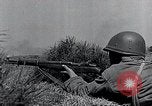
Role of American women in the military; WACS, nurses, and other military roles for women in World War 1 and World War 2
The role of women in the armed forces in the United States. A U.S. Army sniper fires a 1903 Springfield rifle on the Korean front during the Korean War. A woman in the Women's Army Corps (WAC) inspecting such a rifle in the U.S. Several Patton Tanks moving up a hilly road in Korean War. A WAC testing the turret of a Patton tank. U.S. Army women at desks as they work with Army men in an office. Picture depicts Molly Pitcher, wife of a fallen U.S. Revolutionary War artilleryman. Depiction of George Washington at desk. Depiction of Clara Barton, an American nurse with a wounded soldier. Reenactment of Clara Barton working with another women. A man holds the flag of the American red cross. Actual footage of a Wright Brothers aircraft in flight. Women in long dresses pushing an early model of car. A group of American soldiers in World War I running on a battlefield.. U.S. Army troops wearing gas masks and firing rifles from trench in World War I. American women war production workers assembling belts of machine gun bullets during World War I in a munitions factory in the United States. A nurse tending a wounded soldier. A woman nurse helping place a wounded soldiers into an ambulance in Europe, in World War I. Nurses in an operating theater in a hospital during World War I. Women march in victory parade at end of World War I. Women's suffrage demonstration by suffragists (sometimes called suffragettes) in front of the White House and then women and men entering a polling place to vote around time of of 19th amendment giving women the right to vote in 1920. Aviatrix Amelia Earhart climbing down from an airplane. Swimmer Gertrude Ederle on an award stand. U.S. Navy Vought SB2U-2 planes in flight as they drop bombs. Scene of Pearl Harbor attack by Japanese during World War 2. Army nurses look out from deck of ship in World War II. Soldiers fire artillery. View of mountains and scenes of combat on islands in the Pacific during WWII. General Mark Clark awards nurse Silver Star medal. Repatriated Army nurses, who were prisoners, are loaded onto an aircraft by means of a fork lift. In 1942, President Franklin D. Roosevelt signs legislation establishing the Women's Army Auxiliary Corps (WAAC). Secretary of State George Marshall and others witness the signing. Depiction of Godess Athena. Women volunteering for WAAC move in a line carrying bags. American women in military uniform marching. WAAC volunteers being processed. Women receive physical exams and receive inoculations. WAAC personnel being trained: working on X rays, in medical pharmacy laboratories, food service, and radio work. Women on board warships in World War 2.