


 Francais
 Deutsch
 Italiano
Refine Your Search
Japanese-martial-arts stock footage and images
- Showing 3937 to 3942 of 4336 results more
more Hide
Hide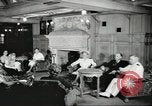
The Swedish ship, M.S. Gripsholm awaiting departure from pier at Jersey City, New Jersey, in World War II
At start, the film shows the Captain of the M.S. Gripsholm relaxing, with an American civilian official, along with several crew members and some American women, in the First Class smoking lounge aboard the ship. Scene shifts to view of the Gripsolm's two smoke stacks and then to a stack of baggage belonging to Japanese Nationals and Issei passengers aboard the ship for repatriation to Japan in World War 2. Customs officials are seen screening the luggage. Stern view of the Gripsholm docked at pier in Jersey City, New Jersey. Swedish flag displayed on the deck. More stern views of the ship.
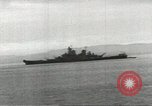
End of World War II and formation of United Nations
Japanese troops surrender on board United States Naval ship Missouri in the Pacific Theater. Officers sign surrender documents and General Douglas MacArthur delivers a speech. People celebrate the end of World War II. Harry S. Truman, Molotov and Gromyko and delegates of 50 other nations sign United Nations charter in San Francisco, California. American troops return after the war.
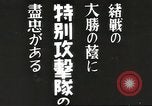
National Yasukuni Shrine in Tokyo, Japan
Photographs of Japanese Naval heroes who lost their lives for the nation. Cherry blossom trees. Yasukuni National Shrine where the Naval heroes lay buried in Tokyo, Japan.
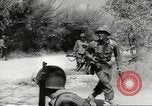
Amphibious operations in Italy, during Operations Husky and Avalanche. General hazards of wartime amphibious assaults including those in the Pacific Theater in World War II.
American soldiers in Italy, during Allied Operation Husky, and Operation Avalanche in World War 2. In landings during invasion of Salerno, Italy, soldiers pause their movements while two use a detector to search for possible buried mines. They detect one and are seen carefully digging it up from the sandy soil. Soldiers unroll steel matting across an area of beach. Close-up of heavy trucks moving across the matting. A bulldozer uses a cable to pull a section of temporary docking out of an LST (Landing ship tank). Troops move across several sections of such docking as they make their way onto the shore. A sherman tank making its way toward the shore . More heavy equipment coming ashore from LSTs, including a US M1 155mm “Long Tom” Gun. The gun being towed on shore, as trucks and jeeps maneuver through shallow water nearby. A long line of jeeps and trucks moving inland. Military vehicles being offloaded from the British Landing Ship Tank (HM LST-200). U.S. troops moving on a beachhead, along with artillery pieces, and vehicles. Soldiers carrying boxes of supplies and ammunition and struggling with large wooden crates of such, in shallow surf, and using a roller conveyor to offload some heavy items from a ship. A landing craft suspended from a cable operated A-Frame on wheels (in the water). At this point the thrust of the film shifts to illustrate the hazards of amphibious operations, in general. Swamped vehicles and a landing craft in the surf. The beach littered with damaged and swamped landing craft and equipment, including, among others, a landing craft from the USS Samuel Chase (APA-26). A huge explosion in the water. Glimpse of a German Junkers Ju 87 (Stuka) dive bomber attacking while being shot down by a U.S. sailor firing an anti-aircraft gun . View from above of sailors firing twin bofors 40mm antiaircraft cannons from an emplacement on a ship. Several German Junkers Ju 87 planes maneuvering as they attack. Quad bofors antiaircraft guns firing from a ship. More attacking Ju-87 dive bombers on the attack. A dramatic explosion and smoke from the Liberty ship SS Robin Rowan after being hit by a German bomb off the coast of Gela, Sicily on July 11, 1943. A landing ship burning from German bombing, off Gela, Sicily, with its deck full of halftrack and personnel carrier vehicles. The film continues the theme of losses encountered in wartime amphibious assaults, by shifting to the Pacific theater of operation, where a Landing Ship Tank (LST) is seen ablaze, off Guadalcanal, after being hit by Japanese shelling. View from beach with barbed wire, ashore, of the burning LST. Sherman tanks lost in a conflagration aboard an LST. Sailors carry a casualty on a litter, and place it next to other fallen crew members, on deck.
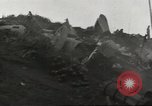
Amphibious Task Force 9 soldiers carry supply boxes in Aleutian Island, Alaska
Amphibious Task Force 9 soldiers carry supply boxes in Aleutian Island, Alaska. Wrecked Japanese air planes and huts on the island. (World War II period).
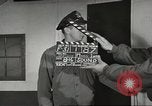
Mission members briefed at Quonset hut in Attu, Aleutian Island
Officers point at a map as they brief a mission in a Quonset hut in Attu, Aleutian Island, during World War 2. Bomber aircraft flight crew members enter the class and take their seats. Officers brief them as they take down notes about Japanese targets.
CRITICALPAST.COM: About Us | Contact Us | FAQs - How to Order | License Agreement | My Account | My Lightboxes | Shopping Cart | Advanced Search | Featured Collections | Website Terms & Conditions | Privacy Policy ©2026 CriticalPast LLC.
License Agreement |
Terms & Conditions |
Privacy Policy
©2026 CriticalPast LLC.