


 Francais
 Deutsch
 Italiano
Refine Your Search
Japanese-martial-arts stock footage and images
- Showing 4003 to 4008 of 4336 results more
more Hide
Hide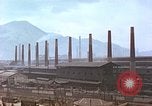
Burned out sections of Japan Iron and Steel Works at Kitakyushu, Kyushu, Japan
Iron and Steel Works at Yawata in Japan (Yawata Steel Works). A view at the end of the Japan Iron and Steel Works. Open hearth, rolling mills and coke ovens. Southern sections of the plant as seen from the roof of the Muwata Grade School. Burned out sections of Yawata as seen from the roof of the school. This area lies between a post office and the south end of the plant. It includes the areas Higaichi, Machi, Okadamachi and Hishimachi. This view shows the results of incendiary attack of August 8, 1945. The coke plant and by-products installations of Japan Iron and Steel Works. The southwest corner of the plant. Views of Tobata Power Plant. Aircraft revetments around the Japanese Naval Air Base in Omura. (World War II period).
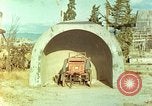
Fire fighting equipment being towed out of its underground revetment at an oil refinery in Otaka, Japan.
Firefighting equipment at a steel mill and oil refinery in Otaka, Japan. A reinforced concrete shelter is used to protect the fire fighting equipment at the steel mill. The fire fighting equipment being towed out of its underground revetment at the oil refinery. A Japanese worker removes human excrement from a out house for use as fertilizer. Grain being weighed and measured by merchant in Kyoto. People in a line wait for their ration of grains. A wagonsmiths shop in Kyoto.
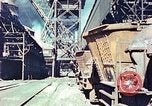
A blast furnace area and allied plants within Japan Iron and Steel Works at Kitakyushu in Kyushu, Japan.
Japan Iron and Steel Works at Yawata (Yawata Steel Works) in Kitakyushu, Kyushu, Japan. Various views of a blast furnace area and allied plants. Japanese workers walk around.
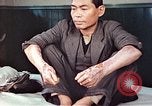
A male patient shows atomic radiation effects on his body in a hospital in Nagasaki after World War II.
Japanese patients at a hospital in Nagasaki, Japan after facing the atomic attacks of World War II. A man seated on a bed shows the effects of atomic radiations on his both hands. The patient shows both his legs affected. The neck of the patient. He shows his elbow.
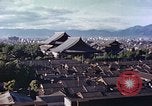
Higashi Hongan-ji Buddhist Temple and related areas in Kyoto, Japan.
Tourism in Kyoto, Japan. View of the Higashi Hongan-ji Buddhist Temple, which towers far above the tightly packed Japanese homes (Japan, 600-8505 Kyoto, Shimogyo Ward). View of the wooden Torii gate inside a Shinto shrine near the Higashi Hongan-ji. A fire breaks opposite eight-story Marubutsu Department Store (presently known as Kintetsu Department Store). Mountains in distance. Another view of Higashi Hongan-ji Buddhist Temple and related areas. A view around Kyoto Railroad Station (Higashishiokoji Kamadonocho, Shimogyo Ward, Kyoto, Japan). Rooftops of closely packed wooden houses and other buildings.
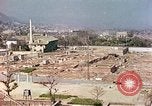
Damage inflicted upon Sannomiya Station and surrounding areas in Kobe, Japan during World War II.
A survey of the damage inflicted upon Kobe, Japan during World War II. A view across the debris of a Japanese Government building. A religious edifice stands in the rubble. Sannomiya Station shows steel casement windows showing the effect of fire. The windows on different floors shoe the fire effect. Debris in the area. A corner of a cement wooden frame building shows effects of fragmentation. Burned area in the north of Hankyu Elevated Railroad. A section between the Sanyo Main Line and streetcar tracks. Damage inflicted on the area.
CRITICALPAST.COM: About Us | Contact Us | FAQs - How to Order | License Agreement | My Account | My Lightboxes | Shopping Cart | Advanced Search | Featured Collections | Website Terms & Conditions | Privacy Policy ©2026 CriticalPast LLC.
License Agreement |
Terms & Conditions |
Privacy Policy
©2026 CriticalPast LLC.