


 Francais
 Deutsch
 Italiano
Refine Your Search
Japanese-martial-arts stock footage and images
- Showing 481 to 486 of 4336 results more
more Hide
Hide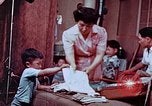
Japanese civilians get help from WRA offices, leave relocation center and find living space in United States.
United States Relocation Program by War Relocation Authority (WRA) during World War II. Japanese child gives roller skate to mother who packs it. Japanese couple shows paper to guard and leaves relocation center, getting aboard a Trailways bus. Other Japanese relocated greeted at railway station. Map of United States shows relocation (internment) areas. War Relocation Office main door. A Japanese man gives documents to an officer; he reads the papers and makes a call. Japanese-American couple with a young daughter go from house to house attempting to rent apartment. Japanese people in a hostel. A woman plays piano while other women sit and talk. People look at map showing housing availability. Japanese-American couple rents apartment. They are seen happily in their apartment hanging clothes in the closet. Japanese-American woman at grocery store. White woman helps her choose items that are not rationed. She holds a can of peaches. White woman shows Japanese-American woman the point value price card. Japanese-American women and her daughter visit park with white woman and her son. Children play with a toy sailboat at the waters edge. Relocation center kitchen. Japanese-American family sits at the dinner table. Children run in a relocation center. Women sit in a park and talk. Man feeds geese with his children beside water. People walk past fountain. Japanese-American women sit on beach in Chicago. Pedestrians walking on sidewalk outside and under the Lowe's Stillman theater marquee in Chicago. The movie 'Above Suspicion' displayed on marquee. Woman window shopping. Japanese couple sits on porch of house.
Japanese troops and tanks advance to Mandalay, Burma, during World War II.
Japanese troops walking along the "Road to Mandalay" in World War 2. A road sign shows 104 miles North to Mandalay and 326 miles South to Rangoon.Cattle in a field. Road clogged with Japanese troops, some leading or riding horses. Several soldiers on bicycles.Trucks line the side of road. An official proclamation posted in Japanese and Burmese.Roadside lined with Burmese people, some carrying parasols. They offer water to passing troops and for their animals. Japanese troops drinking from their newly filled canteens. Japanese soldiers interrogate a wounded British soldier sitting on the ground. Japanese infantry files past a line of Japanese tanks. They pass another road sign pointing 82 miles to Mandalay, 348 miles to Rangoon, and 6 miles to Hanza. Japanese troops struggle to move a truck over a by-pass around a bridge destroyed by the British. Japanese officers surveying the situation. A photographer takes pictures of Japanese tanks coming over a steep hill. Japanese gun crew secures a field artillery piece in place, with rope and stakes. They then load and fire it. Rounds exploding in the distance.Tanks and other military vehicles are parked clear of the artillery, as if waiting to proceed, after the bombardment. Truck pulling a large artillery piece and infantry pulling small artillery pieces, advance alongside parked tanks. Some of the infantrymen carry Japanese flags. Japanese tanks rolling into outskirts of Mandalay, near railroad yard, past trashed military equipment.
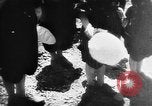
Hierarchy of social strata in Japan and subjects bow to the Japanese Emperor.during World War II
Psychology and living habits of Japanese people. Hierarchy of social strata in Japan during World War 2. Japanese children bowing. A little boy bows to a woman. A woman in kimono bows to a man. A young man bows to his parents. Civilians bow to military personnel. Subjects bow to Emperor Hirohito. Emperor Hirohito riding a white horse. Japanese people come out of their homes and bow as Emperor Hirohito’s convoy passes by. Posters on the walls remind the Japanese civilians of their duties. Japanese calligraphy reads 'Duty is heavier than mountains and death is lighter than a feather'. A dying old man rises from his futon. Dying man bows to the Japanese Emperor. Japanese samurais bow to the Shogun during the Tokugawa era. A Japanese couple in their home. The man sits on the cushion and the woman sits on the mat. A woman bows to the couple. A Japanese woman in western clothing bows to her husband. A modern Japanese woman argues with her fiancé. breaks her engagement. A Japanese photograph depicting a man standing. A Japanese kabuki melodrama exemplifies the duties which each person owes to others. A Japanese kabuki performer dances on stage. Men escape a tunnel during a kabuki play. A kabuki actor plays a distraught servant.
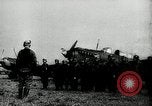
Japanese occupation of Hong Kong (WW2)
Japanese pilots run to their aircraft before a mission to Hong Kong, a British Crown Colony, during the Battle of Hong Kong in World War II. Aerial view of Hong Kong. Smoke rises from bombing. Japanese crew loads and fires old type artillery piece. Imperial Japanese Army (IJA) troops marches into the New Territories and Kowloon peninsula. Captured British soldiers, including Sikh Indian troops, are marched to the compound by Japanese soldiers. Japanese soldiers drive a tracked truck along Tai Po Road. Crowds on the streets of Kowloon after Japanese occupation. Japanese soldiers carry huge banner that reads 'Peace Mission'. Japanese troops in Japanese Navy ships sailing to Hong Kong. Naval artillery and bombers bombards Hong Kong Island. British prisoners of war in Hong Kong Island after Japanese capture. A British prisoner of war drinks from a can. Japanese military officials in Hong Kong. Japanese troops march into Victoria and streets of Hong Kong Island.
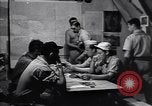
U.S. Navy PBY Catalina (Black Cat) night mission against Japanese shipping during World War II in the Pacific
U.S. Navy Aircraft Seventh Fleet PBY Catalina operations in Southwest Pacific during World War 2. Pilots and navigators of six PBY Catalina crews are seen planning the night's operations at a table in a flight planning hut. (These Catalinas are called "Black Cats" because they were painted black for night operations.) The Black Cat mission is to interdict Japanese supply ships at sea. Intelligence officer is seen briefing about locations of Japanese convoys and cautions that Japanese night fighters are stationed only 60 miles away.The pilots look at pictures of the type of warships that might accompany the Japanese convoys.They are briefed on Japanese antiaircraft batteries near harbor where convoy ships might anchor.And they are briefed on the weather. Ground crew pass a large box of foods to a PBY crewman.The aircraft taxis into the water. The weather is getting stormy.Ground crew remove landing gear. The PBY takes off. Views from inside the aircraft as it leaves the water and becomes airborne. Views from inside a PBY as lightning strikes outside in a storm. Crew members in their positions.Approaching the harbor where Japanese vessels may be anchored. Navigator plots position with dividers and calculates course using E-6B computer. Waist gunners ready at their stations. Crew member is posted as a lookout at an open bay in the PBY nose. There are no Japanese ships seen in the harbor. But the PBY is sighted by Japanese antiaircraft batteries that begin firing. They are also being hunted by Japanese night fighters. The pilot dives low towards the water to hide. Japanese fighter plane passes overhead. They resume search for convoy and lookout spots it. Radio operator informs other Black Cats via CW signal. As the Catalinas converge on the convoy, Japanese warships open fire on them.The "Cats" attack and hit a Japanese Cruiser, 2 freighters, and a tanker. One of the Catalinas is destroyed during its bomb run.
Events in career of Chester W. Nimitz. Japanese Attack on Pearl Harbor. Admiral takes command of U.S. Pacific Fleet
Japanese flag on a Japanese aircraft carrier. Japanese aircraft take off to attack Pearl Harbor. Squadron of Japanese aircraft in flight, and dropping bombs over Pearl Harbor. U.S. Navy ships being destroyed by Japanese bombing at Pearl Harbor. Chester W Nimitz gives a brief speech when he takes command of the U.S. Pacific Fleet. He shakes hand with his senior officers. Animated map depicts the Japanese and American bases. Sweeping elevated view of an American ship building dock area as many workers build new warships for World War 2. Close-up views of war production workers building ships. New ships being launched including an aircraft carrier and also the Liberty Ship SS Richard Bassett. View of interior of a U.S. Navy submarine. Officer with cigar in mouth viewing target through periscope. Shot of torpedo being fired from submarine and then view through periscope as a target ship is hit and explodes. Dramatic shot of a U.S. Navy submarine surfacing. The submarine breaks the surface and its bow shoots high into the air as it breaches and then settles to complete surfacing. Scene of United States warships firing at Japanese enemy ships, and U.S. Navy aircraft taking off for attack from aircraft carrier. Narrator indicates it is for Battle of the Coral Sea and Battle of Midway. Scene from deck of U.S. Navy ship of sky filled with flak and fire as American ships work to down a Japanese airplane. Fire on deck of a U.S. Navy aircraft carrier after attack by a Japanese aircraft. Burning wreckage of Japanese aircraft in water close to an American Navy ship. Scenes of U.S. Navy ship guns firing and hitting Japanese aircraft that crashes into the sea. An aerial view of a Japanese airplane hit by an attacking U.S. aircraft, as seen from the American aircraft gun camera.