


 Francais
 Deutsch
 Italiano
Refine Your Search
Kendo stock footage and images
- Showing 7 to 12 of 15 results more
more Hide
Hide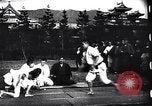
Sensei and others at a martial art training school watch men practicing jiu-jitsu wrestling bouts and Kendo, in Japan.
Men practice martial arts training at a training school in Japan. The sensei and other pupils sit near and watch closely. Two men practice jiu-jitsu wrestling bouts. Others practice Kendo, bamboo sword fighting. School building and trees can be seen at distance.
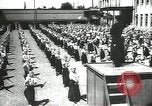
Japanese students practice Japanese martial arts (Kendo) focused on sword fighting
Opening scene shows instructor on a raised platform drilling students in preliminaries for Kendo training. Next, the students divided into two large teams, charge each other in combat exercise. The students wear protective armor (Bogu) and wield wooden swords (Bokken).
Children play and adults work in rice fields during spring time in Japan
Kendo martial arts match between two Japanese boys. The boys engage in Kendo with Shinai sticks while wearing protective masks and Kendo armor (known and bougu). Children play and swim in the warm sunlight. Japanese children swimming. A Japanese grandmother holding an infant. A farmer planting rice in rice field. A group of children follow cinematographer Fred C. Ells. Rural Japanese boy carries a traditional Japanese umbrella April 1934.
A multiracial parade with natives, Chinese, and Koreans in Hawaii.
A multiracial parade in Hawaii. Parade begins with policemen on horseback. Men in tribal costumes build a hut on top of a horse-drawn float. Hula girls dancing in another float. More Hawaiian natives sit in front of huts on top of floats. Men ride bicycle with fancy fish costumes. Chinese men on a float, with a large pagoda behind them. A group of men in Chinese costumes follow the float. Japanese men demonstrate Kendo martial arts from a moving float. Marching Unit with banner 'Korean Girls Seminary'. Young Korean women wearing Hanbok dresses.
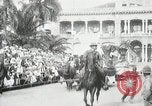
A historical parade in Hawaii depicts the early history of Hawaiian Islands and its industrial development
A historical parade in Hawaii depicts the early history of Hawaiian Islands and its multiracial culture. Parade begins with policemen on horseback. Men in tribal costumes build a hut on top of a horse-drawn float. Hula girls dancing in another float. More Hawaiian natives sit in front of huts on top of floats. Men ride bicycle with fancy fish costumes. Chinese men on a float, with a large pagoda behind them. A group of men in Chinese costumes follow the float. Japanese men demonstrate Kendo martial arts from a moving float.
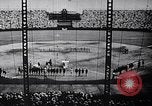
US baseball players visit Japan in 1931; also anti-Japanese propaganda circa 1941-1942 during World War 2.
Huge crowd attends baseball game between visiting American players and Japanese team in Tokyo, 1931. Lou Gehrig, Al Simmons and Lefty Grove mentioned by announcer but not seen. American representatives walk out to pitcher's mound to greet pitcher. Shots of Babe Ruth hitting. Shots of Japanese player rounding third, sliding safely into home. Film suddenly morphs into anti-Japanese propaganda circa 1941-1942; shows Japanese newspaper publisher who was murdered. Scenes of sumo wresting and judo and kendo seen and compared to alleged acts of Japanese diplomatic and military treachery and spying. Shots of fishermen, tourists, barbers and others said to be spies and soldiers for Tokyo. Closeup of a Japanese man gardening. Japanese men on small fishing boats, raising boat sails, and pulling in heavy loads of tuna fish in nets. Japanese tourists supposedly taking photographs of American ships in Hawaii. Female Japanese barbers giving haircuts. Japanese military officials in Japan organizing papers, films, and incoming information. Japanese industrialist figure emerging from car. Scenes of Japanese industry supporting war preparations: Exterior views of Japanese factories in Osaka, textile mill operations in Tokyo, chemical plant operations in Nagoya, steel mills, and a large newly completed ship being launched in Nagasaki. Overhead view of steel mill operations. View of a slum town area in Japan and simple living arrangements of Japanese citizens. Japanese laborers at work in small home factories for textiles, pottery, and other goods, said to be in "semi-slavery." Workers include men, women, and child labor. Shows production of goods said to be produced in other countries that are pirated, mislabeled by Japan, and dumped at low prices abroad to undercut competitors. Products shown include factories and production lines for spark plugs, scotch whiskey, matches, silk, cotton, bottled beer, toothbrushes, hair brushes, hair combs, and American flags produced in Japan and offered for sale at lowest prices in the United States. Shipping dock areas in Japan showing large ships at docks, cranes in use, and importing of oil, rubber, scrap iron, tin for war materiel.