


 Francais
 Deutsch
 Italiano
Refine Your Search
Richmond-viginia stock footage and images
- Showing 91 to 96 of 101 results more
more Hide
Hide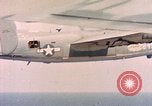
United States ships bombard the coast of Iwo Jima, Japan during World War II.
View from inside one of several U.S. Army Air Forces B-24 liberator bomber aircraft attacking Japanese positions on Iwo Jima in World War II. Dim aerial view of Iwo Jima from overflying Navy PB4Y. Smoke rising from isolated explosions on the ground. U.S. Navy warships, including battleships, cruisers, and gunboats, of Task Force 51, commanded by Vice Admiral Richmond Kelly Turner, are visible but not individually identifiable from the air. smoke rising onshore as shells from navy guns explode. Smoke also seen from the barrels of the warships themselves, as they fire barrages. Large white clouds of smoke obscure the beaches of Iwo Jima as the warships begin firing white phosphorus shells. At the same time, large numbers of amphibious landing craft are assembled in lines ready to move toward the beach. Bright images of the battleship, USS Idaho (BB-42) bombarding Iwo Jima with her twelve 14-inch guns. View from the air over Iwo Jima during the naval bombardment.
U.S. Secretary of Navy James Forrestal arrives by a C-54 aircraft in Honolulu, Hawaii.
A U.S. C-54 transport aircraft approaching Honolulu to land, with faint rainbow visible behind it. The aircraft lands and taxis in with outboard engines shut down, to the Military Air Transport Terminal on the airfield. An anchor and four stars on field of blue are displayed below the pilot's window. The aircraft parks and sailors quickly form an honor guard as the cabin door opens. Secretary of the Navy, James Forrestal, wearing a tropical pith helmet, steps from the airplane and is greeted by Rear Admiral John Towers and other officers. Secretary Forrestal is accompanied by Admiral Towers across the tarmac to a waiting car. He stops briefly to converse with Vice Admiral Richmond Kelly Turner, before he and Admiral Towers enter the car.
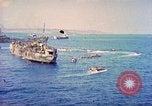
Secretary of the Navy Forrestal, Admiral Turner and General Smith discussing aboard USS Eldorado at Iwo Jima in Japan.
Activities of the U.S. Navy during the Battle of Iwo Jima in Japan during World War II. U.S. Secretary of the Navy James Forrestal, U.S. Navy Admiral Richmond Turner and U.S. Marine Corps General Holland Smith on flag bridge of USS Eldorado. They watch the target area through binoculars and discuss amongst themselves. Secretary of the Navy smokes a pipe. Mount Suribachi in view in the foreground.
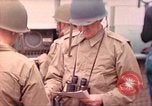
Admiral Turner and Secretary of Navy Forrestal read messages on flag bridge of a ship off the coast of Iwo Jima in Japan.
Activities of the U.S. Navy during the Battle of Iwo Jima in Japan during World War II. U.S. Navy Admiral Richmond Turner and U.S. Secretary of the Navy James Forrestal on flag bridge reading messages. They watch the target area through binoculars. Mount Suribachi, flag locker in the foreground. Smoke column rises from the base of Mount Suribachi. Soldiers fire gun from a destroyer. Smoke arising from explosions.
Scenes of Japanese attack on Pearl Harbor in World War II; launching of cargo ships and ships at sea
The legislative and maritime history of the U.S. Merchant Marine. Japanese air raid on Pearl Harbor in Hawaii on 7th December 1941. Dramatized view of Japanese airplanes in flight over Pearl Harbor. They drop bombs over the target area. Actual footage of Japanese attack on Pearl Harbor with heavy columns of smoke rising as ships explode. U.S. sailors on the deck of a ship. The activities at a U.S. shipyard. Launching in July 1942 of the SS Ocean Viceroy, built by Permanente Metals Corp in Richmond California for the British Ministry of War Transport. People gather at the shipyard as the SS Ocean Viceroy is launched. A ship convoy underway at sea of various cargo ships and Liberty Ships in World War 2. The U.S. flag flying from a flag pole on a ship. The sailors march on the deck.
Policemen uses the “Picture Puzzle” method to create a sketch of a criminal’s face in California, United States
Policemen uses the “Picture Puzzle” method to create a sketch of a criminal’s face in California. A seated woman describes the features of a criminal to a Richmond, California police technician George Meyer. A man pointing to a collection of cards depicting several types of male hairstyle and pairs of eyes. Policeman attaches several cards to create a face of a criminal. Woman uses hand gestures to describe the criminal’s eyes. The police technician picks up the eyes portion from the puzzle. The woman describes the face. Woman picks a card depicting a chin. Policemen attach pieces of facial features together like a puzzle to make a face of a criminal. Policemen holding a mugshot of a criminal.