


 Francais
 Deutsch
 Italiano
Refine Your Search
Vietnam-security-police stock footage and images
- Showing 853 to 858 of 6186 results more
more Hide
Hide
Police demonstrate the effectiveness of 'instant banana peel' as a tool to curb outbreaks of disorder in the United States
Inauguration of a new powdery substance 'Instant banana peel' in the United States. Press and public gather for the inauguration of a chemical Riot-trol. A man holds a powdery chemical 'Instant Banana peel'. The powder is spread on a hard surface. A man sprays water on the power. A man pulls a car on the powdery surface. A man skids while riding a motorbike on powdery surface. Men fall while running on the slippery surface. A man running with a crate falls. A man pulls a women on a ski cart on the slippery surface.
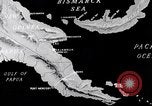
Soldiers pack supplies and parachutes at an Australian Parachute Packing Depot in Papua New Guinea.
March 1943: A map shows Salamaua in Papua New Guinea. An aircraft drops supplies with parachutes over hills. An Australian parachute packing depot. Soldiers pack parachutes on tables in rows. Stacked Australian parachutes to deliver rations, American parachutes used for Ammunition, and 24 foot parachutes for regulation. White parachutes used for medical supplies, blue ones used for rations and red used for ammunition supplies. Aerial view of Goodview, an area of conflict. A soldier radios the requirements to base. Another soldier delivers the plan to the depot. Soldiers pack mortar ammunition. The fuses and sheets are packed together in boxes. Soldiers put boxes into sacks, tie the sacks and attach parachutes. Soldiers pack canned meat: lay straw in big cans, put small cans into those, seal the big cans, secure them with a wiring machine, and attach parachutes. Sacks of rice are put into copper sacks, their mouths tied. Soldiers pack rations including onions, bacon and potatoes for delivery. Supplies are loaded onto trucks and transferred to the aerodrome. (World War II period).
Normal operating procedures including start, take off, stall and landing of the U.S. Navy T2V-1 SeaStar.
Normal operating procedures including start, take off, stall and landing of the U.S. Navy T2V-1 SeaStar. Start: The plane on the runway. A crewman arrives with the air impingement car. He inserts the pipe into the air impingement inlet. The crewman gives a signal when the air impingement hole is secure. The pilot adjusts the battery operator switch and turns on the ignition. He moves the throttle to ignite and then to idle position. The exhaust gas temperature gauge. The pilot signals the crewman to disconnect the air impingement starter and adjusts the instrument power switch. Post-start Cockpit Check: The pilot checks the RMI for alignment, adjusts S2 compass controller, annunciator panel touch button, fire detector test switch, fuel quantity indicator button. He checks the communication, navigational, annunciator and left panel. He goes through the take off check list, moves the plane into position, advances throttle, inspects the tachometer, exhaust temperature, releases brake and taxis to the end of the runway. The plane taxis, pilot applies brake and rudder control and takes off. He raises the nose wheel, retracts the landing gear and flaps after take off. The plane in flight over clouds. Stall occurs. The attack angle gauge. Landing procedure: View of the runway. The pilot begins the let down, reduces power, extends the brake, lowers landing gear and flaps, and continues to reduce speed. Diagram of the runway depicting approach. The plane approaches the runway, touches down and lands.
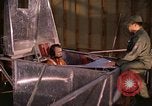
A Reaction Control Simulator in use at the Aerospace Research Pilot School in Edwards Air Force Base, California, United States.
A pilot at the Aerospace Research Pilot School in Edwards Air Force Base, California, is seen seated in the Reaction control simulator used to practice controlling space vehicles. He reaches up to pull down a cover. An Air Force Sergeant, monitoring the device, secures it and small hatch at its front. Next, the camera focuses on the simulator, which is seen to move very slowly under the control of the pilot inside. After a while, the simulator makes a significant turn to the left, followed by an increase in elevation, and a turn to the right and what appears to be a return to its initial starting position.
Post-landing activities following first powered flight of X-15. Grounding cables are attached to airframe. Firemen hose area.
Post flight activities, at Edwards Air Force , involving the X-15, 56-6671, following its first-ever powered flight of an X-5 rocket plane. Cylinder with pressure gauges seen on sand. Technicians secure ground wires to the aircraft. One talks to test pilot Scott Crossfield, who is still in cockpit. Technicians examine nose gear. Some gather around rear of X-15. Fire Truck stands by. Test pilot Scott Crossfield leaves cockpit and accompanies civilian official to waiting car. Firemen hose down area around the X-15. Car carrying Crossfield drives away with white flag affixed to it. Ground crews prepare to tow the X-15.
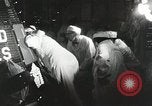
Major Cooper shakes hands with Malcolm S. Carpenter and Walter Schirra and climbs into a capsule in Cape Canaveral, Florida
Major L. Gordon Cooper climbs into Faith 7 capsule for his first NASA space flight, in Cape Canaveral, Florida, during the Mercury Atlas MA-9 mission. McDonnell technicians work on a spacecraft. Major Cooper, wearing a flight suit and helmet, arrives in the White Room and salutes Padleader Guenter F. Wendt, who returns the salute. Major Cooper talks with the McDonnell technicians and shakes hands with Lt. Commander Malcolm S. Carpenter and Walter M. Schirra. Commander Alan B. Shepard in white coveralls. Major Cooper climbs into the capsule. Technicians help him getting in. The hatch being secured. A technician with headphones.
CRITICALPAST.COM: About Us | Contact Us | FAQs - How to Order | License Agreement | My Account | My Lightboxes | Shopping Cart | Advanced Search | Featured Collections | Website Terms & Conditions | Privacy Policy ©2026 CriticalPast LLC.
License Agreement |
Terms & Conditions |
Privacy Policy
©2026 CriticalPast LLC.