


 Francais
 Deutsch
 Italiano
Refine Your Search
Vietnam-security-police stock footage and images
- Showing 1207 to 1212 of 6186 results more
more Hide
Hide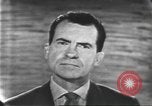
During a presidential election debate in Washington DC, Nixon and Kennedy mention measures to combat unemployment.
The second Kennedy-Nixon Presidential Debate in Washington DC. Harold R. Levy of Newsday asks Republican candidate U.S. Vice President Richard M. Nixon to mention the measures he would advocate to combat unemployment. Nixon states that to combat unemployment, the U.S. should concentrate on depressed areas and analyze sections of society where unemployment exists. He mentions a program for education, for equal job opportunities and for older citizens. He talks about full utilization of government resources and credit expansion in order to fight unemployment. He mentions measures like development of the private sector of the economy, tax reforms and tax cuts to stimulate more jobs. Democratic candidate Senator John F Kennedy talks about the area redevelopment bill passed by his party. He questions as to why Nixon opposes putting medical care for the aged under Social Security. He says that they should increase the use of surplus foods in backward areas and should not impose a high interest rate policy. He concludes and talks about development of educational aid and effective tax policies programs.
During a presidential election debate in the US, John F Kennedy and Richard Nixon comment on the necessity to defend Berlin.
The third Kennedy-Nixon Presidential Debate in the United States. Moderator Bill Shadel introduces the candidates and tells that candidates will not share the same platform. Republican candidate U.S. Vice President Richard M Nixon is in a Los Angeles studio and Democratic candidate Senator John F Kennedy is in New York. He also introduces the panel of correspondents who will question the candidates. The panel includes Frank McGee from NBC News, Charles Van Fremd from CBS News, Douglass Cater from Reporter magazine and Roscoe Drummond from New York Herald Tribune. Frank McGee asks Kennedy whether he would take military action to defend Berlin. Kennedy answers and says that the U.S. has contractual right to be in Berlin coming out of the conversations at Potsdam and of World War II. He states that the United States must meet its commitment on Berlin in order protect the security of Western Europe. He concludes by saying that the U.S. will meet its commitments to maintain the freedom and independence of West Berlin. Nixon disagrees with Kennedy's statement that the Republicans are trigger-happy and lead the nation into wars. He talks about the Democratic presidents who led the U.S. into wars. He concludes and states that he thinks there isn't any question about the necessity of defending Berlin.
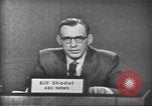
John F Kennedy and Richard Nixon contrast costs of their party platforms during a presidential election debate in the U.S.
The third Kennedy-Nixon Presidential Debate in the United States. Douglass Cater of Reporter magazine asks Democratic candidate Senator John F Kennedy to comment on costing of party platforms calculated by U.S. Vice President Nixon. Kennedy states that he believes in a balanced budget and an unbalanced budget is warranted during a recession or a national emergency. He comments on the cost of his budget and compares it with that of Nixon. He talks about high interest-rate policy that has added huge amounts to interest on debt. He talks about a different monetary policy to reduce the interest-rate burden. He talks about the bill passed by the Congress for the medical care for the aged. He says that more money would be spend on aid to education, housing and defense in his programs. Republican candidate U.S. Vice President Richard M Nixon comments on Kennedy's medical care for aged program under social security. He talks about the cost of his agricultural program and points out resulting rise in food prices. He concludes and states that following Kennedy's program would lead to inflation.
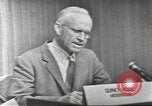
Vice President Nixon talks about Communist influence in the Western Hemisphere prior to presidential elections in the U.S.
The fourth presidential election debate held between Democratic nominee Senator John F. Kennedy and Republican nominee U.S. Vice President Richard Nixon in New York, United States on 21st October 1960. ABC news correspondent Quincy Howe speaks during the fourth Kennedy-Nixon presidential debate. He speaks that the candidates would answer and comment upon questions put by these four correspondents: Frank Singiser of Mutual News, John Edwards of ABC News, Walter Cronkite of CBS News and John Chancellor of NBC News. Frank Singiser puts the first question to Vice President Nixon. He asks Nixon the way he would handle Fidel Castro's regime and prevent establishment of Communist governments in the Western Hemisphere and why his policy is better for peace and security of the United States in the Western Hemisphere. Nixon answers that Senator Kennedy's policies and recommendations for the handling of Castro regime are dangerously irresponsible recommendations that he's made during the course of this campaign. Nixon speaks that what Senator Kennedy recommends is that the U.S. government should give help to exiles and to those within Cuba who oppose Castro regime, provided they are anti-Batista. Nixon says the United States have five treaties with Latin America, including the one setting up the Organization of American States in Bogota in 1948, in which the U.S. has agreed not to intervene in the internal affairs of any other American country. He further says that if the U.S. follows recommendations of Senator Kennedy then the country would probably be condemned in the United Nations and it would result in an open invitation to Soviet Premier Nikita Khrushchev to come into Latin America and to engage the U.S. in a civil war. He speaks about quarantining Cuban Prime Minister Fidel Castro by cutting off trade and diplomatic relations with Cuba.
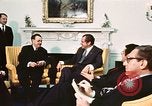
President Nixon with Soviet Ambassador Dobrynin and Soviet Foreign Trade Minister Patolichev at the Oval Office in the U.S.
U.S. President Richard Nixon with Soviet dignitaries in the Oval Office of the White House in Washington DC, United States. President Nixon, Soviet Ambassador to the U.S. Anatoly F. Dobrynin, Soviet Foreign Trade Minister Nikolai Patolichev, United States Secretary of Commerce Peter George Peterson, U.S. National Security Advisor Dr. Henry Kissinger, and Assistant to the President and Assistant to the President for International Economic Affairs Peter Flanigan pose for pictures in the Oval Office.

President Nixon and Dr. Henry Kissinger walk towards a helicopter on the South Lawn of the White House in Washington DC.
U.S. President Richard Nixon on the South Lawn of the White House in Washington DC, United States. President Nixon and U.S. National Security Advisor Dr. Henry Kissinger walk on the South Lawn towards a helicopter. President Nixon takes two dogs on leashes from an attendant and goes into the helicopter. The helicopter lifts off.
CRITICALPAST.COM: About Us | Contact Us | FAQs - How to Order | License Agreement | My Account | My Lightboxes | Shopping Cart | Advanced Search | Featured Collections | Website Terms & Conditions | Privacy Policy ©2026 CriticalPast LLC.
License Agreement |
Terms & Conditions |
Privacy Policy
©2026 CriticalPast LLC.