


 Francais
 Deutsch
 Italiano
Refine Your Search
Vietnam-security-police stock footage and images
- Showing 1255 to 1260 of 6186 results more
more Hide
Hide
United States troops firing Long Tom inland, shoot down Kamikaze Japanese fighters during the Battle of Leyte Gulf (WWII)
United States troops secure the island of Leyte, Philippines from Japanese control during World War II. apprehend an injured Japanese soldier found in a jungle. The Japanese soldier is taken to a tent. Two semi-naked Japanese soldiers raise their arms upon surrendering. General Douglas MacArthur discussing plans to take over the rest of the Philippines from Japanese occupation. Map of the Philippines. Japanese soldiers arriving in Leyte, with scenes of Japanese troops climbing down ladders from a ship during landing. A hand points to a map as other soldiers surround it. Two soldiers sitting on the mud as they work. United States troops with 155mm Howitzer “Long Toms” firing at enemy positions. Coconut trees lined behind the artillery. Soldier uses a telephone. Artillery fire both at daytime and night. Soldiers cover their ears. Troops begin to move through the jungles of Leyte. Imperial Japanese Navy flag waving. A fleet of Japanese ships heading to Leyte Gulf. Soldiers with binoculars on the lookout. Animated map of the Philippines shows Japanese and United States fleet. United States Navy ships sailing to Leyte Gulf. United States Navy sailors at fire control station. Sailor opens valve. Gun crew removes gunpowder bags from magazine. Hand squeezes fire control trigger. Torpedo released into water. Naval artillery firing during the Battle of Leyte Gulf. United States troops reading maps and reports inland. A soldier talks on the telephone. A general (Likely General Walter Krueger) inspects a map while smoking a cigarette. A 155mm Howitzer “Long Tom” is taken to the shore. Shirtless soldiers adjust the position of the howitzer. Howitzer barrel moves upwards. United States carriers sail to Leyte Gulf. A soldier pointing while other uses binoculars. Japanese land-based bombers and fighters flying to participate in the Battle of Leyte Gulf. A Japanese aircraft is shot down, falling to the sea. Naval anti-aircraft guns firing at enemy bombers and kamikaze fighters. A shot down kamikaze Japanese fighter bursts into flames. Inferno of shot-down Japanese aircraft burning. Anti-aircraft guns strafing at Japanese fighters. Thick smoke rises from bombed United States aircraft carriers on Leyte Gulf. Two United States fighters still flying with little gas. A Grumman F4F “Wildcat” fighter struggles to land on wet runway of Leyte airfield. The F4F stumbles and turns upside down. Another F4F skids off the runway and crashes into another aircraft. Medics carry a wounded pilot on a stretcher.
Men unload large incendiary bombs, arming sky markers before storage in bomb dumps (WWII)
Incendiary bomb storage in Allied bomb dumps during World War II. Incendiary bombs are neatly stacked in a bomb dump. A truck backing on the right of the pile. Men unload wooden crates and large incendiary bombs from trucks. Man unloads crates containing 100-pound M47A2 bombs. Men unpack bomb from its wooden protective crate. 500-pound PT-1 Pyrogel-filled AN-M76 bomb is rolled off from the truck. The AN-M76 is also called "Blockburner" or "Goop". Technicians remove the shipping bands off the AN-M76. Truck crane carries an AN-M76 bomb. Stacks of AN-M76 bombs are stacked in the bomb dump. Men carefully place the bomb in the stack. Men flip the crate containing an M17 Aimable Cluster bomb. Men unpacking the M17 500lb Aimable Incendiary Cluster Bomb. Technicians remove the tape and cuts the wires securing the incendiary bomb. A man removes the protective frame of a bomb. The men roll an M17 Aimable Cluster bomb to a stack. Two men stand in front of a shed with a door sign “Bursters”. Man opens a crate, inspects bursters. A Chemical Warfare officer shows a sky marker (made from a converted M47 bomb casing filled with FM smoke producing solution) while other soldiers look on. The Chemical Warfare officer demonstrates the method of arming the sky marker with a modified US 101 fuse. A sky marker is sealed with a rubber washer and a plastic disc. A threaded aluminum fuse adapter and another fuze are inserted. A flange is bolted down. Men marking sky markers prior to storage in bomb dumps. Wooden sign reads “DANGER ACID”.
Dock crane lifts 1947 Morris automobiles and Matador truck in the United Kingdom
Sign on car reads “Nuffield Exports.” A 1947 Morris Eight Series E automobile is pushed onto a lift platform by dock workers. Car is secured and then foreman gives the signal to lift. Another car is loaded on the platform and lifted. Close up of foreman giving the lift signal. A Matador truck chassis with drivetrain dangling via crane above a ship's cargo hold area. Workers rotate truck while it is lowered.
Workers manufacture Edison nickel-iron batteries at the Edison Storage Battery Company Building in West Orange, New Jersey
Manufacturing Edison batteries (also known as nickel-iron battery or NiFe battery) in West Orange, New Jersey, United States. View of the Edison Storage Battery Company Building (177 Main Street, West Orange, New Jersey, USA), the manufacturing facility for Edison batteries. Smoke emanates from vats. Motorized ceiling rack carries cylinders receiving nickel flake via electro plating. Aerial view of battery tube steel manufacture. Factory workers working in assembly lines to assemble batteries. The workers pack batteries for shipment. The four main parts of an Edison battery- negative plates (steel), container (steel), electrolyte (alkaline), and positive plates (steel)- on display. The steel positive plate and perforated steel tube which hold Nickel Hydrate on display. A finger touches the carbon steel ribbon that runs through a perforating machine to create battery tubes. A pen points to the perforation of the carbon steel ribbon. Machines nickel plate steel ribbons. Man places reels of steel ribbons in a tub. Men pushes the tubs into an automatic machine. A machine winding steel ribbons into tubes. Closer view of the steel tube showing its spiral pattern. Hand holding a steel tube. The manufacturing of nickel flake by an electro plating process. Metal sheet cylinders lifted out from vats of nickel. The cylindrical rolls of metal sheet are lowered to alternating vats of copper and nickel. Man unfolds a nickel-copper sheet. A machine cuts the nickel-copper sheet into small pieces. The copper in the nickel-copper pieces is chemically dissolved in a electro plating vat. The positive tubes are loaded with alternate layers of nickel hydrate and nickel flake. Man fits the tubes into a metal mold. Nickel hydrate and nickel flakes are fed into a machine. The man takes off the metal mold, taking the tubes. Cross section of a steel tube. Steel rings on a machine. Man counts the 8 steel rings of the tube. A woman mounts the tubes and presses them into a permanent position in a nickel-plated steel grid. A finished positive plate. A man mounts positive plates on the pole piece. He screws them into place. View of the negative plate, showing its perforated steel pockets holding iron oxide. Machines fold the perforated steel ribbons into Negative Pockets. A worker inserts Negative Pockets into a metal mold. A machine fills the Negative Pockets with iron oxide. Worker mounts the Negative Pockets in a nickel-plated steel grid. A machine secures the Negative Plates by a pressure of 120 tons. The Negative Plates are equidistantly spaced on the negative pole piece. Worker assembles the positive and negative plate groups together. A woman inserts additional insulation between each plate. The container is made of a nickel-plated steel sheet folded and welded to form one piece. Workers carefully inspect and insulate the assembled elements before the elements are permanently sealed in the container. Workers wearing goggles fill the finished battery cells with alkaline solution. Man closes the Filler Cap of the battery cell. Two terminals are seen on top of battery cell. Quality control inspectors check the finished products. A Weston DC voltmeter. A man dips battery cells into an insulating preservative compound. He places the battery cells in trays. Another man connects the cells in trays.
General Henry H. Arnold talks about the role of the United States Army Air Force in the Pacific theater (WW2)
General Henry H. Arnold (Hap Arnold) describes the role of the United States Army Air Force in the Pacific theater of World War II. Flags of the United States and the Army Air Force are seen behind General Arnold. General Arnold seated behind a desk with a nameplate bearing his name. A model aircraft is seen on General Arnold’s right side. “The Army Air Forces play an important part in winning the war. It is equally important to ensure our winning the peace and America remaining what it is today a leading the airpower in the world. You and every American play your part in maintaining the freedom and security which we have all fought by buying and holding bonds,” says General Arnold.
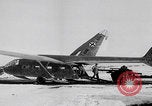
German soldiers loading Howitzers into a Go-242 transport glider in Germany (WW2)
German soldiers loading Howitzers into a parked Gotha Go-242 transport glider on ground covered with snow. The rear of the fuselage is raised. Soldiers pushing in a World War II 105mm type German Howitzer. Two soldiers inside aircraft use hand pulley to pull in the Howitzer. The soldiers load more Howitzers into the aircraft. Interior shots of Go-242 glider as soldier fastens the just close rear part of fuselage. Soldiers continue to fasten and secure the Howitzer to aircraft deck using cloth straps. Go-242 towed by a small truck from right to left. The aircraft goes past ground camera and then right to left again over snow-cleared runway.
CRITICALPAST.COM: About Us | Contact Us | FAQs - How to Order | License Agreement | My Account | My Lightboxes | Shopping Cart | Advanced Search | Featured Collections | Website Terms & Conditions | Privacy Policy ©2026 CriticalPast LLC.
License Agreement |
Terms & Conditions |
Privacy Policy
©2026 CriticalPast LLC.