


 Francais
 Deutsch
 Italiano
Refine Your Search
Vietnam-security-police stock footage and images
- Showing 403 to 408 of 6186 results more
more Hide
Hide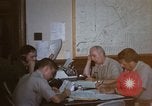
General Throckmorton and Stone in a conference and Creel talks with Police Superintendent and Police Commissioner in Detroit.
Detroit riots in Detroit, Michigan. Interior: Officers seated at a table. An officer talks on phone. U.S. Army Commanding General John Lathrop Throckmorton and MG Charles P Stone in conference. Colonel Creel, PIO, talks with Police Superintendent and Police Commissioner. Sign outside office: 'Communication' and 'Intelligence'. Shots of military and civilians at communications office. Newsmen on phone and at desks.
Policemen riders fill a horse-drawn Police Patrol Wagon
Police are seen climbing aboard a horse-drawn police wagon. It appears to carry as many as a dozen of them as it drives away. (Filmed by Edison Company, 1897)
U.S. Navy Gunboats of the "Brown Water Navy" at Dong Tam, Vietnam, in the Vietnam War
A U.S. Navy Riverine Armored Troop Carrier "Tango" Boat (ATC) backing to a dock. It displays American flag. Letters "T-91-7" are stenciled on its stern. Crew members aft, ready to secure it. They secure lines to the dock. A sign on boat reads:"Casrep Seven." A dozen similar boats are tied up in a line at the dock. Camera shifts to a sign on shore reading:"Dong Tam Fleet Landing." Image stops after TC:01:33 and wild sound only follows to end.
18th Military Police brigade signs in Saigon in M 151 armored jeep.
A Military Police station. 18th Military Police brigade signs in Saigon. Military Policemen check M-60 machine guns and radio in the M 151 armored jeep. They get into jeep. They discuss among themselves and drive off on patrol. They drive in armored jeeps in the streets of Saigon.
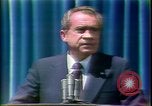
In San Clemente, California U.S. President Nixon talks about the existence of wiretaps during the Kennedy administration.
U.S. President Richard Nixon talks about the role of wiretaps in national security during a press conference in San Clemente, California. A journalist questions the President about his statement regarding the 10 additional wiretaps that could have been initiated by late U.S. Senator Robert F. Kennedy, which would have lead to the discovery of the Oswald plan and thus prevented U.S. President John F. Kennedy's assassination. The President responds that 10 more wiretaps could have found the conspiracy, if it was a conspiracy in the first place, then it would have been worth it. The President also talks about the high number of wiretaps in the National Security area during the Kennedy administration for national security purposes. The taps on news organizations, news people and civil rights leaders were all justified. The journalist then asks the President if he thought that President Kennedy's assassination threat mattered more to the national security wiretaps. The President does not agree with this and believes that the assassination was a breakdown in the President's security. He also states that he personally does not prefer to have secret service.
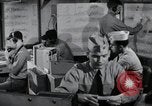
Labeling of doors, hatches, scuttles and valves according to conditions to prevent them from damage in the United States.
A training film depicts the procedure by which material conditions of readiness are put into effect in the United States. Personnel at work in the Damage Control Center. An alarm rings. A personnel on a ship puts material conditions of readiness ZEBRA fittings. Men secure valves, doors , hatches and scuttles with ZEBRA condition. A battle station compartment. Battle crew secures all ZEBRA fittings. A man checks a list. A crew member speaks over a radio and reports to the Damage Control Center. A personnel at the Damage Control Center reports to a Commanding officer about the secured fittings. Animation depicts different water tight compartments in the ship. YOKE and XRAY valves. Division of pumps by two ZEBRA valves. Three main material conditions of readiness YOKE, XRAY and ZEBRA encircled. A circled XRAY door. A circled YOKE hatch. A crew member secures a YOKE hatch after he uses it. A circled ZEBRA hatch. A 'Z ' on fittings. A ' W' label on the controls. A XRAY secured door. The naval ship underway.
CRITICALPAST.COM: About Us | Contact Us | FAQs - How to Order | License Agreement | My Account | My Lightboxes | Shopping Cart | Advanced Search | Featured Collections | Website Terms & Conditions | Privacy Policy ©2026 CriticalPast LLC.
License Agreement |
Terms & Conditions |
Privacy Policy
©2026 CriticalPast LLC.