


 Francais
 Deutsch
 Italiano
Refine Your Search
+"Africa" +1943 stock footage and images
- Showing 13 to 18 of 175 results more
more Hide
Hide
Last part of a U.S. Army Air Forces film to prepare aircrews for bombing raid on Ploesti oil facilities in Romania in World War II
Training and motivational film for U.S. Army Air Force crews preparing for the bombing of the Ploesti (or Ploiesti) oil fields in Romania, (Operation Tidal Wave) of August 1943. Final part of a training film to brief U.S. Army Air Forces aircrews in preparation for their bombing raid on the Ploesti oil refineries in Romania during World War 2. Formation of bombers is seen flying toward oil derricks in the oil fields. Aerial views of the oil fields and refineries. Oil storage facilities. Closeup of oil workers at a drilling rig. German officers walking in snow, ostensibly seeking places to obtain oil to fuel their wartime operations. German Field Marshal Erwin Rommel and other Nazi officers examine a chart in Africa. German prisoners taken in North Africa. Large numbers of German prisoners walking across the desert. A flight of several German Messerschmitt Bf 109 fighter planes in formation. Italian Dictator, Benito Mussolini, walking with an entourage in an Italian colonial region of Africa. He climbs aboard an open rail car on a small gauge railway. Accompanied by others, the rail car is pushed along the track by Colonials in white garb. German Field Marshal Fedor von Bock, who commanded German forces attacking the Soviet Union in Operation Typhoon, is seen visiting a German base. Next, Lieutenant Colonel James "Jimmy" Doolittle has his hands on the fins of a bomb while posing with his flyers when underway in the Pacific, aboard the USS Hornet (CV-8) for their daring raid B-25 bombing raid on Tokyo, Japan. View of a B-25 taking off from the Hornet. An American B-17 flying fortress, bomber taking off for a daylight raid in Europe. President Franklin D. Roosevelt, speaking on radio, saying "We believe the Nazis and fascists have asked for it. And they're going to get it." Oil storage tanks ablaze with heavy black smoke rising.
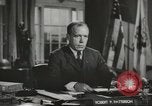
American Undersecretary of War speaks to difficulties facing Allies in confronting Germany and Japan in World War II
Undersecretary of War, Robert Porter Patterson, Sr. speaks about a report from the General staff outlining the needs for combating Germany and Japan in World War 2. He cites Operation Husky, the invasion of Sicily, as an example of what will be needed. He continues to narrate in the background as an animated map appears showing the buildup of supplies and Allied forces in North Africa; Allied air forces flying 60 thousand sorties over Sicily and, the direct amphibious assault using 3,200 vessels. Map also depicts opposing forces of 12 (“unwilling”) Italian Divisions and 3-1/2 German Divisions. View of Allied troops carrying some of their 31 thousand casualties on stretchers from field ambulances. Allied medics attending to the wounded. Some are seen lying on stretchers in a row on the ground near a wall. Interior of a field hospital where surgeons and other medical personnel treat the wounded. Animated map shifts to Europe with Germany at its center, showing , in contrast to Sicily that was only an “outpost,”, the heavily fortified perimeter of Axis controlled areas; the axis industrial might; and the disposition of 300 German Divisions (mostly on the Eastern front) defending the region. Next, the map illustrates Japan’s defended regions in the Pacific Image returns to Undersecretary Patterson i n his office, speaking of the Allied offensives planned for next year (1944), and emphasizing their challenge and difficulty. Scene shifts to General Jonathan Wainwright and his garrison at Corregidor, in the Philippines, surrendering to Japanese forces in 1941. Japanese military camera pans over the Americans being taken prisoner. Other Americans and Filipinos are seen being marched together under guard. Scene shifts to classic views of the Japanese attack on Pearl Harbor, Hawaii, on December 7, 1941. View of Japanese soldiers executing two Chinese civilians in 1937. Dangling bodies of persons hung by Nazis during Operation Barbarossa in Russia, in 1941 A Russian soldier comforts a little girl as he escorts her across a snowy landscape. Time bomb left by German forces retreating from Naples, Italy, in 1943, blows up a Post office building . Views of damage to building and bodies of victims. American Military Police assisting a victim. American soldiers carrying an injured civilian on a litter. Scene shifts to British Foreign Minister, Anthony Eden, Soviet Foreign Minister, Vyacheslav Molotov, and U.S. Secretary of State, Cordell Hull, entering a hall in the Spiridonovka Palace, during the 1943 Moscow Conference in Russia. Close-up of the American, Soviet, and British flags on a table. View of many delegates seated around the table. Close-up of Molotov, Eden, and Hull signing conference document.
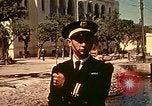
General Dwight D. Eisenhower meets Admiral Sir Andrew Cunningham at Tunis Port during the North Africa Campaign
On shore at Tunis harbor, a British Navy officer gives a sword salute to a senior Naval officer in World War II. U.S. Navy and British Royal Navy sailors lined up on either side of dock for a salute. General Dwight D. Eisenhower accompanied by Admiral Sir Andrew Cunningham and other British and American Navy officers walk past the sailors in review. Cunningham has a walking cane hooked over his left forearm but does not use it. The Union Jack and the British Royal Navy flag are visible. Ship at dock in the background. Eisenhower and Cunningham and the other officers pause and greet in front of a waiting Royal Navy car, RN ME 4096, parked on shore. Eisenhower, Cunningham, and another British officer enter the waiting car and it leaves, passing by a Allied landing ship with number 5 seen on its bow, anchored at the port. Closeup view of U.S. Navy Rear Admiral Richard L. Conolly and another U.S. Navy officer watching after the car drives away. Honor guard sailors march with rifles, departing the dock after the officers leave. (Eisehhower visited Tunis for meetings with British and U.S. Navy officers May 11-13, 1943. This footage is likely during those 3 days.)
Preparations for allied invasion of Normandy France during World War II.
'Normandy: Air borne invasion of fortress Europe ' Allied invasion of Normandy. Lieutenant General William S Knudsen introduces the film to be presented, expressing thanks to makers of the glider aircraft used in the invasion, who are the intended audience of the film. Field Order no1, 9th Troop commander Carrier. A man puts a Top Secret seal on the order. The Captain of United States 82nd Air Borne Division briefs men about the terrain with the help of a mosaic. A map of Europe shows principle cities of the continent. Map and narrator describe German Atlantic Wall coastal defenses on European continent. A giant concrete coastal gun emplacement. A large German railroad coastal gun moved out of a concrete shelter. Various concrete structures, sandbag structures of coastal guns. A concrete base gun turret revolves. Huge coastal guns protrude from concrete gun emplacements. Huge steel and concrete tank barriers stretched across. Large concrete and steel structures built along the coast to prevent assault craft from landing. Combined Chiefs of staff of the United Nations at a meeting. George Marshall and Henry Arnold at the head of the table during the meeting. A map shows invasion area near Le Harve. Troop Carrier units departing for Allied invasion on Sicily, Africa on 10 July, 1943. The United States C-47 aircraft take off towing gliders from an airfield in Africa. Troops transported from British 1st Air Borne division and United States 82nd Air Borne division. Dust rises as aircraft take off from a desert field. Demolished gliders on field and beside water. Multiple views of demolished gliders. C-47 in flight and paratroopers jump from the plane in New Guinea. Instructor trains paratroopers in United States. Discussion and demonstration of improvements in glider equipment and usage after Sicily Invasion and prior to D-Day Normandy invasion. Two men attach link nose chain to glider. Parachute extended and held open by men. Pilot of a glider talks to the pilot of the plane towing the glider over intercom.
Fierce battle for Stalingrad and for Russian oil fields near Baku during World War II.
Battles fought by Russians fighting military invasion from Germany during World War II years of 1942-1943. A poster shows Hitler cuff held by the Allies. United States ships at docks for aid and supply to Russian people. Fight for the control of oil field of Russia near Baku. Buildings and house of Stalingrad. German Army offensive on Stalingrad in order to take control of the oil fields. Civilians take arms to fight the invading German Army. German artillery and bombers raid Stalingrad. Fierce battle on the streets. Snipers fire from inside a house, artillery fire from a house. Bombing and infantry fight in every house of the city. Ruined city buildings and houses by war. German bombers on raid, shot by anti aircraft guns. Battle for Stalingrad continues on streets during Russian winter. Map shows British and United States forces land in North Africa. Soviet Army pushes back German Army in various cities and occupies them. Fresh cavalier troops arrive in Siberia. Russians Army commanders Marshal Nikolai Voronoff and others at a meeting. Operation Uranus: Soldiers of Soviet Army encircling meet from two ends as they prepare to attack German forces in Stalingrad and drive them out..
British Prime Minister Winston Churchill in many meetings before and after America's entry into World War II
Opening slate reads: "Quebec Conference August 1943." The English battleship, Prince of Wales, is seen in fog off the Coast of Newfoundland, in August 1941. View of sailor on fore-deck of the British ship. View inside engine room of the ship where sailor manipulates her power. Closeup of engine crankshaft stopping as she drops anchor in Placentia Bay. View of Prime Minister Winston Churchill, greeting U.S. President Franklin D. Roosevelt aboard the Prince of Wales. He proffers a letter to the President, from the King of England. View of Roosevelt and Churchill seated on deck with their respective military leaders standing behind them. Admiral Ernest King, U.S. Chief of Naval Operations converses with U.S. Army Chief of Staff, George Marshall, as they stand behind Churchill and Roosevelt. Wider camera view shows the larger military entourage accompanying the Prime Minister and the President. Glimpse of prisoners and enslaved workers taken by Nazi Germans in Europe. Glimpse of bombs falling from an airplane. Classic film views of the Japanese attack on Pearl Harbor in December 7, 1941. Bombs exploding along "Battleship Row." Heavy smoke rising from the bombed ships. The USS Arizona tilted heavily and burning. Camera pans along the path of destruction, as the voice of President Roosevelt is heard in the background, asking the Congress to declare that the Japanese attack created a state of War between the United States and the Japanese Empire. View of President Roosevelt speaking to the U.S. Congress. Seated behind him are Vice-President Henry Wallace and Speaker of the House, Sam Rayburn. Glimpse of Congress members applauding. Change of scene shows President Roosevelt and Winston Churchill meeting in Washington, DC, in December of 1941, during World War 2. Views of war preparations in the United States, including the building of new war production plants and facilities. A large steel ingot being forged into an artillery gun barrel. Machinist at work turning a gun barrel on a lathe in a munitions factory. Views of manufacturing plants in operation and steel being made. A railroad train carrying new Army trucks. Another meeting of Churchill and Roosevelt in Washington, D.C. June, 1942. Standing behind them is President Roosevelt's special assistant, Harry Hopkins, a British naval officer, and an American navy Captain. American soldiers boarding a troop ship, and closeups of them as they enter the ship, looking out of portholes, and waving from the ship's deck. Glimpse of Washington Monument and its image in the reflecting pool in Washington DC. Closeup of a book entitled, "Time Table for Invasion." General George Marshall with several of his generals doing preliminary planning. Series of scenes involving senior military officers engaged in war planning. A convoy of warships is seen at sea during the Operation Torch Allied invasion of French North Africa during 8–16 November, 1942. Views of Allied Navy ship guns firing. Allied troops riding in landing craft, and advancing from beached craft on shore of Algiers. Aerial view of a flight of Douglas Dauntless bombers in formation. "Bombs away" view from Allied airplane dropping bombs. Allied troops firing camouflaged antiaircraft guns from sandy positions near shore. Enemy shells or bombs exploding nearby. Two U.S. Army soldiers holding a document in French entitled, "Message from the President of the United States.