


 Francais
 Deutsch
 Italiano

Refine Your Search
+"Atlantic Ocean" +1917 stock footage and images
- Showing 7 to 12 of 23 results more
 Hide
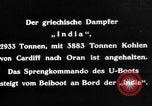
German U-Boat sinks Greek ship "India" in 1917 during World War I. U-Boat crew captures and examines sea turtles, in 1915.
Opening scene shows a tramp steamer listing to starboard.during World War 1. She displays "India, Greece" in large letters on her side. Slate indicates that an explosives technician from a U-Boat had climbed aboard and set charges on the Greek Steamer, "India" as she is stopped in the Atlantic during World War 1. The India is carrying a cargo of coal from Cardiff Wales, to Oran. The ship is seen listing. Smoke still rises from her stack. Slate states that the cross on the hull of the sinking "India" is the Greek national emblem. The ship sinks lower and finally slides out of sight, with smoke rising above the water from her exploding boilers. (Note: This German U-boat is the SM U-35, which was operating in the western approaches to the Straits of Gibraltar after leaving the Mediterranean on 11-12 April. It carried a professional cinematographer on board. Two years earlier, on June 12, 1915 , the U-35 also sank the British ship, "Crown of India." ) The next sequence shows an image of the German Daily Express newspaper for Monday May 10, 1915. Dead! it reports in bold print: The world has a duty to conduct a Hunt for turtles. Scene shifts to deck of surfaced German U-boat, showing a dinghy arriving alongside, from which several giant sea turtles are unloaded. Crew members examine the turtles on the deck of the submarine. At least one appears to be dead. Next scene shows lookouts on conning tower of the U-Boat, as they see smoke on the horizon. (The Imperial German Naval war flag is displayed on the conning tower.) The Captain calls for full speed ahead on both engines, and the controls show that being selected. (World War i; World War 1; WWI; WW1)
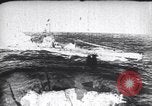
German U-boat U-35 sinks three mast sailing ship by torpedo attack in the Atlantic Ocean during World War I.
German U-boat or submarine U-35 attacks an enemy ship in the Atlantic Ocean during World War I. German U-boat U-35 underway in the Mediterranean Sea. The U-boat encounters British three masted sailing schooner Miss Morris, in route from Genoa to Malaga. The U-35 under command of Captain Lothar von Arnauld de la Perière, stops the sailing ship, assists its crew in departing the ship on lifeboats (and coming aboard the U-35), and then sinks the Miss Morris SV 20 miles southeast of Garrucha, Spain. The enemy ship is scuttled by the U-35.

A German U-Boat attacks a British freighter and it sinks in the Atlantic Ocean during World War I
A British freighter is seen, stopped at sea by a German submarine. The U-Boat gun crew fires at the ship's waterline. The ship is seen settling slowly in the water, with her stern awash and her bow jutting upwards. Finally, she sinks straight down stern-first. (World War I; World War 1; WWI; WW1)
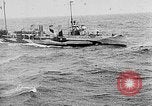
A gun drill aboard the United States ship Whipple in the Atlantic Ocean.
United States Ships en route to France during World War I. United States destroyer Whipple underway in Atlantic with a gun on board.Sailors at the guns and torpedo launcher during a gun drill aboard the USS Whipple.
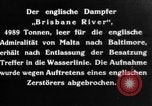
The British Ship "Brisbane River," stopped (and sunk) by German U-Boat, UB-35, in World War I
View from the German U-Boat, UB-35, of the British ship, "Brisbane River," stopped in the Atlantic off the coast of North Africa, in World War 1. U-35 Captain, Lothar von Arnauld de la Periere, with the British ship's officers, aboard the submarine, examines their papers and Registry of Ships. Closeup of a Ship Registry showing the Brisbane River, listed as number 1219. The Captain crosses it off the Registry and pencils in the date: April 17, 1917. (As noted in opening slate, the actual sinking of the Brisbane River was not caught on camera, as filming was suspended due to the approach of British destroyers.) Later, the crew is seen on deck, taking showers, and enjoying themselves, swimming in the ocean.

Activities of U-Boat, U-35, on return voyage during World War I
View from the surfaced German U-Boat, UB-35, on a scenic cruise along the British coast in World War 1. The U-Boat crew uses explosives to sink a ship, close to shore (after releasing the ship's crew). The ship was loaded with salt herring for transport to Genoa, Italy. Repeated explosions are seen. In change of scene, five prisoners of war (British ship captains) take a morning walk on the deck of the UB-35 behind a screen of tarpaulin stretched across the deck. A slate referring to the difficulties experienced by Britain from German U-Boats. The U-35 Captain, Lothar von Arnauld de la Periere, is seen sitting in his conning tower. Other officers are keeping watch. He receives a message from a sailor below. He writes a note to Headquarters reporting on ships and tonnage sunk by the U-35, and mentioning 5 English ship's captains taken prisoner, in the month of May, 1917. He signs it: "U-35, Arnauld." Closeup of the note. The U-35 proceeds to rendezvous with the Austro-Hungarian Novara-class scout cruiser, "Helgoland." View of the 4-stacker Helgoland with black smoke issuing from her stacks. View from the U-35 as it passes to port of the Helgoland. Captain von Arnauld and another officer, greet an Austro-Hungarian navy officer who comes aboard bringing greetings and wishes for good luck from his Admiral, to the U-35. View of the Admiral's flagship,the Austro-Hungarian Armored Cruiser, S.M.S. Sankt Georg. (Slate reads three cheers for the returning U-Boat, so presumably the Sankt Georg crew gives cheers.) Camera pans across the cruiser to deck of the U-35, where officers and men of the U-35 salute and raise their hats in three cheers for their Austrian-Hungarian comrades. Flags fly from the U-35, one for each Allied ship sunk. The U-35 with crew on deck moves slowly into port next to another submarine and large ship. U-Boat Captain von Arnauld walks to a fleet message center. The U-35 crew happily receive and read letters from home. The next scene shows the U-35 heading out to sea again,