


 Francais
 Deutsch
 Italiano
Refine Your Search
+"Burma" +1945 stock footage and images
- Showing 43 to 48 of 64 results more
more Hide
Hide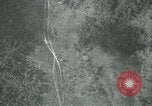
Railway track and road attacked by the U.S. Army Air Force in China-Burma-India Theater during World War II.
U.S. Army Air Force attacks enemy positions in China-Burma-India Theater during World War II. The target of the attacks is a railway track and a road running alongside each other. Bombs dropped in a sequence by the B-24 bombers of the U.S. Arnt Air Force leave smoke trail behind.

Key enemy positions and supply lines targeted and bombed by United States Army Air Force, China-Burma-India Theater
U.S. Army Air Force attacks enemy positions in China-Burma-India Theater during World War II. The target of the attacks are the railway tracks, roads and bridges built over a river which are the supply lines of the enemy forces. Bombs drop towards the target leaving a smoke trail behind them.
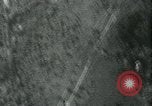
Bombing by U.S. Army Air Force destroys rail roads and bridges with explosion in China-Burma-India Theater during World War II.
U.S. Army Air Force attacks enemy positions in China-Burma-India Theater during World War II. The bombs dropped by the bombers of the U.S. Army Air Force target important railway tracks and bridges which act as supply chain for the enemy. A big explosion and smoke evolves at a bridge built on a river.
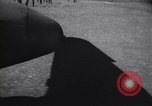
P-51 planes of the U.S. Army Air Forces drop bombs over Japanese held hills near Burma border during World War II
P-51 planes of the U.S. Army Air Forces in a combat operations over Wanling, China, near the Burma border, during World War 2, as photographed from a B-25 Mitchell bomber. Close view of the B-25 bomber's right engine nacelle and empennage shadow on the runway, during takeoff roll. Some soldiers and parked aircraft in the background. The B-25 takes off. . P-51 aircraft seen in flight over Japanese occupied positions in hills. Aerial view of a meandering river. Smoke rises from ordnance dropped by P-51s.
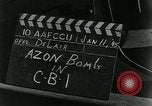
Azon Bombs checked for military operations in China-Burma-India Theater during World War II.
Azon Bombs in China-Burma-India Theater during World War II. United States Army Air Force personnel unpacks the smoke flares from wooden boxes. Tests of flares and checks their continuity using some meter. In a laboratory a man removes gyroscope which controls the ailerons and rudder from a box to test them. He tests a radio receiver for frequency matching and then installs it in Azon Bomb assembly. Testing of the complete assembly and marking it as correct.
Azon Bomb assembly checked and approved for military operations by technicians, China-Burma-India Theater of World War II.
Azon Bombs in China-Burma-India Theater during World War II. U.S. Army Air Force technicians perform continuity and other tests on various components of Azon Bombs in their laboratory. The indicators and meter readings display the results of the tests. Technicians with badges on their uniform check and assemble a tail section of an Azon Bomb. Another technician fills the check sheet.