


 Francais
 Deutsch
 Italiano
Refine Your Search
+"China" +1942 stock footage and images
- Showing 31 to 36 of 54 results more
more Hide
Hide
American Volunteer Group Flying Tiger pilots fly P-40 fighter planes in China Burma India Theater during World War II.
Chinese Air Force 1st American Volunteer Group Flying Tiger pilots in China India Burma Theater during World War II. Flying Tiger pilots grouped on a field are presented with letters and rank bars which they pin on their shirts. Close-up view of Flying Tigers ace pilot Frank Schiel being recognized. U.S. airplanes parked on an airfield in the background. The Commander of Flying Tigers U.S. Lieutenant General Claire Lee Chennault arrives. The pilots conclude a quick briefing and then scramble and run, rushing to United States Army Air Force P-40 Tomahawk fighter airplanes. The P-40s taxi and take off from the airfield. The aircraft in flight.
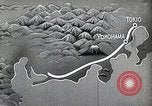
Making of china and steam locomotives in Nagoya, Japan.
Map shows Nagoya, Yokohama and Tokyo. Narrator in Spanish discussing Nagoya as a great industrial city. View of buildings and temples in Nagoya and a family walking toward a temple. The making of fine china is shown: Workers work at machine. China plates and jars are displayed for drying process. Potter shapes pottery on a potter's wheel. Delicate pottery is made. China plates, cups, saucer and jars displayed. The making of locomotives is shown: Workers work at machines in the train factory. Interior of the factory. Steam locomotive is prepared. Main cab of locomotive is lowered from cables onto a waiting wheel chassis for final assembly. View of a newly completed steam locomotive rolling off of the production line in Nagoya.
United States Army aircraft airlift supplies to China over The Hump air route during WW2
Airlift of supplies from India to China through “The Hump” during World War 2. Barrels of oil in Allied airfield in Assam, India. Sikh Indian laborers, wearing Dastar turbans, load supplies on a plane as an American soldier watches. Man welding. Dismantled airplane equipment. Shirtless American soldiers inspect equipment before boarding plane. A Curtiss C-46 Commando takes off. Three planes of the American Transport Command fly over “The Hump”. Map showing flight route change from Dibrugarh, India to Kunming, China. A C-47 Skytrain flies over mountainous jungle, misty fog, and high mountains of the Himalayas. Various views of the Eastern Himalayan Uplift. A Curtiss C-46 Commando lands in Kunming, China.
US General Joseph Stilwell with Major General Frank Dow Merrill; Allied soldiers in China Burma India Theater training in India during WW2
United States General Joseph Stilwell discusses plan with Major General Frank Dow Merrill during World War 2. Insignia of the China Burma India Theater (CBI). Nationalist Chinese soldiers march toward a United States Army Air Force transport plane to India. USA Army Air Force plane takes off, heading for India. At the U.S. Army Chinese Training and Combat Command at Ramgarh, India, Chinese soldiers train under the United States Army leadership. Aerial view of tents and buildings at Ramgarh. General Stilwell personally instructs Chinese soldiers as they shoot at targets while in prone position. Chinese troops charge out of a trench, crawl with guns under barbed wire, and avoid gun fire and explosions. India Command Formation insignia. British General Archibald Wavell inspects soldiers in formation. General Archibald Wavell shares a map with Field Marshal Claude Auchinleck, who was made Commander in Chief, India, for the British. British Indian soldiers seen in training, as they lift logs, jump over obstacles, climb ropes, and practice jumping from a parked airplane fuselage during parachute training. Next, soldiers are seen jumping out of an aircraft in flight with parachutes. British Indian soldiers descending with parachutes. United States soldiers unload supplies. Allied soldiers marching. Indian infantry marching in farmland. Gurkha soldiers from Nepal march with donkeys. Naga headhunters from Assam and northwestern Burma. East and West African soldiers. British colonial regiment, the Burma Rifles marching. Soldiers from the Kachin people of Burma and Southwestern China. Allied soldiers in India coming from various races- Scots, Irish, English, Welsh, Australian, New Zealander, Indian, Gurkha, Burman, African, Chinese and American. Multinational army from Allied countries.
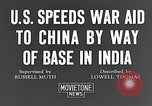
United States and Chinese forces delivering war ammunition and supplies to China via India during World War 2
U.S. Military personnel together with Indian personnel in India receive military cargo such as ammunition, arriving by boat during World War II. Large boxes of ammunition and supplies lowered from boat. A boat being pushed to dock by tug. Natives of India push boxes onto carts. Railroad cars being loaded with tanks from boat and trains leave the harbor area. Camel pulling carts filled with ammunition and equipment. Mechanics work on P-47 warplanes in a large hangar in India. American military Personnel loading supplies on C-47 transport plane. American and Chinese Pilots seen, involved in shuttling supplies to China through India due to Japanese closure of the Burma road. P-40 aircraft with Chinese pilots take off.
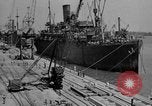
Military supplies to China from United States and the United Kingdom transit from Calcutta, India to China during WW2
Workers load supplies in Calcutta port in India during World War 2. A crane lowers stacks of boxes. Indian laborers roll artillery shells. A row of United States army trucks. Various materiel and military supplies, including rolls of chain link fencing and rolls of barbed wire. United States soldiers prepare a row of tanks for shipment. A transport boat on the Hooghly River in Calcutta, India (present day Kolkata, India). Sign on boat reads, "Rambari." Transport boat sets sail for the Brahmaputra River. A train begins to depart on the Bengal-Assam Railway. Indian worker transfers boxes to another train during a stop. Laborers repair train tracks damaged by monsoon rains. United States Army Douglas C-54 Skymaster planes in flight.