


 Francais
 Deutsch
 Italiano
Refine Your Search
+"China" +1944 stock footage and images
- Showing 7 to 12 of 115 results more
more Hide
Hide
U.S. industrialist, Henry J. Kaiser appeals to Americans to donate used clothing for war victims throughout the world
American industrialist, Henry J. Kaiser appeals for donating clothing to war victims in China and Europe during World War II. Seated at desk in office, he addresses the nation and announces a drive, commencing April 1, 1944, to collect used clothing for war victims, all over the world. Scenes shows : War victims in food lines. Starving and wounded civilian victims of war. An American woman and a girl at home in America select clothing for donation. Mr. Kaiser shows a banner which reads "what can you spare that they can wear?"
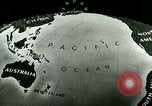
African American soldiers engaged on all fronts in World War 2
Film opens with map of the world showing the various theaters of operation in World War II. Narrator refers to Allies liberating town after town, as they advance. View of American troops being welcomed in a European town during an advance (probably Italy in 1944). Next, African American troops are seen boarding troop transport ships. A huge convoy of ships is seen from the air. Huge piles of war materiel on a dock. Ammunition being delivered by landing craft from the transport ship USS Hunter Liggett (APA-14) to American troops at a beachhead in the Pacific. An African American sailors directs the lowering of a piece of artillery from a ship into a landing craft. Construction equipment being used to clear the way for a new landing field. Docks, roads, and bridges being built as the Allies advance. American troops in the swamps of the South Pacific. American Army engineers clearing trees to build the Alaska Highway (ALCAN Highway) in 1942. Corps of Engineers building the Ledo Road (from India to China) during the war. African American soldiers building a bridge across a river in Europe. A U.S. Army truck under fire, driving along a dirt road in Europe as shells burst all around it. U.S. troops firing various kinds of field artillery and tank guns. U.S. infantryman using a flame thrower. Closeup of African American soldier using a bayonet and others firing small arms. A tank being blown up by artillery fire. A Japanese Mitsubishi A6M3 Zero aircraft maneuvers overhead in the Pacific theater. An African American soldier runs to man his Browning .50-caliber, water-cooled antiaircraft machine gun, and begins firing as the Zero fighter plane strafes his position. Closeup of Japanese pilot in his cockpit and his machine guns firing from leading edges of his plane. His rounds strike all around the U.S. gunner, who turns and follows him with more fire. His tracers show behind the plane. Closeup of the African American gunner as he continues firing. View of the Japanese airplane rolling over and diving. Next the Japanese plane, aflame, crashes on a tropical island and explodes. (Note: It is apparent that some of these combat scenes have been made up of clips from other sources, edited into this film.) (World War II; WW II; World War 2; World War Two)
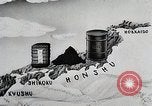
Japanese natural resources related to Second Sino-Japanese war and World War II
Animated map illustrating shortage of indigenous raw materials in Japan. As stockpiles vanish during Second Sino-Japanese war, Japan's domestic sources supply only 10% of the nation's needs for war. Animated sequence shows lack of steel, aluminum, copper, and power generation for the conduct of war. But one of the nation's greatest resources is the population of skilled Japanese workers, who are shown at various high tech jobs, as well as on the farms and in the fishing industry. Japanese workers are seen who work for the Zaibatsu (four ruling families of Japan). Banks of Japanese women typists and women in a factory. Young women painting faces on a "Kewpie doll." A Japanese family at dinner time. Women engaged in fabric spinning. Animated graphic illustrates Japan's war-related resources for World War 2, by showing a Japanese soldier standing astride map of Japan with lines extending to sources of needed raw materials from Japanese possessions in Korea, Manchuria,Formosa, China,Indochina,Malaya, and its network of Pacific Islands. Final scene displays copy of Los Angeles Times newspaper with headline reading: "Jap Supply Lines Blasted." It also features a story that appears to refer to the U.S. 6th Army invasion of Leyte in the Philippines, in October, 1944 (when General MacArthur waded ashore and stated,"I have returned"). (Note: Although produced during World War 2, this film shows prewar scenes of Japan. The animated illustrations and maps and, of course, the newspaper shown at the end, date from World War II.)

Japanese 1931 aggression in Manchuria condemned by the League of Nations. Continued Japanese aggression in the Pacific, through World War II
Japanese international activities during 1931-1945. Opening scene shows Japanese troops embarking on ships bound for an invasion of Manchuria, in 1931. Officers walking on the dock, amongst the departing troops. Scenes of explosions and destruction. Views of Shanghai during Japanese attacks in 1937. Destroyed buildings. Civilian dead lying in the streets. Japanese soldiers racing along a street in a three wheeled motorcycle vehicle. Change of scene shows Japanese diplomat Yosuke Matsuoka addressing a League of Nations meeting in 1933, after that body adopted a report blaming Japan for events in Manchuria. He objects to that action and then leads his delegation in walking out of the meeting. View of Japanese delegates in top hats and bowler hats exiting the building. Scene shifts to Japanese forces firing artillery and machine guns in Manchuria.They wave large Japanese flag victoriously after a battle. The next scene shows Italian forces occupying Ethiopia and raising the flag of the Kingdom of Italy, as Italian troops salute, presenting arms of rifles with fixed bayonets. Axis leaders celebrate the 1940 Tripartite Pact between German, Italy and Japan. The festivities take place in a hall displaying the three nation's flags on the walls. A large number of persons attend including Japan's Prime Minister, General Hideki Tojo, seen with two celebrants. Scene reverts to China with Chinese civilian people trying to escape from invading Japanese forces. The refugees carry their belongings as they flee. Occasional shell burst is seen among advancing Japanese troops as Chinese soldiers put up resistance. Chinese soldiers firing artillery. In the U.S., Japanese envoys Kichisaburō Nomura and Saburō Kurusu are seen walking together into a building and entering a room inside. Next, are views of the Japanese attack on Pearl Harbor, with huge plumes of smoke obscuring the bombed U.S. battleships in the harbor. U.S. battleships in line formation in the Pacific during World War 2. Aerial view of U.S. warships moving in parallel. British ships augmenting the U.S. warships. Naval guns firing. U.S. amphibious assaults on Japanese held islands in the Pacific. Prisoners of the Japanese who suffered in the Philippines. General Douglas MacArthur mingling with former prisoners and internees upon his return to Manila in 1944. Aerial views of Iwo Jima. Naval bombardment and amphibious assault of Iwo Jima. Numerous fallen Japanese soldiers. The iconic American flag raising by U.S. Marines on Iwo Jima. View of Lieutenant General Simon Bolivar Buckner Jr. during the campaign on Okinawa, where he was killed in action. A Soldier being carried on a stretcher. Another throwing a hand grenade. U.S. soldier firing at a Japanese defender who falls out of his bunker. Large numbers of Japanese prisoners of war assembled in a field. Japanese Kamikaze attacking U.S. warships off Okinawa. The sky filled with antiaircraft flak clouds. View of 40mm Bofors antiaircraft cannon firing and a Japanese plane falling and exploding on impact in the ocean.
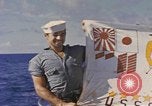
Crew members of Submarine, USS Crevalle, display a commemorative flag in World War II
The USS Crevalle (SS-291) on war patrols in East China Sea and Sea of Japan in final days of World War II. Crew members hold a flag they made depicting their engagements with Japanese shipping. It shows Japanese Navy Rising Sun flag with marks below for five Japanese Navy ships. It also shows the Japanese Red Ball flag and fourteen marks for other Japanese ships. As the film continues, it reveals more of the flag, showing more encounters with enemy shipping. A Landing Craft Infantry (LCI) passing by. Sailors standing on deck in bright sunlight with breeze blowing. One of the sailors is drinking from a mug. Sailor Robert Schwarz has grown a notable full beard and smokes a pipe. Toward the end of the film, the boat's Captain, Navy Captain Everett Hartwell Steinmetz, is seen from the back and in profile, standing on deck. Another aircraft passes overhead. (Note: Sailors holding flag in opening frames has been identified as James A. Katchis who served on the boat beginning as a Seaman 1st Class in August 1944 and Robert Schwarz of St. Louis, MO)
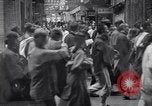
Fighting in China as Japan tries to conquer China during World War II.
Japanese aggression in China during the Second Sino-Japanese War and World War II. People in the streets of China. Animated pictures show one Chinese out of every 5 people in the world. A page showing Chinese writing. A mariners' compass. A Chinese man at an observatory. A porcelain cutlery set on a table. A Chinese man places porcelain into a furnace. A man puts gun powder in a bowl from a mortar. Explosion in the bowl. Firecrackers burst. Chinese people celebrating a festival. A book titled 'Analects of Confucius'. A saying of Confucius reads “What you do not want done to yourself, do not do to others”. Statues and pagodas in China. Scenes of fighting. Japanese artillery fires and cavalry advances. U.S. flag flutters beside the Chines flag. Chinese troops on horses. Animated map of China. A book titled 'The Tanaka Memorial Japan's dream of World Empire'. Japanese Foreign Minister Baron Nishi Tanaka. Excerpted line of the book. Japanese military officers. An animated map of Asia showing regions which Japan wanted to conquer. Animated map shows Germany and Russia. Animated map showing Japan and China contrasts Japanese unity with Chinese disunity. Animated map shows China breaking into pieces. A scene of the Japanese Army.