


 Francais
 Deutsch
 Italiano
Refine Your Search
+"China" +1944 stock footage and images
- Showing 13 to 18 of 115 results more
more Hide
Hide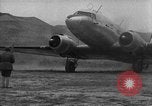
New Zealand Nurse Kathleen Hall arrives in China with help and supplies for Bethune International Peace Hospital in China (WW2)
U.S. Air Force C-47 aircraft arrives in Hebei Province of China carrying Nurse Kathleen Hall of the New Zealand Anglican Church Mission in China during World War II. She and companions bring help and supplies for the Bethune International Peace Hospital.
U.S. Lieutenant General Daniel Sultan explains Japanese aggression in China and need for troops in India and Burma during WW2
World War II film about the China, Burma, India (CBI) Theater of Operations. A soldier is seen filling out a form seeking information about him and inviting him to write in questions about anything he hadn't learned through normal information channels. Scene shifts to Information and Education Department of the Burma-India Command, where it is being processed by a soldier. Lieutenant General Dan I. Sultan, commander of Burma-India Theater, is seen next, seated at a desk, with wall map of the region behind him. He is appearing in an information film intended to inform troops under his command. He notes that more than half the troops who filled out the information form, asked why American troops were stationed in India and Burma. He refers to the recent recall of General Stillwell and the splitting of CBI into two theaters (China and India/Burma). He states that the purpose is a path toward Japan. An animated map shows China (that narrator notes has been fighting Japan since 1937). Animation shows Japan walling off China from the outside world, by seizing her ports, and then concentrating its grip on the Eastern part of the country. Without access by sea, the allies had only one option to assist China in the fight against Japan. That was to open the Burma Road. Film shifts to scenes of Japanese bombing of Shanghai and Chinese civilians abandoning the city in 1937 during Second Sino-Japanese War. Wounded and injured Chinese fighting fires while tending casualties in an open area. Glimpse of Chinese soldiers near one of their few large artillery pieces. A gun crew manning one of her few antiaircraft guns. Chinese jam road in trek to the unoccupied provinces of the country. Chinese carrying casualties on stretchers, making do without ambulances. Chinese coping in the face of all kinds of shortages. In contrast, well supplied Japanese troops are shown in formation. Japanese troops, military vehicles and equipment are seen. Japanese firing machine guns and heavy artillery against Chinese positions. Japanese armor and long lines of troops engaged against the Chinese, who continue to resist in spite of shortages and hardship. Chinese soldiers without shoes, marching in a column.

The U.S. officers being greeted by and meeting other officials in China.
U.S. officers arrive in China. Commandant of the U.S. forces in China General Albert Wedemeyer makes an inspection tour of the American installations in China. He comes out of an aircraft. Other officials greet him. U.S. Ambassador to China Patrick Jay Hurley arrives and meets Chairman of the Nationalist Government of China Chiang Kai-shek. Prime Minister of the United Kingdom Winston Churchill meets local leaders in Athens, Greece.
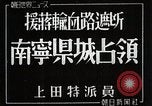
Japanese troops attack and capture Nanning in China.
Japanese troops capture Nanning in China. Japanese troops march amidst mountains in China. They march with artillery. They cross Ford River by wading with horses. Japanese troops attack city. Explosions in city. The flag of Japan. Japanese troops march on horseback. View of victory march. (World War II period).
Japanese troops bombard and fire on Changsha in China (WW2)
Imperial Japanese Army troops advance on Changsha, Hunan Province, China during World War II. View of boats in a lake. Japanese bombers bombard at the mountains and field in China. Explosions over the mountains. Japanese troops go with artillery to attack. The troops firing artillery. Wreckage and debris. Invading Japanese troops bombard and fire. Battles ensue and Japanese win. Exterior of a building. Japanese troops on horses.
Flying Tigers work for United States Air Force in China
'Flying Tigers of China join U.S. Air Force '. Brigadier General Claire Chennault and Colonel Scott look at a big map of China out side a building with a picture of Chiang Kai Chek. Colonel Scott talks to pilots. Captain Wong of Chinese Air force welcomes him. Pilots of Flying Tigers group with Chinese flags on their backs. P-40 fighter planes take off. Brigadier General Chennault flies a P-40 plane.