


 Francais
 Deutsch
 Italiano
Refine Your Search
+"Cuba" +1962 stock footage and images
- Showing 13 to 18 of 47 results more
more Hide
Hide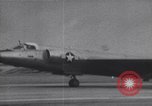
The Cuban Missile Crisis. The Limited Nuclear Test Ban Treaty.
October, 1962, U.S. Air Force U-2 reconnaissance aircraft, tail number 56-6707, of the Strategic Air Command (SAC) 4080th Strategic Reconnaissance Wing, lands at Laughlin Air Force Base, Texas. View of Photographic evidence, brought back by the U-2, showing Soviet missiles being set up in Cuba. President John F. kennedy broadcasts to the nation about the crisis on October 22, 1962, announcing measures being taken by the USA to address the situation. A B-58 Hustler bomber landing. Airmen removing camera from nose of a reconnaissance aircraft. Air Force Sergeant, photo interpreter, reading wet film in a base laboratory. U.S. Naval officers and sailors in Command Center viewing large wall map of the world. U.S. Air Force SAC B-52 bombers taking off. View of United Nations Headquarters building in New York City. On October 25, 1962, U.S. Ambassador to the UN, Adlai Stevenson, confronts Soviet Ambassador Valerian Alexandrovich Zorin about missiles in Cuba.He looks at Zorin, and says,"Don't wait for the translation, yes, or no." Zorin smiles as the room fills with laughter. He then responds. View of a Soviet ship bound for Cuba being monitored by a U.S. aircraft overhead. Pilot in cockpit of the aircraft. View from U.S. aircraft flying low past a Soviet ship. Crew in cockpit of the aircraft. Soviet ships turning away. Helicopter flying over sandy beach area of Hyannis Port, Massachusetts. The helicopter parked and Undersecretary of State, Averell Harriman, steps from the helicopter and is later seen with President Kennedy, and Secretary of State, Dean Rusk, at the President's Weekend White House. Harriman reports on the successful negotiation of a limited nuclear test ban treaty. Glimpse of Moscow. U.S. Secretary of State, Dean Rusk, Soviet Foreign Minister,Andrei Gromyko, and British Foreign secretary, Alexander Douglas-Home, are seen signing the document for their respective nations, August 5, 1963.
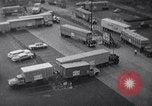
United States monitoring Cuba and enforcing Kennedy's shipment quarantine order during the Cuban Missle Crisis
Community fallout shelters being stocked. Lorries and trucks on road carry supplies. View of Red Ball trucking line truck. Aerial, exterior view of United Nations Building in New York City. View inside United Nations building. United Nation Ambassador Stevenson asks the USSR delegate whether there are missile bases on Cuba. President Kennedy signs Quarantine order on what materials may be shipped to Cuba, to begin 10am on October 24, 1962. B-52 bombers take off, taking 24 hour missions. Interceptors and fighters take off. Views on aircraft carriers with fueling and takeoff operations on flight deck. Radar dishes and radio communications. U.S. battleship at sea. U.S. intercepts Soviet tanker and allows her to proceed. Reconnaissance aircraft over Cuba. Views of White House. SAC bombers and anti aircraft missiles on 5 to 15 minute alert to handle any critical situation. Interiors of control room inside the Headquarters of American Air Defense Command.
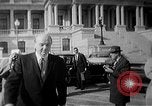
U.S. President Kennedy addresses American people about the buildup of arms in Cuba by Soviets.
Events held in the United States during the Cuban Missile Crisis of October, 1962, during the Cold War, when the United States and the Soviet Union confronted each other with nuclear destruction. Top advisors of U.S. President John Kennedy arrive at the White House. Americans buy newspapers. President Kennedy makes a TV announcement about the crisis and what has been happening. He states that a strict quarantine on all offensive military equipment under shipment to Cuba is being initiated to halt offensive buildup of nuclear arms. He says that all ships of any kind bound for Cuba from whatever nation and port , if found to contain cargoes of offensive weapons, will be turned back. This quarantine will be extended, if needed, to other types of cargo and carriers. He further states that it shall be the policy of the United States to regard any nuclear missile launched from Cuba against any nation in the Western Hemisphere as an attack on the United States, requiring a full retaliatory response upon the Soviet Union. Exteriors of the White House. An electronic billboard flashing news. Americans being interviewed by newsmen along a street.
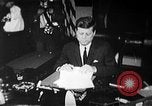
In the US, President Kennedy receives a message from Soviet Premier Khrushchev about dismantling of missiles in Cuba.
Events in the United States during the Cuban Missile Crisis of October 1962 when the United States and the Soviet Union confronted each other with nuclear destruction. U.S. President John Kennedy signs a quarantine order. U.S. Air Force B-52 Stratofortress bombers take off. U.S. Air Force interceptors and fighters take off from U.S. aircraft carriers at sea. Radar dishes moving. A U.S. battleship underway at sea. A U.S. aircraft intercepts a Soviet tanker and allows it to proceed. U.S. reconnaissance aircraft over Cuba. U.S. Air Force SAC (Strategic Air Command) bombers are prepared for a take off. U.S. missiles are prepared. Head Quarters of American Air Defense Command shows interiors of a control room. People wait for news. Exteriors of the White House in Washington DC. Exterior of the Kremlin in Moscow, Soviet Union. A press announcement about a message that President Kennedy has received from Soviet Premier Khrushchev saying that he will dismantle missiles in Cuba.
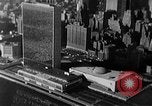
U.S. Ambassador Adlai Stevenson asks a Soviet representative in the U.S. if his country is installing missiles in Cuba.
Events held in the United States during the Cuban Missile Crisis of October 1962 when the United States and the Soviet Union confronted each other with nuclear destruction. United Nations building in New York. U.S. Ambassador to the United Nations Adlai Stevenson asks Soviet representative to the UN Valerian Zorin if his country was installing missiles in Cuba. Following Zorin's refusal to answer the abrupt question, Stevenson retorts, 'I am prepared to wait for my answer until hell freezes over'.

Story of Cuban missile crisis in the month of October.
Documentary "One Week in October." Aerial views of Russian missiles in Cuba. Columbus day parade with marching bands, Boy Scouts, troops. Brief excerpt from 1962 World Series Baseball game with New York Yankees pitcher Ralph Terry delivering to Willie Mays of the San Francisco Giants, who hits a ball to the deep left corner that is caught. March of Dimes annual poster girl. Jackie Kennedy with children of foreign diplomats. Fireworks in Uganda celebrating its independence. View of Vatican Palace and a candlelight vigil. President John Kennedy with Ahmed Ben Bella, Premier of Algeria. Ben Bella is then seen with Cuban leader Castro who receives him in Cuba. U.S. moon rocket launch. Scientists in America reviewing designs for fallout shelters during Cold War, and visiting banks, stores, and municipal buildings and garages to assess them for worthiness as bomb fallout shelters. Views of various types of fallout shelters. Food, water drums, medical and sanitation supplies bound for civic fallout shelters are seen rolling off of assembly lines and being boxed. Radiological monitoring equipment on an assembly line. A woman packages a geiger counter into a box. Then the fallout shelter supplies are seen transported by rail to defense department warehouses for distribution by local authorities to Community Fallout Shelters. View of moving train seen from above and from sideview. View of new fallout shelter signs being mounted at fallout shelters. Forklifts working at Naval Supply Center Oakland in California to arrange supplies for shelters. View of American Legion meeting where former President Harry Truman makes a speech. Former President Eisenhower gives a speech in Connecticut endorsing some candidates. Air Force helicopter flies overhead and then seen landing on White House lawn. Beaches of Cuba. Marches in Cuba. Historic view of soldiers marching beside monument to Battleship Maine in Havana. Crane atop monument as a wing is cut off; scenes of destruction of monument to Battleship Maine in Havana. Fidel Castro and Che Guevara marching into Havana in 1959 with cheering throngs after succeeding in revolt against Batista. Fidel Castro and Soviet leader Khrushchev greeting one another at United Nations in 1961. Soviet deputy premier Anastas Mikoyin greeted by Castro and crowd at Havana airport in 1960. Trade agreement between Cuba and Havana signed. Soviet Russian cargo ships on way to Havana. Cuban refugees in small boats being rescued by U.S. Coast Guard. Views of military specialists examining films of aerial views of suspected missile installations in Cuba. U.S. military mobilization for possible war. Strategic Air Command begins dispersing aircraft to possible needed locations. B-52 Stratofortress aircraft takes off. Badge on plane: "Anywhere. Anytime." Destroyer USS Strong, DD-758, making way in heavy seas. An American Aircraft Carrier underway in the distance. Polaris submarine on surface. Officers of STRAC or Strategic Army Corps seen meeting after being assigned to the new command of U.S. Forces Atlantic. Alerted U.S Army units on training exercise to maintain combat readiness. American Army troops load into rear of transport plane . C-124 Globemaster taking off. Then a C-119 shortly after takeoff flying overhead. Then a MATS C-124 again is seen overhead. 1st Armored division tanks being loaded onto rail for transport from Fort Hood Texas to Fort Stewart Georgia.