


 Francais
 Deutsch
 Italiano
Refine Your Search
+"Cuba" +1962 stock footage and images
- Showing 19 to 24 of 47 results more
more Hide
Hide
Spanish journalist talks about the Cuban Missile Crisis
A Spanish-speaking journalist reports on the developments of the 1962 Cuban Missile Crisis. Words read "Cuba: Peligro Rojo" ("Cuba: Red Danger") beside the journalist. The journalist talks about the missile confrontation in Cuba inside a conference room of the Organization of American States (OAS) in Washington DC. The reporter reads from his report while holding a microphone. Nameplates bearing the names of countries from the Organization of American States such as Uruguay, Brazil, Costa Rica and Chile. The journalist reads from his report while a janitor cleans the conference room behind him. The journalist interviews a man who just arrived in the conference room. The man, a representative from the Organization of American States, talks about the ongoing Cuban Missile Crisis. The camera shows the seal of the Organization of American States in Spanish (“Organización de los Estados Americanos”).
U.S. Government officials at White House and Pentagon during the Cuban Missile Crisis; President Kennedy informs America.
Activities during Cuban Missile Crisis in the United States. U.S. Government officials arriving at the White House in Washington DC to address the Cuban missile crisis. CIA Director John McCone and Vice President Lyndon Johnson seen arriving at the White House. President John F. Kennedy addresses the American people on October 22, 1962, announcing discovery of Soviet missiles in Cuba and imposing a U.S. naval "quarantine" on Cuba. Animation showing areas of naval quarantine. The U.S. Capitol in a night time view. Night view of the State Department Building and the Pentagon in Arlington, Virginia. Interior views in the Pentagon show offices and signs for Office of Secretary of Air Force; Office of U.S. Air Force Chief of Staff; Office of Chief of Naval Operations; Office of the Joint Chiefs of Staff; and Office of the Secretary of Defense. View in a meeting room of Robert McNamara, the Secretary of Defense, standing at a microphone.
A Spanish-speaking journalist discusses Cuban Missile Crisis
A Spanish-speaking journalist reports on the developments of the 1962 Cuban Missile Crisis in the United States. The journalist makes his report beside an America-centric world map. The map changes into a North and South America map. The projector shows a photo of United States President John F. Kennedy, briefly changing into a silhouette of the Americas and the island of Cuba, before reverting back to Kennedy’s photo. The reporter discusses the missile sites and the dismantling of Soviet weapons in Cuba.
Fidel Castro during Cuban Crisis, Havana, Cuba.
Soviet Deputy Premier Anastas Mikoyan visits Havana, Cuba. Mikoyan waves from Cubana airstair. A sign outside the Russian trade fair or Soviet Exposition in Havana, Cuba. Cuban leader Fidel Castro with other officials, walks into a hall during the Soviet Exposition. Fidel Castro inspects a Soviet microscope. A party goes on, Castro drinks. Photographers taking photos. Anastas Mikoyan wearing a straw hat with “CUBA” written in front. Che Guevara and Anastas Mikoyan signing Cuban-Soviet trade agreements. A Russian ship in sea. Cubans receive Russian guns. Cuban men inspecting Soviet guns and artillery. Soviet T-55 tanks move on the road in Havana. A huge gathering around the road is seen. Fidel Castro observes the parade.
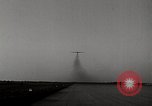
U-2 aircraft takes pictures of Soviet missile sites in Cuba during the Cuban missile crisis
U.S. Air Force U-2 aircraft takes off from runway, and climbs rapidly.Next scene shows interior of a U.S. Air Force photo reconnaissance laboratory where films from U-2 aircraft are developed and are being examined by Air Force photo interpreters. Images of Soviet missile installations in Cuba are seen on the close-up images.

Cubans get off from a boat and enter a building at Guantanamo Bay Naval Base in Cuba.
Guantanamo Bay Naval Base in Cuba. Views of Guantanamo Bay Naval Base. Cubans aboard a boat headed towards a shore. They get off the boat. They enter from the gate of a building at the base to report for work. A guard checks their identification. A jeep drives along a road. A guard standing with a rifle looks at equipment. A bunker camouflaged with sand bags. A U.S. Air Force helicopter in flight.