


 Francais
 Deutsch
 Italiano
Refine Your Search
+"Europe" +1944 stock footage and images
- Showing 79 to 84 of 226 results more
more Hide
Hide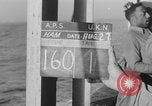
African American United States Army soldiers socializing on deck of ship heading to Europe (WW2)
African American soldiers of the United States Army on board a ship heading for Europe during World War 2. A soldier sitting at his post in front of ship anti-aircraft gun. View of a young black soldier. Two black soldiers laughing. A black soldier sitting pensively. A black soldier reads a book while smoking a pipe.
Launch of a V-1 flying bomb from German-occupied Europe toward England
A German soldier moves into a camouflaged position. Launch of a Fieseler Fi 103 (V-1 flying bomb or buzz bomb) from a position in German-occupied western Europe toward Great Britain. View of the V-1 in flight. (World War II period).
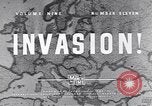
News media military analysts discuss the problems of Allies invading Europe to defeat Germany in World War II
Map of Europe and label "Invasion." Westbrook Van Voorhis leading a panel discussion about the problems arising from the Allied invasion of Europe in World War 2. He introduces panelists: Hanson Baldwin (military editor of the New York Times) Dewitt MacKenzie (Associated Press military analyst), and Paul Schubert (of Mutual Radio Network). He asks Mr. Baldwin about the importance of aerial bombing campaigns. Baldwin also stresses importance of a land invasion of Europe. Relief map of Europe highlighting major German cities. Asked about the merit of invading Italy on the way to Germany, Mr. Schubert cites the problem of the Alps and suggests other more effective invasion routes. Van Voorhis asks Mr. MacKenzie about best route into fortress Germany. He considers the criterion of ease of supply as most important, and suggests the Atlantic coast, near a good port and not far from England. Animated map shows this idea. When asked about this, Mr. Baldwin agrees completely, calling the conflict "a quartermaster's war." He adds, "The problem of victory is the problem of supply."

The Quebec and Tehran Conferences in World War II. German defenses in the Western Wall. The air war in Europe.
Allied strategic Conferences in World War 2. Opening scene shows Château Frontenac. Then President Franklin Roosevelt seated with Canada Prime Minister, McKensie King, and British Prime Minister, Winston Churchill. Scene shifts to their respective military staffs conferring at a table. Next scene shows the Russian Embassy in Tehran, Iran, with the Big Three (Joseph Stalin, FDR, and Churchill) seated on the portico, and their top ranking military officers standing behind them. Soviet Marshal Kliment Voroshilov stands behind Stalin. American officers are seen in next scene, including General George Marshall, Admiral Ernest King (lighting a cigarette) and General Henry H. ("Hap") Arnold. U.S. Ambassador to Russia, W. Averell Harriman, stands behind King and Arnold. Closeup of Churchill. Shift to an animated map of Europe. It illustrates the massive fortifications put in place by the Nazis along the coast of occupied Europe. Camera pans across heavy German coastal guns, Pill Boxes, and shore obstacles in place on the beaches. Marshal Erwin Johannes Eugen Rommel leads a group of German officers on an inspection tour of the "Atlantic Wall" defenses. Closeup of Rommel. British Bristol Blenheim bombers en route to attack targets in the German occupied areas. Views of Allied airmen inside cockpit of their bomber aircraft. A flight of five German fighters (appear to be Bf-109s) peeling off to attack an Allied bomber. View inside bomber of American gunner in bomber firing machine gun at attacking German fighter. Head on view of German Focke Wulf FW-190 fighter heading straight toward the camera, and point of view from gun camera as German aircraft zooms up over it. Gunner in bomber firing. An aircraft exploding inflight. View inside Allied bomber, through cracked windshield, of aircraft in a formation of U.S. Martin B-26 Marauder bombers. Next shot is rearward from bomb bay showing bombs away view as bombs are released from a B-26. Scene shifts to aerial view from rear of a U.S. B-17 bomber dropping bombs. View of the bombs striking a railroad marshaling yard. Another view of a B-26 bomber in flight.
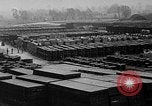
Allies prepare to invade Europe during World War II.
Allied invasion of Europe during World War II. Allied weapons and equipment piled up in England to be transported to the battle front in Europe. Freight cars and flat railroad cars carry equipment to the war front. Tanks, military trucks and artillery lined up. Pile of shell and other military equipment stacked up in Britain. Men of Home Guard and women of Auxiliary Territorial Services guard the equipment against German air attacks. Allies engaged in a Naval battle. Minesweepers clear mines, seaplanes in flight and ships underway at sea.
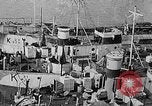
Allied troops rehearse and land in Europe during World War II.
Allied invasion of Europe during World War II. Allied ships at harbors in England carry military equipment, medicines, food and other supplies. Allied soldiers rehearse landing soldiers load in landing crafts, tanks and artillery unloaded from a ship. On the day of the invasion soldiers climb down a ladder along the side of a ship and load in landing crafts. Crafts move beach wards. Soldiers land amidst heavy firing. Barrage balloons fly over head as Allied troops make amphibious landings in Europe.