


 Francais
 Deutsch
 Italiano
Refine Your Search
+"Germany" +1915 stock footage and images
- Showing 13 to 18 of 23 results more
more Hide
Hide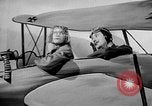
Examples of popular show business entertainment in Germany during World War I.
A woman and a man singing a duet on stage, as they pretend to be in a german warplane,flying over parts of Europe during World War 1. Below their staged airplane the set includes paintings of the Eiffel Tower, a Dutch windmill and other features of European countries. The programs for various musical theater presentations are shown, including one entitled "Die Gulasch Kanone" (The Field Kitchen), a play with music in three acts. A scene from another production is seen, with A newly wedded couple walking to a horse drawn carriage. Women standing near the carriage serenade the couple and spread flower petals at their feet. They enter the carriage.
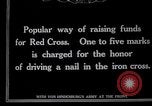
Jane Addams, of Chicago, U.S.A. watches Berliners raising funds for the Red Cross in Germany during World War I
A large wooden replica of the Iron Cross medal is set up outdoors, where persons may drive nails into it, to mark their contributions of from one to five marks to the Red Cross, during World War 1. An older man in military uniform taps several nails into the top of the cross. Visiting American, Jane Addams, co-founder of Hull House, in Chicago, and President of the newly formed Women's International League for Peace and Freedom (WILPF) stands nearby observing, as the man sets a nail into position at the center of the cross. He then lifts a small boy up, so he can finish hammering it in.
German Army units proceeding through the Brandenburg Gate in Berlin, Germany, early in world War I.
German Army units move through the Brandenburg Gate during World War 1. First seen are infantry, followed by horse-drawn artillery, several automobiles, and then a column of soldiers riding horses with feed bags on their necks.

German Field Marshal Paul Von Hindenburg examines maps and reviews troops during World War 1.
On German Field Marshal, Paul Von Hindenburg in Germany. Paul Von Hindenburg as a captain examines maps during World War I. An official stands near him. He reviews First World War German troops and decorates soldiers during a ceremony. Soldiers salute him. Scene shifts and show Hindenburg greeting citizens as he walks through the streets and they throw flowers. He speaks to elderly German military veterans who are part of an honor guard. He confers with officers. Civilians on either side of the streets. Flags in the background.
Effects of World War I in Poland and France. Scenes from before war and during war in Polish countryside and in French villages
Turkish peasants (refugees) en-route to Greece during World War 1. Destroyed homes in Germany. Devastated plains of Poland. Pre war scenes of Poland showing farm fields in snow. Polish peasant civilians flee an area due to war. They walk across a snow covered field towing a sled with a woman on the sledge. A group of Polish children stand together with English children outside a simple hut in the snow. The boys and girls smile. Pre-war scenes of France: View of a French village from high on a hill side overlooking the valley, town, and farmland. Scene from French village streets in the 1910s, before World War 1, with people shopping in busy food markets and market square area. A woman selling grapes at a stand holds up the grape bunches and smiles for the camera. French children and adults seen shopping in the market. Buyers inspect wares being held in wicker baskets by French women. Contrasting view of war torn France shows barren land with all trees destroyed, wrecked and destroyed towns and villages caused by battles in World War 1.
German youth in Wandervogel organization march in a weekly drill during World War I
Members of the German youth group, Wandervogel, march to music provided by a brass band, during World War 1. They parade across a grass field accompanied by their adult advisors, who march beside them. A contingent of Wandervogel follow, walking their bicycles. The band falls in and marches behind the bicycle cadre.