


 Francais
 Deutsch
 Italiano
Refine Your Search
+"Germany" +1917 stock footage and images
- Showing 7 to 12 of 57 results more
more Hide
Hide
Images pertaining to advance of communism during 20th century, especially in East Germany
Statue of Karl Marx on his grave stone in Highgate Cemetery, London. A picture of Karl Marx. Scenes in Russia around the time of the Russian Revolution circa 1917 and creation of the Soviet Union. Soviet soldiers walking slowly in loose formation. Bolsheviks standing with a large banner. Images spanning many years thereafter: Damaged shops on a street. "One way" street signs in several languages. Large gathering of people carrying signs reading: "Frieden" (Peace, in German). A sign reading: "HALT, Landesgrenze" marking a German provincial boundary. A sign in German, designating the customs border at Furth im Wald, Bavaria ("Zollgrenz-Bezirk, Furth i.Wald"). East German border guards setting obstacles and sentry paths at barbed wire barriers (constituting the Berlin Wall, early on). Picture of Günter Litfin, a twenty-four-year-old tailor, who swam across the Spree Canal to West Germany on 24 August 1961. View of him being fatally shot from across the border, by East German guards, as he is being pulled into West Germany (the first such fatality at the East West German border). Animated map of the world with label references to Berlin,1961; Havana, 1959; Budapest, 1956; Coyoacan, 1940; and Kronstadt, 1921.
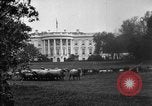
President Wilson in his office at White House in Washington DC, and signs proclamation of war against Germany in World War I
U.S. President Woodrow Wilson at White House in Washington DC during World War 1. Exterior views of the White house with sheep grazing on White House lawn in the foreground. U.S. President Woodrow Wilson works in his office. He stands and watches sheep graze on the White House lawn. Wilson talks on phone. Wilson, seated at table in his office, looks at documents. President Wilson sitting in chair. On April 6, 1917, Wilson signs documents proclaiming a state of war exists between the United States and Germany (Presidential Proclamation 1364) during World War 1. Several officials standing behind him during signing.
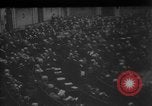
U.S. President Woodrow Wilson asks Congress for a declaration of War against Germany
Film opens showing the U.S. Congress filling the U.S. Capitol chamber on April 2, 1917, when President Woodrow Wilson asked Congress to declare war against Germany. Four days later, on April 6th, President Wilson is seen in black topcoat and top hat delivering an address from a building in Washington, DC announcing that Congress approved his request for a declaration of War. Former President Wiliam Howard Taft sits nearby. View of President Wilson dressed in summer white, relaxed and very casual, speaking impromptu to a group of persons in front of a brick building. Patriotic bunting is seen nearby. Change of scene shows Woodrow Wilson's youngest daughter, Mrs. W.G. McAdoo,Eleanor Randolph Wilson McAdoo. An unidentified old woman is nearby.
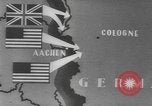
United States First and Ninth Army troops advancing into Germany starting from Aachen (WWII)
United States First Army soldiers advance into Germany during World War II. Map shows the position of United States and British troops such as the First and Ninth Armies after taking Aachen, near Cologne. First and Ninth Army troops carry supplies as they advance out of Aachen. M4 Sherman tanks and trucks are moving on the roads and forests. Soldiers sit on top of a truck. First Army troops stand by the rough, muddy road. First Army soldiers sitting on dugouts. Howitzer under a canopy firing at German positions. Tanks and artillery barrage enemy positions. Observation officer orders on the phone. The Howitzer recoils after firing. Black cloud of smoke forms over enemy position. Army tanks fire their artillery one by one. Soldiers in prone position firing with rifles. Soldiers fire with a Browning M1917A1 machine gun. A medic uses medicinal drops on an unconscious soldier. Equipment advancing along the area. Smoke rising due to the firing in the foreground. Medics treating wounded soldiers on the battlefront. Bomb damaged buildings along the sides of a street. Soldiers searching houses. Soldiers firing with a Browning M1919 machine gun from a house window. Troops acting as decoys to reveal enemy snipers. A wounded soldier crawls in the mud to get to a medic. Soldier lowers his head when a shell is dropped. Captured German prisoners of war are led away.
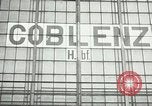
YMCA volunteer women provide refreshment to U.S. troops arriving in Coblenz, Germany. Troops visit YMCA library.
World War 1 U.S. troops greeted by YMCA volunteer women with refreshments upon arrival at train station in Koblenz,Germany. Troops seen checking out books and magazines and reading in a YMCA library.1917-1918.
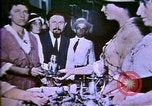
U.S. President Wilson gets reelected as Americans prepare for war during World War I
Events during World War 1. Sketches : In November 1916 newspaper shows Wilson reelected as a president. Cartoon depict the people of America supporting the Wilson's policy of peace. Several sketches of Thomas Woodrow Wilson after winning the election. Second inaugural of President Wilson at the United States capitol in Washington D.C. The German High Command in Berlin. Posters show the hardships of German citizens due to Allied blockade. Germany announces unrestrained submarine warfare against all vessels. Posters of the Germans destroying the American ships. The New York times reports German demarche to Japan and Mexico for support to Germany. Sketch depicts Germany Secretary of foreign affairs, Arthur Zimmermann seeks these alliances. Theodore Roosevelt addresses people. Several sketches of Woodrow Wilson. On April 2nd 1917 President Woodrow Wilson obtains declaration of war against Germany, from congress. American enters the conflict. U.S. Soldiers carry weapons in the battle field. sketches of several American officials. People work in factories to produce war materiel. A person with posters promoting Liberty bonds. A blindfolded person draws numbers from a bowl for civilian conscription. Citizens entering military service. People in a railroad train and others stand outside. People holding baggage walk in a group. A doctor checks the mouth of a recruit. Army recruit getting a haircut. Soldier stands holding guns. Soldiers practice firing artillery. Soldiers march. American recruits practice on wooden guns. Several sketches of the allied armies.