


 Francais
 Deutsch
 Italiano
Refine Your Search
+"Germany" +1943 stock footage and images
- Showing 265 to 270 of 300 results more
more Hide
Hide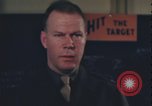
Officer present flight plan.
Closeup views of an officer addressing others regarding a B-17 bombing mission. Officer in front of chalk board gestures with a pointer. The locations of "Norden" and "Leer" in Germany are noted on the board.
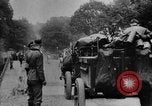
German forces occupy Warsaw, Polish resistance fighters print leaflets and paint graffiti during WW2
Arrival of Nazi military vehicles with soldiers in Warsaw after its capture by Germany during World War 2. German soldiers patrol the besieged streets of Warsaw as citizens watch. Destroyed city blocks in smoke after German bombing. A bomb crater in middle of destroyed city blocks in Warsaw after German bombing. Woman cries over dead relative as gravedigger digs a grave in Warsaw cemetery. Graves in Warsaw cemetery. View of the highest Polish military decoration, the Virtuti Militari. Coat of arms of Warsaw. Warsaw Castle Square (plac Zamkowy01-195 Warszawa, Poland), with Baroque column of Polish King Sigismund III Vasa, in ruins after being shelled, burned and looted by German forces. Graffiti in Polish. Polish resistance fighter crawling in underground tunnel. Collection of guns and grenades. Polish resistance documents and pistol. Man prepares printing press. Man prints more Polish resistance leaflets. Polish resistance fighter proofreads a document. Printing press prints more leaflets. Piles of leaflets. Man carefully wrap reams of leaflets. Polish men walking in Warsaw street. German document announcing daily execution of Poles in Lublin. Two Polish men glues a resistance leaflet in wall. Polish man writes “pawiak pomścimy” (“We will avenge Pawiak” in Polish) on the wall. Man paints graffiti saying “Verloren” (“Lost” in German). Wall displays anti-Nazi graffiti speech and symbols such as “HYCLER”, a hanged Swastika in gallows, a turtle, and the “PW” Kotwica emblem of the Polish Underground State. Writing on the ground says “Polska Walcząca” (“Fighting Poland” in Polish).
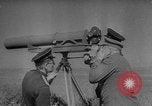
Soviet and German forces battle in Bryansk, sustaining heavy damage during WW2
Soviet military officers use an artillery telescope with camera at Bryansk front battlefield during World War 2. Seen from a camera, German soldiers retreat from a burning tank, running away from Soviet firing. Explosion in the battlefield. A Soviet soldier carries his injured comrade on his back in the middle of a battle. A German soldier killed in battle. Soviet guerrilla soldiers read map, load ammunition on small artillery. A Soviet guerilla soldier firing with rifle behind bushes. Artillery hits the city of Bryansk, which sustained heavy damage during its liberation from Nazi Germany. Artillery shell hits a house, exploding it. Soviet troops with guns advance through the city of Bryansk. Soviet infantry troops firing with rifles. Soviet troops engage in urban warfare to drive out German forces from Bryansk. Soviet troops enter a ruined building. A Soviet soldier firing with rifle from a house window. Soviet soldiers climb stairs. A Soviet soldier places a flag of victory on the window of a building. An unmarked (assumedly red) flag in Bryansk after its liberation from German forces.
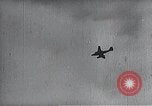
German officer instructor pilot and Technical Sergeant student discuss and observe ME-262 jet airplanes at an airfield
Opening scene shows a German ME-262 jet airplane speeding across the sky. An officer instructor pilot and a student Technical Sergeant observe it from the ground on a snow covered field. They both wear winter flyer's garb. They walk together toward the camera, discussing the jet airplane as they walk. An army truck passes behind them and some buildings and a radar antenna are visible in the background. A soldier on a bicycle and another, walking are seen in background. The instructor and student stop walking. The Officer gives the student a set of binoculars which he peers through. Next, the camera focuses on an ME-262 jet plane coming in for a landing. It is in the process of lowering its landing gear. The officer and student watch. The student using the binoculars. (World War II; WW II; World War 2; World War Two)
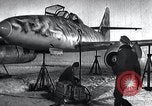
German Officer instructor pilot shows Technical Sergeant student features of the ME-262 jet airplane
At beginning of the film, a German officer instructor pilot and his Technical sergeant student approach a German ME-262 jet airplane set up on maintenance jacks in a snow covered airfield. A mechanic stands as they approach. The landing gear of the plane are in the process of extending, which the instructor pilot discusses and they are moving. Closeup of the landing gear fully extended. The instructor pilot signals to a mechanic in the cockpit and the landing gear are then retracted. Closeup of the gear retracting into the fuselage of the plane. The mechanics leave the instructor pilot and student who then climb up to the airplane cockpit. The instructor points to two hydraulic valve handles for the landing gear in the cockpit. They then both jump down from the plane and continue talking about its controls as they walk. Suddenly, the officer instructor points to an ME-262 taking off from the field. Closeup of the jet on takeoff roll. It has "V 167" stenciled on its fuselage. Next, an ME-262 jet is seen being towed along a ramp past a line of parked ME-262s. (World War II; WW II; World War 2; World War Two)
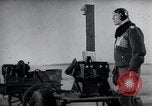
German student pilot mans a mobile ground control station during flights of an ME-262 jet airplane
Opening scene shows a German Air Force Technical Sergeant student pilot manning a mobile ground control station at an airfield. He is in communication with an ME-262 aircraft, next seen taxiing, from a parking place, onto a ramp for takeoff. The Technical Sergeant at the mobile control looks through binoculars, as the jet plane passes various other aircraft getting into position for takeoff. A woman soldier, near a shack on the field, raises a flag to signal the jet to take off. It applies power and heads down the runway. View from the side of the jet breaking ground on takeoff, and landing gear beginning to retract. View inside cockpit as pilot manipulates engine controls. Glimpse of his feet on rudder pedals. Closeup from side as the jet is airborne with gear retracted. Student controller watching airplane's progress with binoculars. The student's Officer instructor pilot joins him at at the mobile control point and they converse as they watch the ME-262 in flight. (World War II; WW II; World War 2; World War Two)