


 Francais
 Deutsch
 Italiano
Refine Your Search
+"Guam" +1945 stock footage and images
- Showing 49 to 54 of 69 results more
more Hide
Hide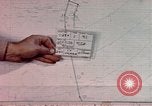
A USAAF officer points out a position on a section of a map of the Pacific in Guam, Mariana Islands during World War II.
Planning of last bomber attack on Japan by the U.S. Army Air Force ( USAAF ) during World War II. An officer points out positions on a section of map of the Pacific in in Guam, Mariana Islands.
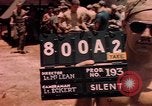
U.S. soldiers eating food and washing cloths in Guam, Mariana Islands during World War II.
U.S. soldiers in Guam, Mariana Islands during World War II. U.S. soldiers pickup meals at a mess tent and stand outside at tables to eat. A laundry for the soldiers shows two ingenious clothes washing machines made of 55 gallon drums and plungers, powered by rotatating wind -driven propellers. Laundry is drying on lines stretched out in background. Soldiers also scrub clothes on tilted tables. A tent area in the background.
U.S. soldiers taking showers in Guam, Mariana Islands during World War II.
U.S. soldiers in Guam, Mariana Islands during World War II. The soldiers taking shower. A tent area in the background. The shower is constructed of iron pipe with individual overhead chain pulls to release water. It is surrounded by a waist-high enclosure.
Maintenance crew working on USAAF B-29 Superfortress bomber airplanes in Guam, Mariana Islands during World War II.
U.S. Army Air Force ( USAAF ) B-29 Superfortress bomber aircraft at an air base in Guam, Mariana Islands during World War II. B-29 Superfortress bomber aircraft parked on the air base. A maintenance crew working on a B-29 aircraft. A quonset hut in the background. Crated engines in the foreground.

USS Comfort (AH-6) attacked by Japanese planes off Okinawa, Japan, with many casualties. Burial services at a cemetery in Guam.
Japanese kamikaze suicide pilot divers attack hospital ship USS Comfort (AH-6), during action off Okinawa, Japan. Damaged USS Comfort. A sign : 'U.S. Navy ship, USS Comfort'. Wounded nurses and casualties are carried and transfered to a van. Burial services are held at a military cemetery on Guam: coffins draped with the flags of the United States are carried to the cemetery. The nurses who treated the casualties shown mourning. The flag draped coffins. Graves of the Americans and the flag of the United States at the Guam cemetery. (World War II period).
A section of a map shows the islands around Guam in the Mariana Islands
United States Army Air Force operations in the Mariana Islands during World War II. A section on a map of the South Pacific. The islands around Guam on the map.