


 Francais
 Deutsch
 Italiano
Refine Your Search
+"Japan" +1934 stock footage and images
- Showing 19 to 24 of 35 results more
more Hide
Hide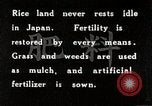
Rice field fertilization in Japan
Japanese farmers use raw sewage, straws, and weeds as mulch for field fertilization. Grass and weeds are processed into mulch. Japanese farmer treats rice field with fertilizer. Woman steps on weeds, sinking the weeds into the muddy field to make mulch. Artificial fertilizers are also used to fertilize the fields. April 1934.
Children play and adults work in rice fields during spring time in Japan
Kendo martial arts match between two Japanese boys. The boys engage in Kendo with Shinai sticks while wearing protective masks and Kendo armor (known and bougu). Children play and swim in the warm sunlight. Japanese children swimming. A Japanese grandmother holding an infant. A farmer planting rice in rice field. A group of children follow cinematographer Fred C. Ells. Rural Japanese boy carries a traditional Japanese umbrella April 1934.
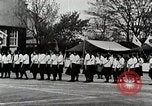
Sports day at school in Japan
Students participate in sports day activities in school. Girls compete in Tug of War contest. Girls dance and demonstrate Naginata with polearms, boy displays martial art skills and students play games to participate in sports day. Film shot in approximately 1934-35.
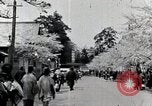
Spring Festival in Japan
Shows Japanese people walking to the spring festival, views of cherry blossom trees, three men dance in park to music played by three other men. Film shot in approximately 1934-35.
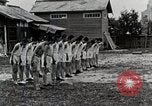
Students exercise in Hirosaki boys school in Japan
Shows methodist mission Hirosaki boys school students exercise. Japanese boys in gym uniforms stretch and do exercises and calisthenics. Film shot approximately in 1934-35.
Scenes from World War 1, and world events in the period between World War I and World War II.
Rail guns firing in World War 1. U.S. troops charging out of trenches. Allied gunners firing "French 75s" Allied twin-tailed biplane bombers. French Renault F17 tanks. Crowds in cities celebrate Armistice Day and end of World War I. Treaty of Versailles. Destruction of warships. Scenes of Paris. A pagoda in Japan. Temples in Siam, China, and Manchuria. Two Kayan women in Myanmar or Thailand perform a dance. Both Kayan women wear long brass coil neck rings. In the U.S., a boy hits a baseball and runs toward first base. Scenes of Japan invading Manchuria. Newspaper with headline: Henry Stimson denouncing Japan. U.S. Army troops dispel World War I veteran bonus marchers. Men lined up in bread line for unemployed during Great Depression. Brief shot of Gangsters in gun battle in an American city. Scenes of dust bowl in American with farmers and families heading West in caravans. Family standing by tent. Torchlight parade in Germany. Adolf Hitler standing with German President Hindenburg circa 1933. Adolf Hitler, Heinrich Himmler, and Victor Lutze, at 1934 Nazi Rally in Nuremberg. Italian Caproni bombers over Ethiopia. Ethiopian tribesmen and Haile Selassie. U.S.Neutrality Act. American youths with a 1930 Ford coupe. Scenes from Civil war in Spain. Spanish Rebel forces in ground combat with Nationalist forces. German and Italian aircraft participate in bombing Spanish Nationalist targets in Spanish Civil War. Spanish civilians flee bombing, tend to wounded and dead victims following bombings. Italian Savoia-Marchetti S.M.79 Sparviero bombers. Crowds running for shelter. Women and children victims of bombing, some crying and in shock. Spanish General Francisco Franco arrives by train in southern France to meet with Hitler. View of Gallup Poll forms, and findings, with Americans against entering European war and preferring neutrality. Japanese planes and warships attack China. Naval Chinese civilians run for cover; bodies of Chinese in trucks. Japanese freighters, Buenos Aires and Tatsuno Maru, in U.S. ports being loaded with scrap iron and metals. Hitler, Goering and other officers in 1938. Adolf Hitler, Neville Chamberlain, Edouard Daladier, Benito Mussolini, Count Ciano sign Munich Agreement. Hitler riding standing up in an open car during a rally in Germany. Elevated view of Los Angeles, then view of traffic on streets of Los Angeles California and newspapers being sold to pedestrians. View of faces of American citizens in a movie theater watching Confessions of a Nazi Spy. German-American Bund activities including outdoor rallies in the U.S. (Camp Siegfried in Yaphank, Long Island, New York, in 1937), and an indoor rally in New York City at Madison Square Garden in 1939. Emperor Hirohito reviewing World War 2 troops of Japan. Japanese steel production and arms production in Japanese factories. The Hokoku Maru Japanese ship being launched with fanfare from Tama Shipyards on July 5, 1939. Meeting of United States Military Affairs Committee of the U.S. House of Representatives in late 1939 to consider national defense matters. In meeting of Naval Affairs Committee, representative asks for increase of 25 percent in authorized naval tonnage.