


 Francais
 Deutsch
 Italiano

Refine Your Search
+"Japan" +1942 stock footage and images
- Showing 85 to 90 of 102 results more
 Hide
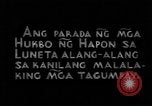
Japanese Army General Masaharu Homma reviews soldiers and army vehicles at Luneta in Manila, Philippines.
Japanese occupation of Philippines in World War 2 and beginning of colonial rule by Japan during the war. Japanese victory march at Luneta Park in Manila, Philippines during World War II. Slide in Filipino reads “Ang parada ng mga Hukbo ng Hapon sa Luneta alang-alang sa kanilang malalaking mga tagumpay” (“The Japanese Army’s parade in Luneta to celebrate their immense victories” in English). Japanese tanks in a row in Luneta Park (Ermita, Manila, 1000 Metro Manila). Soldiers blow bugles. Soldiers near the tanks. Japanese Army General Masaharu Homma on a horse followed by other men. They ride past soldiers on foot going in the opposite direction. The General reviews the troops. Cavalry units pass in review. The General salutes. Army vehicles pass in review. Soldiers in formation. Aircraft in flight. Army vehicles roll past cheering crowds standing at roadsides. People wave small Japanese flags. The vehicles move across the Ayala Bridge over the Pasig River. Sign over bridge reads “Welcome General Homma Welcome”.
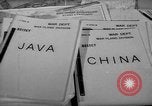
Folders of the War Plans division on a Munitions Building office table in Washington D.C (WW2)
The War Plans Division in Washington D.C during World War II. Folders on a table in an office. Inserts of individual folders marked with titles: China, India, Java, Libya, Australia, Philippines. A map of the Philippines, Japan, and surrounding countries on the table. Hands locate places on the map.

The signing of the Three Power Pact by the Japanese, German and Italian delegates in Germany.
The signing of the Three Power Pact during World War II. Japanese, German and Italian delegates gather in Germany. Adolf Hitler greets the delegate from Japan signing the Three Power Pact of the Axis. The delegates sign the pact and officials stand in the background.
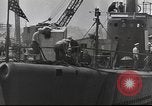
A U.S. submarine in operation during World War II in the Pacific.
U.S. Submarine, USS Pickerel (SS-177) docked in Pearl Harbor during World War 2. Crew members handling lines on deck. Navy ensign displayed on stern. Shipyard derrick in background. Sub's conning tower displays several miniature Japanese flags, representing victories. Boat's officers pose on deck. Other subs docked alongside in background. Sailors ride a motorized lift transporting a torpedo to the sub. Below decks, crewmen load torpedoes into firing tubes. The Pickerel starts moving out of her berth. Animated map shows pattern of U.S. submarine operations out of Pearl Harbor, fanning out toward Japan. Views of the submarine cruising on the surface. Binocular view of ships on horizon. Crew members clear the deck and go below. The submarine submerges. Crew working at duty stations. Captain at the periscope, orders firing of number 1 torpedo. It strikes a ship Which explodes and burns with billowing black smoke.

Animated maps depict the resources and strategic position of the Philippines because of which it was invaded by the Japanese.
Animation depicts the resources and the strategic position of the Philippines during World War II. Animated map show many islands like Borneo and Java near to the Philippines. It also depicts the benefits for Japan on invading the Philippines. The abundance of oil, copper, coal and a large population in the area. Large crowd of Filipino working men wearing hard hats in an industrial or port area. Battleships underway at sea. Large crowd of Filipino people holding lighted candles march on a street at night during a ceremony.
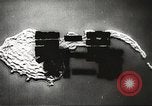
United States prisoners of war at medical aid stations in the Philippines during Japanese occupation (WW2)
During occupation of the Philippines by Japanese troops during World War II. Maps of Manila Bay, the Bataan Peninsula, Corregidor and Caballo islands. Mountains in the foreground. A wrecked U.S. ambulance in Corregidor Island. A U.S. medical aid station. Medics treat wounded soldiers inside a tent. U.S. Army prisoners of war in Corregidor take salt tablets and eat at a field kitchen. A prisoner of war sweeps the ground. A wounded Filipino soldier walking with crutches. Prisoners of war are served with plates of rice. A heap of medical supplies. A man reads The Tribune newspaper. Headlines of the newspaper reads: 'Homma is head of Japan forces'. Soldiers seated inside a tent look at a map.